Africa’s richest man plans to buy ships after struggling to move cement from Nigeria to Ghana
Africa’s richest man, Aliko Dangote, is looking to take greater control of another part of his industrial supply chain, this time by putting his company’s products on its own ships.
 Black News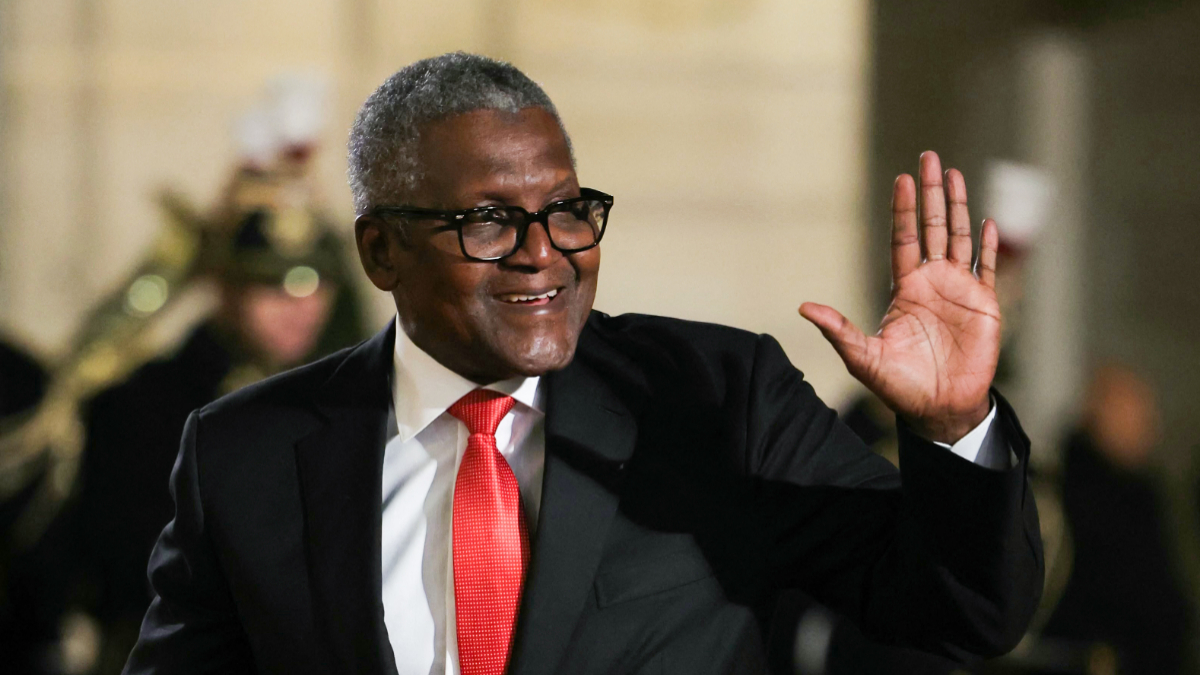

![Aliko Dangote, Africa’s richest man and founder of Dangote Industries, whose group is moving towards acquiring ships for regional exports.[Photo by Thomas SAMSON/AFP]](https://ocdn.eu/pulscms/MDA_/cf2b7b1ab7bfdd93b711a711a7a6591a.jpg)
Africa’s richest man, Aliko Dangote, is looking to take greater control of another part of his industrial supply chain, this time by putting his company’s products on its own ships.
- Dangote Industries is moving towards acquiring ships to transport its products to markets across West and Central Africa.
- The company says it has struggled to secure vessels even for a 1,000-tonne cement shipment from Nigeria to neighbouring Ghana.
- Dangote currently relies heavily on road transport, where taxes and border costs can undermine the competitiveness of its exports.
- The move comes as Nigeria attempts to rebuild domestic shipping capacity after decades of dependence on foreign vessels.
Dangote Industries is moving towards acquiring vessels to transport products from Nigeria to markets across West and Central Africa, as limited shipping capacity and the cost of moving goods by road complicate the group’s regional expansion.
Sada Ladan-Baki, head of international trade export at Dangote Cement, disclosed the plan on Tuesday at a seminar on non-oil exports, according to BusinessDay.
“We are moving forward towards getting our own ships in order to do this business,” Ladan-Baki said.
The problem facing the conglomerate is particularly striking given the short distance between some of its markets.
Ladan-Baki said the company was unable to find a vessel to transport a 1,000-metric-tonne shipment from Nigeria to Ghana, highlighting the shortage of readily available shipping capacity for regional trade.
The alternative, moving products by road through neighbouring countries, comes with its own costs.
Dangote said cement transported from Nigeria towards Ghana encounters taxes while passing through countries including Benin and Togo, increasing the final cost and making Nigerian exports less competitive.
The shipping plan could therefore allow the conglomerate to bypass some of those overland barriers while strengthening its control over logistics.
DON'T MISS THIS: Africa’s largest oil refinery targets 600 vessels annually as $20bn plant deepens global shipping
Dangote’s growing dependence on the sea
The move is significant because Dangote’s businesses are becoming increasingly dependent on maritime trade.
Its $20 billion refinery in Lagos is already dramatically changing Nigeria’s seaborne trade. The U.S. Energy Information Administration said this week that Nigeria’s petroleum-product exports by sea have increased seven-fold since 2023, driven primarily by production from the Dangote refinery.
The refinery is also expected to handle about 600 vessels annually, combining ships bringing crude into the facility and those carrying refined products to domestic and international markets.
![Dangote’s expanding cement, fertiliser and petroleum businesses are increasing the group’s exposure to Africa’s maritime and logistics infrastructure.. [Tom Saater/Bloomberg via Getty Images]](https://ocdn.eu/pulscms/MDA_/fac5bd0118547e04f78c9e6f9bbe482f.png)
Last year, the refinery was considering vessel acquisitions as its maritime operations expanded. The latest comments show that the shipping strategy is extending beyond petroleum products to the group’s wider regional export ambitions.
Dangote Cement has operations across several African markets, making transport costs particularly important to the group’s ability to compete across borders.
The company has built a substantial trucking operation to support distribution, but moving heavy commodities such as cement long distances by road can become expensive when fuel costs, border delays and taxes are added.
Owning ships would give Dangote greater control over another section of its supply chain, much as the group has invested in ports, terminals and other infrastructure supporting its cement, fertiliser and refinery businesses.
Nigeria’s shipping gap
The problem also exposes a longstanding weakness in Nigeria’s maritime economy.
Nigeria has struggled to develop a sizeable domestically owned commercial fleet since the collapse of the Nigerian National Shipping Line in 1995. BusinessDay estimates that about $6 billion in annual freight earnings is largely captured by foreign shipping companies.
DON'T MISS THIS:Africa's richest man picks foreign deals as Nigeria loses money to Angola via the Dangote Refinery
Dangote would not be the first Nigerian billionaire-led industrial group to respond by buying vessels.
In 2022, BUA Group, controlled by Nigerian billionaire Abdul Samad Rabiu, acquired two vessels to support sugar exports to West African markets and reduce logistics costs.
Nigeria is simultaneously trying to increase local ship ownership through the Cabotage Vessel Financing Fund.
The fund was established under the 2003 Cabotage Act to provide financing for Nigerian operators to acquire vessels. The government launched a digital portal for accessing the fund in January 2026 after more than two decades of delays surrounding its disbursement.
Ladan-Baki called for faster access to the fund and greater participation from commercial banks and institutions such as Afreximbank in financing vessel purchases.
For Dangote, however, acquiring ships would do more than solve a Nigerian logistics problem. It could give one of Africa’s largest industrial groups greater control over how cement, fertiliser and potentially other products move between its growing network of African markets.