Nigeria’s Oil Refiners Could Save $328.8 Million Under Proposed Domestic Crude Swap Plan
Nigerian oil refiners, including the Dangote Petroleum & Petrochemicals Refinery, could significantly reduce their operating costs under a proposed domestic crude swap mechanism designed by the Nigerian Upstream Petroleum Regulatory Commission (NUPRC). The proposed plan could save refiners between $246.6 million and $328.8 million in logistics costs, potentially providing much-needed relief for Nigeria’s increasingly important […]
 Black News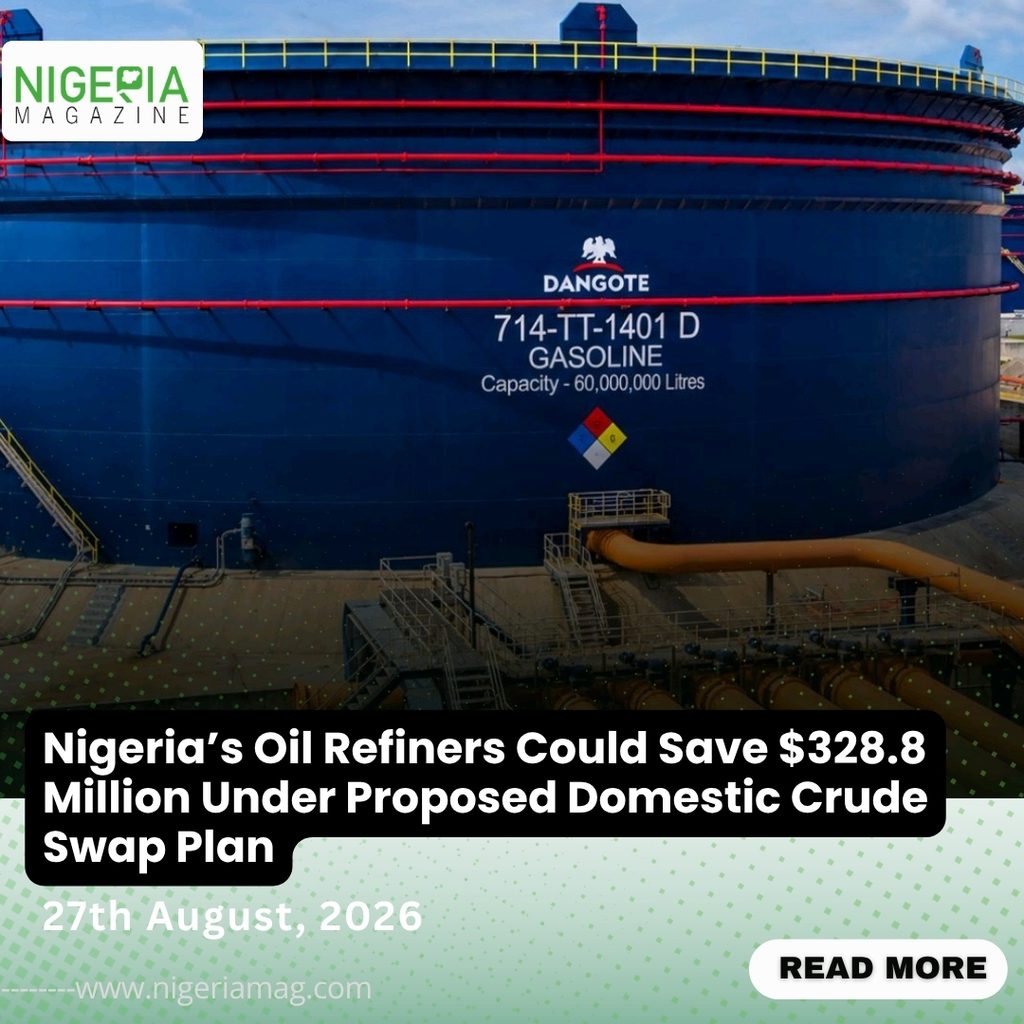

Nigerian oil refiners, including the Dangote Petroleum & Petrochemicals Refinery, could significantly reduce their operating costs under a proposed domestic crude swap mechanism designed by the Nigerian Upstream Petroleum Regulatory Commission (NUPRC).
The proposed plan could save refiners between $246.6 million and $328.8 million in logistics costs, potentially providing much-needed relief for Nigeria’s increasingly important domestic refining industry.
Cutting the Cost of Moving Crude
One of the major challenges facing Nigerian refiners is the high cost of transporting crude oil from distant production terminals to refineries. With refining margins already under pressure, expensive freight, coastal barging and trucking costs can significantly reduce profitability.
According to the Crude Oil Refiners Association of Nigeria (CORAN), barging costs can reach as much as $12 per barrel, while trucking can add another $4 per barrel.
These expenses become particularly significant when refineries receive crude allocations from terminals located far from their facilities.
The proposed NUPRC-reviewed mechanism seeks to address this problem through a domestic crude swap arrangement.
Under the system, refiners with crude allocations at distant terminals could exchange their obligations with producers located closer to their facilities. Any differences in the volumes exchanged would then be settled later.
Rather than physically transporting crude across long distances, the arrangement would allow participants to source crude closer to where it is needed, reducing transportation and associated logistics expenses.
Potential Savings of Up to $328.8 Million
The potential financial impact becomes clearer when the mechanism is applied to domestic crude supply figures.
During the first half of 2026, domestic refineries reportedly received about 82.2 million barrels of crude.
If refiners had been able to save between $3 and $4 per barrel in logistics costs through the proposed arrangement, total savings would have ranged from approximately $246.6 million to $328.8 million.
For refiners operating on relatively thin margins, such savings could make a substantial difference.
Lower logistics costs could improve refinery economics, strengthen the competitiveness of locally refined petroleum products and reduce some of the cost pressures associated with moving crude within Nigeria.
A Potential Boost for Nigeria’s Downstream Sector
The proposed system is backed by industry stakeholders, including the Organisation of Petroleum Technical Services (OPTS), CORAN and the Independent Petroleum Producers Group (IPPG).
Beyond reducing transportation costs, the centralized trading mechanism is intended to address another persistent problem in Nigeria’s downstream sector: mismatches between crude supply allocations and refinery requirements.
Nigeria has invested heavily in expanding domestic refining capacity, with the Dangote refinery becoming a major component of the country’s efforts to reduce dependence on imported petroleum products. However, ensuring that refineries have reliable and economically viable access to crude remains crucial to achieving the full benefits of that capacity.
A more efficient domestic crude trading and swap system could help bridge supply gaps by connecting refiners with nearby producers while reducing unnecessary movement of crude.
What It Could Mean for Consumers
The proposed mechanism is primarily designed to improve efficiency within the oil industry, but its effects could extend beyond refiners and producers.
If lower logistics costs translate into improved refinery economics, domestic refiners could potentially operate more efficiently and competitively. Over time, this could contribute to a more resilient domestic petroleum supply chain.
However, logistics savings alone will not resolve all the challenges facing Nigeria’s refining sector. Crude availability, refinery reliability, financing, infrastructure, pricing and market conditions will continue to play important roles.
The success of the proposed crude swap plan will therefore depend on effective implementation, transparent trading arrangements and sustained cooperation among regulators, producers and refiners.
A Step Toward a More Efficient Oil Industry
Nigeria’s growing refining capacity creates an opportunity to build a more integrated domestic oil value chain. But increasing refining capacity must be matched with efficient systems for supplying crude to those facilities.
The proposed domestic crude swap mechanism could represent an important step in that direction.
If successfully implemented, the plan could eliminate hundreds of millions of dollars in avoidable logistics costs while helping refiners access crude more efficiently.
For Nigeria, the bigger opportunity is not simply the potential $328.8 million in savings. It is the possibility of creating a domestic crude market where producers, refiners and other industry participants can operate with fewer logistical bottlenecks and greater efficiency.
As Nigeria continues its push to strengthen domestic refining, reforms that reduce the cost of moving crude could become just as important as increasing refinery capacity itself.