Africa’s Trade Ambitions Face a Roadblock: Restrictions on Freight Transport
Diverging trucking rules limit the benefits of regional trade corridors, leaving landlocked economies facing obstacles they cannot overcome through domestic reforms alone. Removing tariffs is not enough to facilitate trade between African countries when the trucks carrying goods still face restrictions on transit and access to neighbouring markets. Between ports and inland destinations, the rules […] ظهرت المقالة Africa’s Trade Ambitions Face a Roadblock: Restrictions on Freight Transport أولاً على African Percentions.
 Black News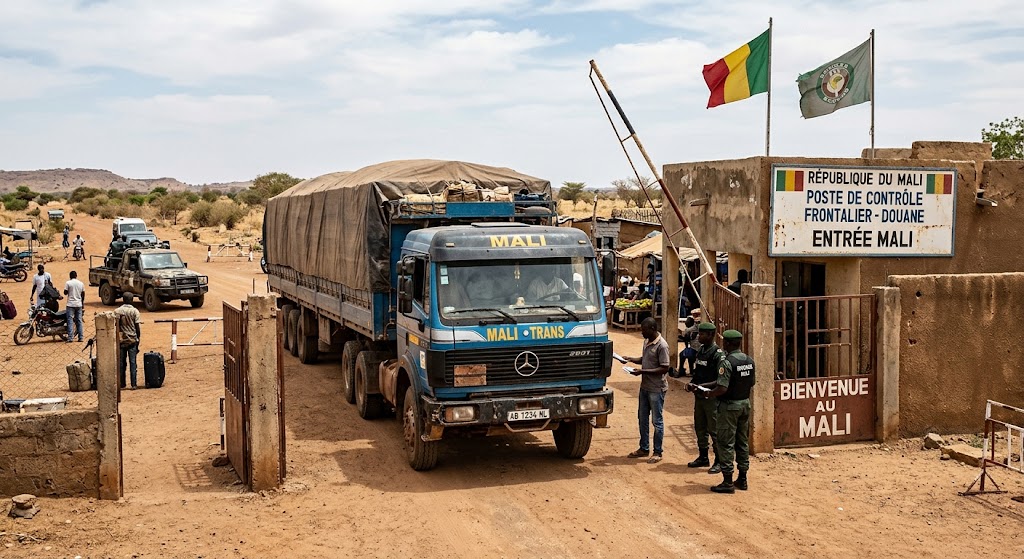

Diverging trucking rules limit the benefits of regional trade corridors, leaving landlocked economies facing obstacles they cannot overcome through domestic reforms alone.
Removing tariffs is not enough to facilitate trade between African countries when the trucks carrying goods still face restrictions on transit and access to neighbouring markets. Between ports and inland destinations, the rules imposed by a single country can reduce the benefits of an entire trade corridor.
A World Bank analysis highlights this challenge through the Services Trade Restrictiveness Index (STRI), which measures how regulatory and policy frameworks restrict trade in services, including road transport. Its findings reveal significant differences between economies that share borders and supply routes but impose different conditions on freight operators.
For landlocked countries, opening their own transport markets does not necessarily guarantee easier access to seaports. Their trade also depends on the regulations of the countries through which their goods must travel.
Regulatory Barriers Along the Route
According to the World Bank analysis, restrictions range from prohibiting foreign operators from carrying goods between destinations within another country to limiting their permitted stay in a transit country. In some cases, operators are barred from providing services altogether.
These requirements force transport companies to navigate different regulatory environments during a single journey. A corridor’s efficiency therefore depends not only on road quality or the openness of one market, but also on whether goods can move through every country along the route.
The analysis cites the North–South Corridor, which connects South Africa and Zimbabwe—both relatively open economies in this sector—with Zambia, where the regulatory framework is more restrictive.
The example illustrates the limits of unilateral reform: a country that eases restrictions at home may still fail to capture the full benefits if obstacles remain elsewhere along the corridor.
Uneven Rules Within Regional Blocs
The analysis identifies Algeria, Cameroon, Guinea, Lesotho, Libya, Mali and Zambia as having some of the highest road freight STRI scores, indicating greater regulatory restrictions. Kenya, Morocco, Nigeria, South Africa and several West African economies maintain relatively open regimes.
These differences also exist within regional economic communities, where countries rely on the same transport corridors while applying substantially different rules.
In its review of World Bank and World Trade Organization data, Kenya’s Business Daily ranked Rwanda as the most open road transport market among the East African Community countries covered, with a score of 21. Burundi followed at 28, then Kenya at 30.4.
The Democratic Republic of the Congo scored 42.3, Somalia 42.9, South Sudan 46.9, Uganda 48.7 and Tanzania 49.6. The scale runs from zero for a fully open market to 100 for a fully closed one.
The index measures regulatory restrictions, however. It does not, on its own, provide a complete assessment of road quality, security or the speed of border procedures.
Market Openness Does Not Remove Roadside Obstacles
Kenya illustrates the gap between regulatory openness and actual transport conditions. Despite its relative position in the index, the Northern Corridor, linking the port of Mombasa to landlocked East African countries, continues to face operational and security challenges, according to Business Daily.
These include more than 20 police checkpoints, cargo theft and highway crime, poor road conditions, uncoordinated border opening hours, delayed container returns and inconsistent implementation of electronic cargo tracking.
The newspaper reported that Kenya’s Ministry of East African Community Affairs plans reforms aimed at reducing police checkpoints to fewer than five and halving transit time between Mombasa and Malaba, in coordination with revenue, port and police authorities.
The measures underline the need to combine transport market reforms with better management of roads and borders.
Road Transport and the Free Trade Test
These challenges matter because African trade depends heavily on trucking. According to the International Road Transport Union (IRU), road transport carries more than 80% of Africa’s goods, yet receives limited attention in the text of the African Continental Free Trade Area agreement compared with air and maritime transport.
The IRU also points to rules reserving domestic freight operations for national operators in many African countries, alongside cargo allocation arrangements in West and Central Africa that coexist with informal load-sharing practices.
In East and Southern Africa, the organisation highlights a different approach: the 2023 Multilateral Cross-Border Road Transport Agreement, which shifted from bilateral permits towards a system granting market access to operators that meet defined quality standards.
These contrasting approaches raise a practical question for Africa’s single-market ambitions: how much can goods benefit from trade liberalisation if the vehicles carrying them remain subject to inconsistent and restrictive rules?
The success of trade corridors depends on more than the length of the roads connecting countries. It also requires trucks to move under coordinated rules and predictable procedures. Otherwise, the gains from openness in one country remain dependent on what the next country along the route allows.
ظهرت المقالة Africa’s Trade Ambitions Face a Roadblock: Restrictions on Freight Transport أولاً على African Percentions.