Agricultural Drones: Material Afterlives of Mao’s Green Revolution
The four propellers begin to spin. A gust of wind presses down the surrounding rice plants as a pulsing rotor-whir fills the air. The drone, carrying its battery and a tank of pesticides, lifts off and stabilises, hovering briefly before angling towards the fields. It accelerates over the paddies, the air beneath it flattening the […] The post Agricultural Drones: Material Afterlives of Mao’s Green Revolution appeared first on Made in China Journal.
 Black News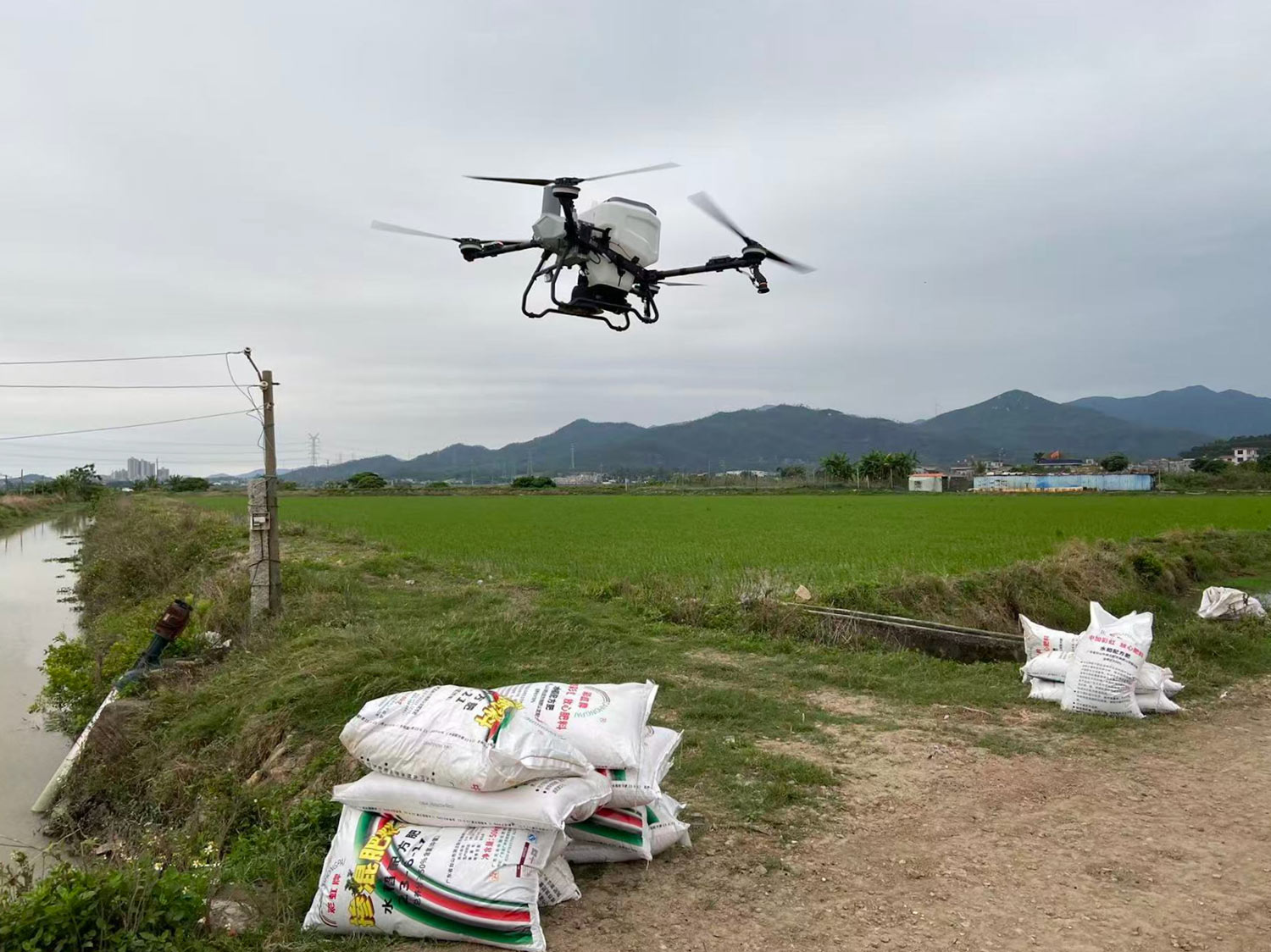
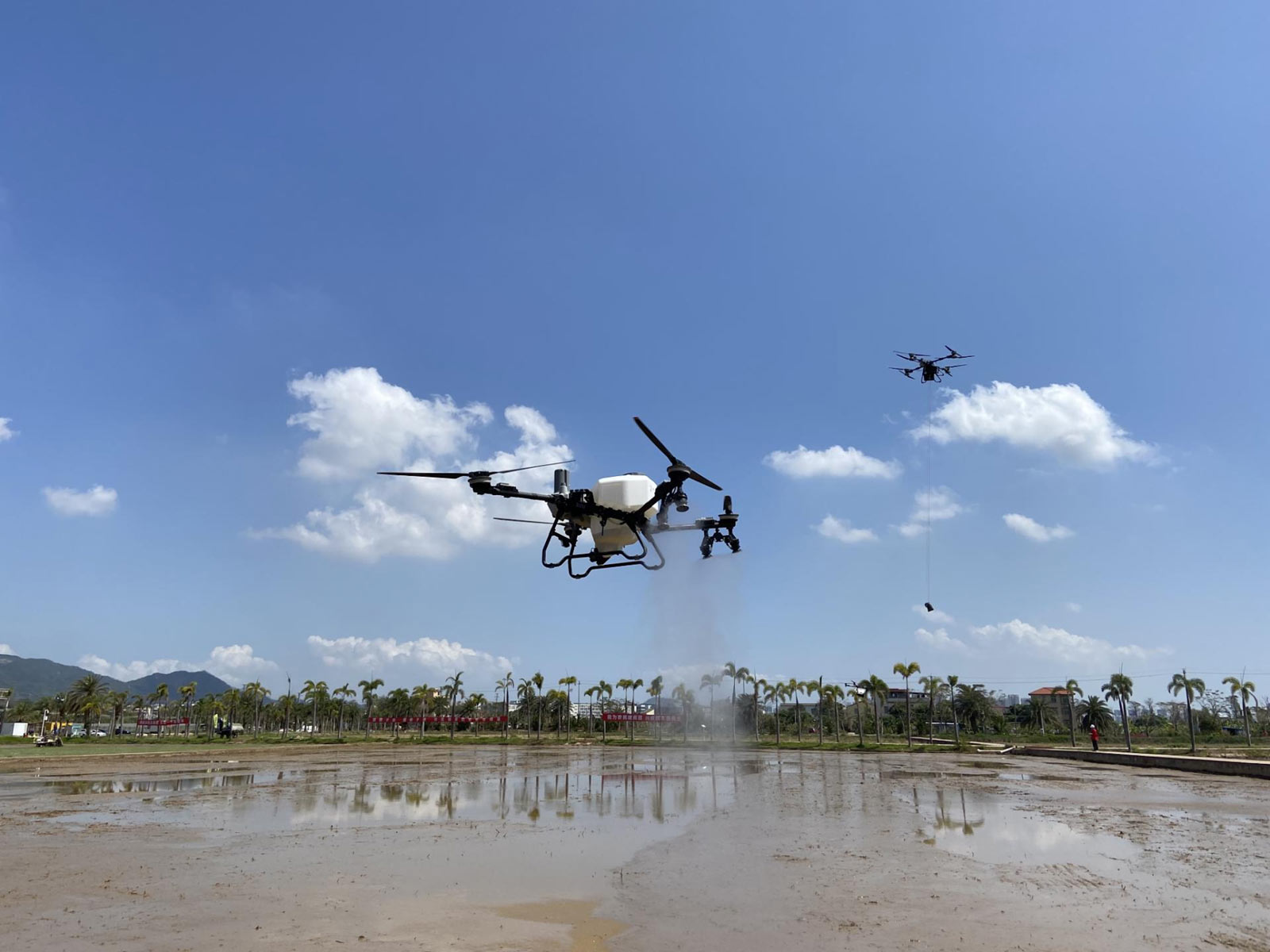
The four propellers begin to spin. A gust of wind presses down the surrounding rice plants as a pulsing rotor-whir fills the air. The drone, carrying its battery and a tank of pesticides, lifts off and stabilises, hovering briefly before angling towards the fields. It accelerates over the paddies, the air beneath it flattening the rice in a shifting ripple. The landscape is a patchwork of bounded fields divided by narrow ridges and irrigation canals fed from a distant reservoir. As it flies, the drone releases a fine mist of pesticides, the downdraft stirring it before it disperses. Moving swiftly, it crosses the field, then banks sharply at the edge and turns back, following the pre-programmed grid visible on the operator’s remote control. Standing at the side of the field, wearing sunglasses and a baseball cap against the sunlight, the operator tracks its movement. The machine repeats this pattern until the spraying is complete or the battery runs low. A few minutes and the field is done.
Chinese video platforms such as Douyin and Bilibili host hundreds, if not thousands, of clips showing similar scenes. Some are spontaneous amateur videos capturing the first encounters with these large flying machines, which can be as wide as a small car and as heavy as a small motorcycle. Others are posted by drone pilots advertising their services, by companies marketing products, or by state media promoting a new rural modernity and technological solutions. They present agricultural drones as cutting-edge and increasingly autonomous, promising to save labour, reduce hazardous work in chemical crop protection, and offset rural labour shortages caused by outmigration. Many industry insiders and scientists describe these drones as revolutionary (see, for instance, Chung 2019; Belton et al. 2025).
I suggest, instead, that they operate within agricultural systems that were built decades earlier. I argue that the recent spread of digital farming technologies, such as agricultural drones, is rooted in the large-scale effort to modernise agriculture during the Mao Zedong era. Although today’s technologies unfold in very different political, economic, and social contexts, they do not mark a break with earlier agricultural systems but recalibrate and extend a longer trajectory of agrarian transformation.
Material Afterlives
My analysis draws on ethnographic fieldwork in a rice-growing village I call Green Water in Anren County, Hunan Province, conducted in the early 2010s. At that time, agricultural drones were only beginning to be marketed, although state initiatives towards mechanisation were already well under way. This research involved participant observation in paddy fields, interactions with villagers, and yearly video interviews with selected families through the early 2020s. In 2024–25, my project team and I carried out exploratory research on agricultural drones, including training with Chinese drones in China and Switzerland alongside farmers, drone pilots, and aspiring operators. I also draw on local gazetteers, statistical yearbooks, drone videos, and Chinese media and industry reports. Together, these sources show how contemporary digital technologies intersect with cultivation systems and industrial farming ideals moulded in the 1960s and 1970s.
To analyse these continuities, I focus on the ‘material afterlives’ (Walton and İlengiz 2022) of the Mao era as they persist in rice fields, seeds, chemicals, farming machinery, and embodied techniques. This perspective foregrounds objects and their material qualities, shifting attention from ruins and waste to how these objects live on. Anthropologists have applied this approach mainly to objects tied to individual lives or ecological processes (de Wolff 2018; Schäfers 2020). I extend it to the remnants of large-scale agrarian political projects that have left lasting imprints on rural environments and agriculture. I further link these well-documented historical projects (Shapiro 2001; Schmalzer 2016; Harrell 2023; Muscolino 2025) to digital technologies. I take up the proposition of Science and Technology Studies scholars that ‘it does not help to imagine the digital in terms of epochal shifts’ (Ruppert et al. 2013: 40). Rather, ‘[t]he lively and productive changes brought by the digital … often turn out to instantiate and reconstitute older practices’ (Ruppert et al. 2013: 40). In this sense, the digital is not something new that simply displaces the old.
Mao-era agrarian modernisation thus persists not only in memories of collectivisation, including the suffering during the famine that accompanied Chairman Mao’s utopian Great Leap Forward industrialisation campaign (1958–61) and the political upheavals of the Cultural Revolution (1966–76) (see, for instance, Manning and Wemheuer 2011). It endures also in terraced hillsides, agricultural infrastructure, and cultivation systems. These material traces form the basis on which contemporary ‘digital agriculture’, the use of digital technologies in farming, operates. Social scientists have largely studied digital agriculture outside historical frames and mainly in the ‘West’ (for instance, Klerkx et al. 2019; for a seminal exception related to China, see Wang 2020)—gaps I address here.
Mao’s Green Revolution
In rural China, the legacy of Maoist agrarian modernisation continues to influence emerging technologies. Earlier agricultural modernisation efforts drew on science and technology, including American cooperation and Chinese scientists trained abroad in the early twentieth century (Stross 1986), as well as Soviet assistance after 1949 (Stavis 1974: 81–87). The Green Revolution of the 1960s and 1970s marked the culmination of state-led modernisation. Closely tied to socialist industrialisation and ‘Mao’s war against nature’ (Shapiro 2001), it sought to transform farming through science, collective organisation, and extensive irrigation and land reclamation.
The Green Revolution unfolded during the Cultural Revolution, when Mao launched a sweeping campaign to remake Chinese society. While red guards destroyed historical and religious sites and many people were denounced as revisionist and killed, agricultural research and technological dissemination accelerated. Collectivisation, formalised with the establishment of the People’s Communes in 1958, brought villages under unified management. Peasants were organised into brigades and production teams—structures through which new technologies spread rapidly. A nationwide research and extension system linked counties, communes, brigades, and teams, sending scientists and technicians to the countryside to promote new crop varieties, cultivation methods, and farming tools (Schmalzer 2016; Li et al. 2009).
The catastrophic famine that followed the Great Leap Forward, in which tens of millions died, heightened the urgency of boosting grain production (Stavis 1974: 98). Local gazetteers from my field site describe agricultural production between 1956 and 1965 as unstable, due to natural disasters, unsuitable crop varieties, and the failed Great Leap (ACGCC 1996: 290). As one villager, Grandpa Zhou (a pseudonym), recalled: ‘That time was very bitter [苦]. We had to eat grass roots, there was so little to eat. There were no pigs or chickens either’ (Interview, 2011, all translations by the author). Grain production thus became a political priority across the People’s Republic of China (PRC)‚ including in Green Water, which was then part of Longshi People’s Commune (ACGCC 1996; Wu 2010).
A central element of the Green Revolution was the introduction of new high-yield crop varieties. These promised greater harvests but required controlled water applications and responded strongly to nitrogen fertilisers. Their success therefore depended on expanded irrigation and chemical inputs. Their short stalks also enabled mechanical processing, laying the groundwork for increased mechanisation (Stavis 1974: 278). Later hybrid rice developments, produced by crossing two rice varieties, amplified these yield gains (Li et al. 2009).
To stabilise grain production, state-led campaigns mobilised villagers to build reservoirs, canals, and drainage systems and to convert low-quality land into arable fields. Slogans such as ‘in agriculture, learn from Dazhai’ (农业学大寨), referring to a model commune in Shanxi Province, urged millions to reshape the landscape through terraces, dams, and irrigation works (Zhao and Woudstra 2007). Irrigated farmland expanded dramatically, officially rising from about 16 million hectares nationwide in 1949 to nearly 69 million hectares by 2024 (China Daily 2022; NBS 2025: 12.1). Between 1949 and 1965 alone, the effective irrigated area doubled (Zhou 2002).
In Anren County, where many fields were designated low-yielding, large construction campaigns in the 1950s organised villagers to dig reservoirs and canals (ACGCC 1996: 295; see Image 2). Showing me the weathered palms of his hands, Grandpa Zhou described how his mother, then in her mid-thirties, worked on a nearby reservoir: ‘My mother dug out the reservoir … They went in groups of two or three … They dug it out with their bare hands!’ (Interview, 2011). By the mid-1970s, additional terraces, canals, and reservoirs had refashioned the landscape and provided the conditions required by the new rice varieties (ACGCC 1996: 295–96). Today, Hunan has the highest number of reservoirs nationwide (NBS 2025: 12.17), reflecting both natural geography and past campaigns.
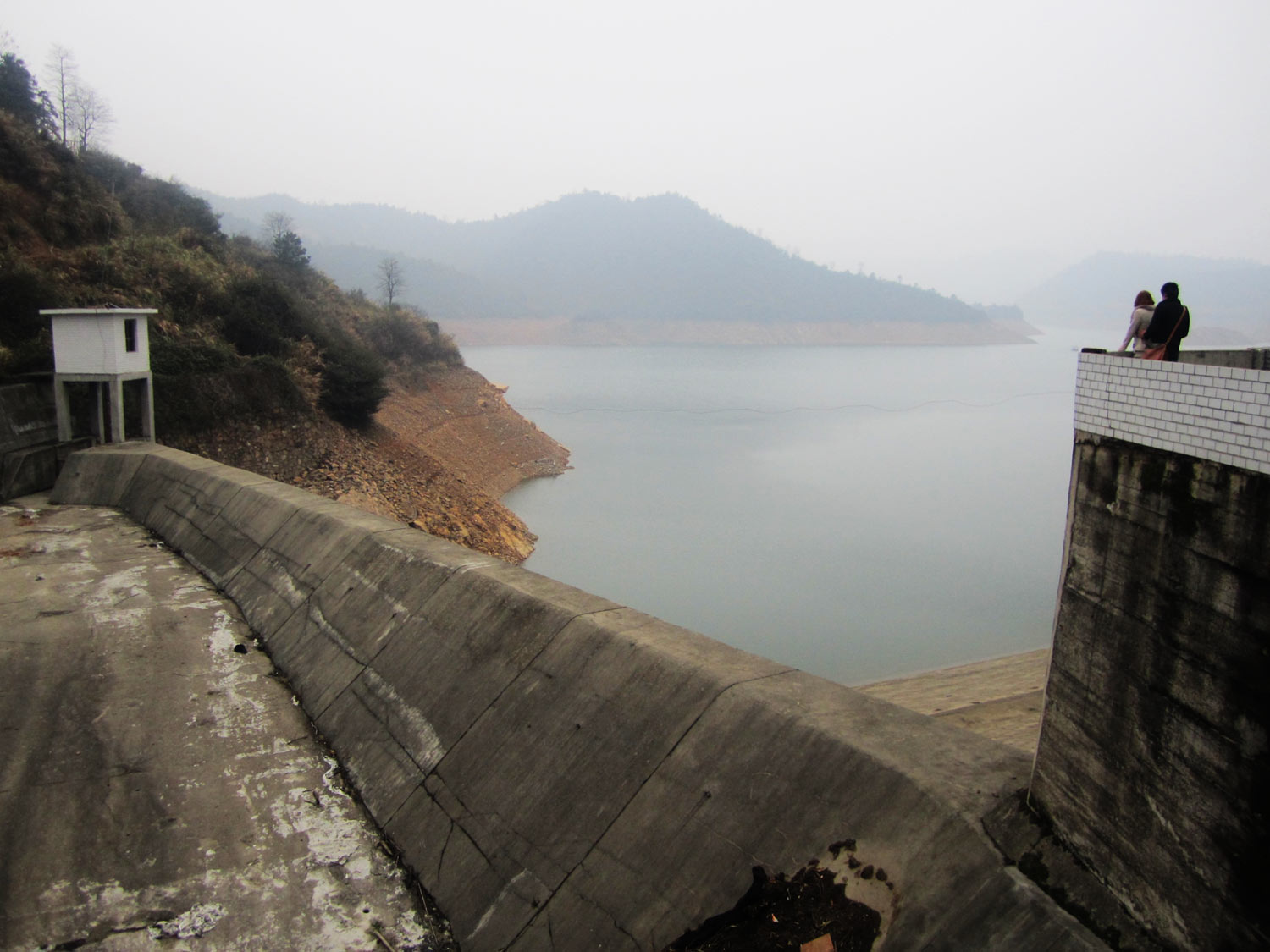
Mao also promoted new agricultural inputs (see Image 3). In 1949, the PRC had almost no chemical fertilisers (Zhou 2002). During the Green Revolution, synthetic fertilisers—primarily nitrogen-based, alongside phosphorus and potassium—and pesticides became central to realising the yield potential of new crop varieties. Their use expanded rapidly. China’s synthetic fertiliser consumption increased roughly 113-fold between 1952 and 1978, and more than 500-fold by 1998 (Zhou 2002). Hunan followed similar patterns (HPBS 1984: 139; NBS Rural Social and Economic Investigation Division 2010: 3.15). Over time, these inputs, alongside industrial and mining pollution, have contaminated an estimated 13 per cent of Hunan’s land (He 2014), including one-quarter of cultivated land with heavy metals (Lei et al. 2024: 174). In some areas, rice has become too toxic to sell, as farmers in northern Hunan told one of my project members in 2024.
The agricultural infrastructure and technologies resulting from these transformations became embedded in everyday work as villagers appropriated them over subsequent decades (Kaufmann 2021). These cultivation systems form the material backdrop against which contemporary digital technologies, including agricultural drones, now operate.
‘Smart Agriculture’
Following Mao’s death in 1976, China’s agricultural production underwent profound institutional changes. Rural reforms dismantled the collective system and introduced the Household Responsibility System, allocating land-use rights to individual households. Simultaneously, large-scale rural–urban migration transformed village life, leaving many communities with ageing populations and fewer available workers (Ye et al. 2017). Almost every household to whom I spoke had one or more members working as migrant labourers.
When Mao came to power, about 80 per cent of the population lived in rural areas, whereas today only 33 per cent is classified as rural (NBS 2025: 2.1). With fewer villagers cultivating grain and more moving to cities, the central government has continued to pursue agricultural modernisation. In recent decades, this has included promoting the use of machinery such as combine harvesters and transplanting machines, which have gradually appeared even in hilly, family-based rice-growing regions such as Green Water (Kaufmann and Tao forthcoming).
Since the late 2010s, policy frameworks have increasingly emphasised digital technologies as part of broader strategies for rural revitalisation and agricultural modernisation. These efforts reflect ambitions to ensure national food security and to position the PRC as a global technological leader and an ‘agricultural power’ (农业强国)—a policy goal under President Xi Jinping (Xinhua 2026). Plans such as the Rural and Agricultural Digitalisation Development Plan (2019–25), the Smart Agriculture Action Plan (2024–28), and the Fourteenth Five-Year Plan (2021–25) promote ‘digital villages’ (数字乡村) and ‘smart agriculture’ (智慧农业) (Rouzi 2022). The Fifteenth Five-Year Plan (2026–30) continues this agenda. It calls for expanding ‘modern agriculture’ (现代农业), raising farm mechanisation rates to more than 80 per cent, advancing smart agriculture, and fostering the ‘low-altitude economy’ (低空经济) (Xinhua 2026)—a policy term covering economic activity involving low-flying technologies such as agricultural drones (for urban contexts, see Yang 2025).
‘Smart agriculture’, a subset of digital agriculture, builds on Mao-era scientific farming (科学种田) ideals and infrastructure, extending their technoscientific ambitions through automation, real-time sensing, and algorithmic decision-making. It encompasses technologies such as driverless tractors, precision irrigation systems, and sensor-based monitoring of soil, weather, crop growth, and pests. These systems analyse large volumes of data to guide operational decisions—for example, when and where to spray pesticides or which weeds to target. They integrate sensors, satellite positioning, machinery, servers, and smartphones and are frequently showcased in state-affiliated media (see, for instance, Zou et al. 2024; Zhong 2025). In practice, however, many remain confined to demonstration settings or large farms, reflecting longstanding modernisation aspirations more than the reality of China’s predominantly small-scale, household-run agriculture (Kaufmann forthcoming).
Agricultural Drones
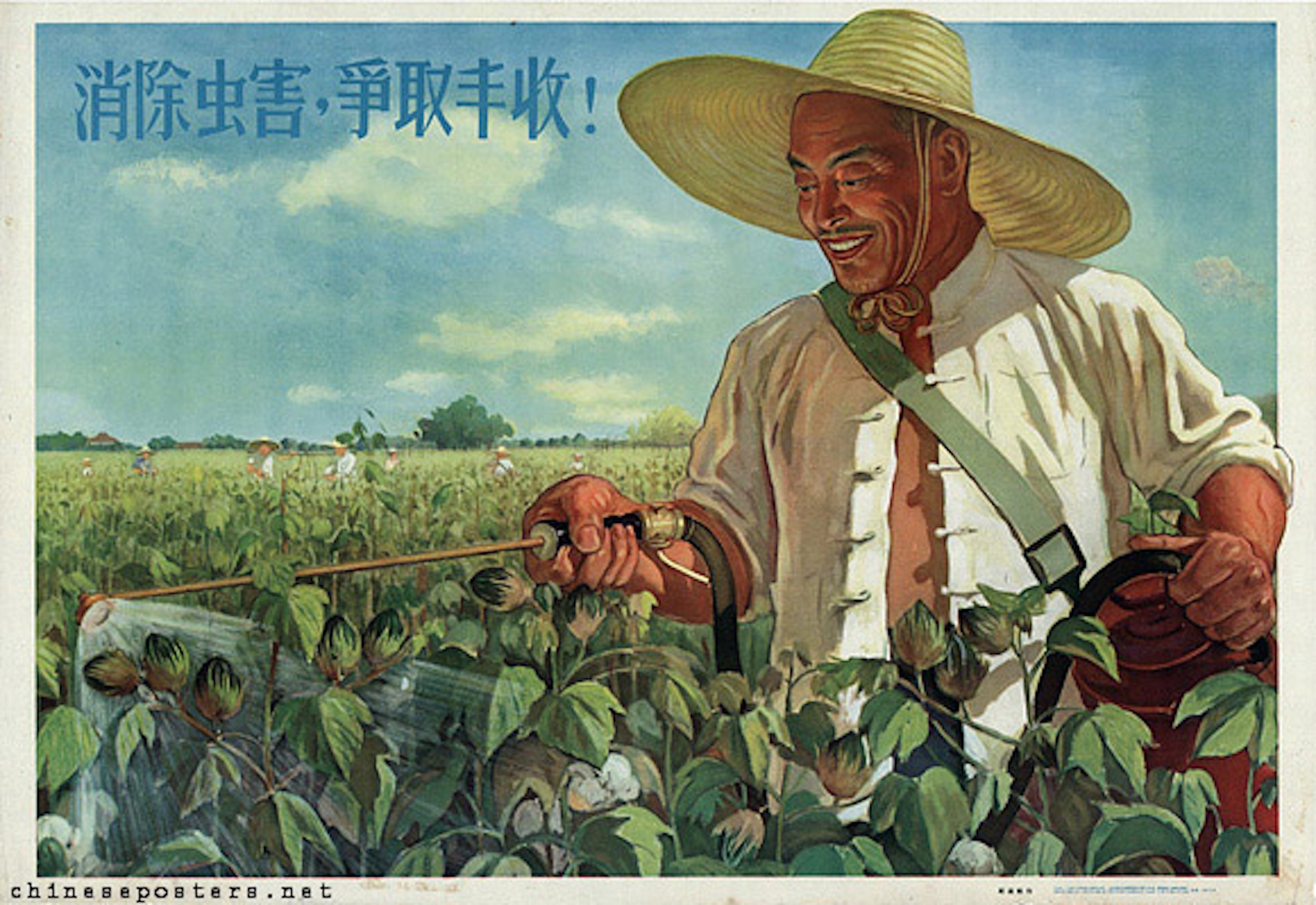
One digital technology that has spread relatively quickly, even in smallholder regions such as Anren County, is agricultural drones (Image 4). Equipped with sensors, onboard computers, and satellite positioning systems, they can spray fertilisers and pesticides, distribute water or seeds, map terrain, and analyse plant growth. Compared with large machines such as self-driving tractors, they are portable and relatively affordable. Nevertheless, despite a nationwide subsidy scheme introduced in 2017 (MARA 2017), drones remain beyond the reach of most rural families. Obtaining a pilot licence can be difficult, especially for older rural residents with limited education. Practical constraints further restrict their use, including hills, electricity poles, cables, and the drones’ short battery life of only a few minutes. Consequently, many households rely on specialised service providers who operate drones for hire (Yvonne 2025; Kaufmann and Tao forthcoming).
In Green Water’s parent township, few operators offer such services. One of them is Mr Kuang (a pseudonym), a former migrant born in the 1970s. After returning from work in Guangdong in 2017, he entered this emerging sector. In 2020, he and six partners purchased two sprayer drones for about RMB40,000 (approximately US$5,850), receiving an RMB8,000 subsidy. He primarily serves large-scale farmers who cultivate multiple plots, often rented from villagers who have migrated. Prices for spraying vary by crop and terrain but are typically around RMB10 yuan per mu (666.67 square metres, roughly one-tenth of a football pitch) (Fan 2021; Kaufmann and Tao forthcoming).
By promoting agricultural drones, service providers such as Kuang reinforce the wider push by technology companies such as DJI and its competitor XAG to enter the agricultural market. Efficiency gains are central to this narrative. As one service team leader quoted in the news portal NetEase explains: ‘Using a drone to spray more than 80 mu of rice fields takes only two hours, whereas using traditional manual methods requires ten people with ten sprayers and might not even be completed in a full day’ (NetEase 2024). The promises of technology developers go even further. In a TV interview, an XAG manager states:
AI [artificial intelligence built into drones] can help farmers make better decisions … [F]armers now don’t need to do any tedious job in the field, they can sit in the house or in the car and control the robot or AI to grow food for us. (New China TV 2021)
Such claims resonate with state-led visions of ecological modernisation. Industry representatives and policymakers often portray drones as a ‘green’ technology that can mitigate the environmental consequences of intensive chemical use. Chemical inputs have been central to raising yields since the Green Revolution (NBS 2025: 12.2). Although the promotion of organic fertilisers, based on centuries of experience (Bray 1984), has continued alongside the push for farm chemicals (Schmalzer 2016), China has become a global leader in chemical fertiliser and pesticide consumption (Wu et al. 2018; Rogers et al. 2023). Responding to soil degradation, the Chinese Government restricted chemical use in 2015, which led to some reductions (NBS 2025: 12.5; FAO 2026). Yet, overall levels remain high, and how to use the country’s scarce water and land resources sustainably and efficiently remains a key question. This has prompted policymakers to turn to digital technologies as a solution. As a science and technology director at the Ministry of Agriculture and Rural Affairs explains: ‘Using 9 per cent of the world’s arable land to feed nearly 20 per cent of the world’s population, [knowing] how to produce more grain [depends on] science and technology’ (Yang 2022). Drones are expected to reduce chemical inputs by spraying more precisely and only where needed, thereby ‘supporting the green development of agriculture’ (MARA 2017).
In everyday practice, however, drone adoption is driven less by environmental concerns than by field size and labour shortages. Labour-saving technologies rooted in the Green Revolution contributed to surplus rural labour, which began to leave the countryside when migration to cities was permitted in the mid-1980s (Kaufmann 2021). Decades of migration have depleted village workforces, while tasks such as manual pesticide spraying, transplanting, and harvesting remain physically demanding. Yet, drone use is uneven. In and around Green Water, where households cultivate on average only 0.05 hectares of paddy land (500 square metres, roughly the size of a small football pitch), manual spraying remains manageable. As the Luo couple (a pseudonym) explained, for example, they felt no need to hire drones (Kaufmann and Tao forthcoming).
Layered Continuities: Beyond the Drone Revolution
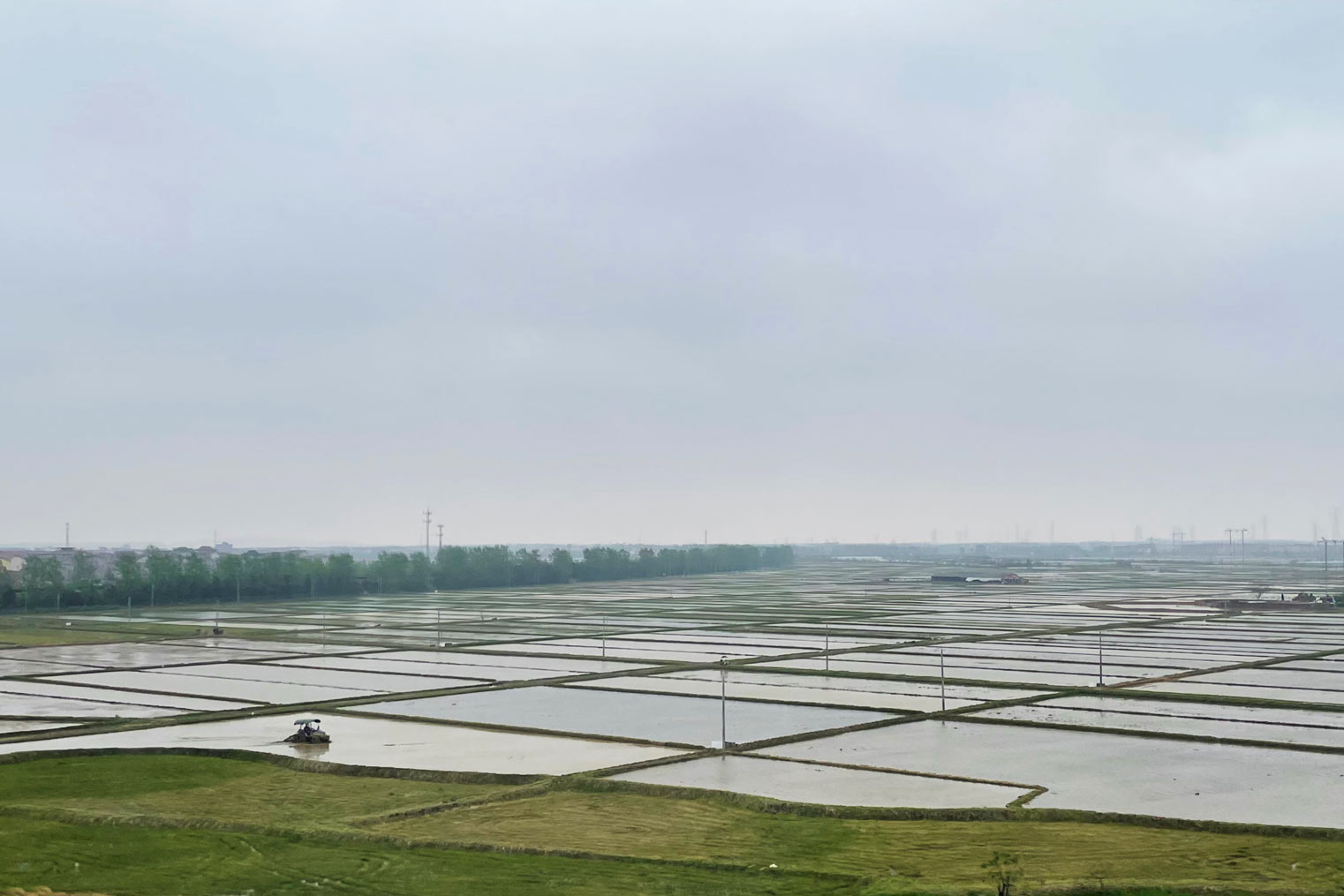
The spread of agricultural drones illustrates how technological change in rural China proceeds through the layering of new technologies onto existing agrarian systems. Drones are integrated into cropping regimes shaped during the Green Revolution, including crop varieties compatible with mechanisation, established practices of chemical use, irrigated paddy landscapes, and field layouts—ideally square and thus easier for pilots to program, as shown in Image 5. Rather than replacing these arrangements, drones modify how inputs are applied. While some farmers continue to use organic plant protection and backpack sprayers, others now distribute agrochemicals from above along pre-programmed flight routes.
These transformations unfold within a rural society markedly different from the collectivised Mao-era countryside. Labour migration, an ageing population, land fragmentation, and the rise of service providers and larger farming units have reconfigured agricultural work. Drone operation introduces new technical skills and actors, such as drone companies and pilots, and shifts authority from embodied, experience-based practices towards digital interfaces and algorithmic optimisation. Yet, earlier forms of knowledge persist and are selectively recombined in practice.
In terms of material afterlives, Mao-era interventions endure as agrarian landscapes, infrastructure, and agronomic logics that continue to shape how digital technologies are used. Far from following a linear, predetermined technological trajectory, drones extend a longer trajectory of state-led aspirations for agricultural industrialisation and modernisation, even as they respond to present-day challenges such as labour shortages and environmental degradation. Whether they can fulfil policy and industry promises, particularly for smallholder farms, remains uncertain.
More generally, a material afterlives approach shows how technological change unfolds through layering on earlier technological practices, rather than replacing them. Contemporary ‘smart agriculture’ in China therefore appears not as a rupture or a ‘drone revolution’ (see, for instance, Chung 2019; Belton et al. 2025), but as a reconfiguration of past projects, in which the material legacies of Maoist agrarian modernity continue to structure the digital present and future.
Acknowledgements
This research was funded by the Swiss National Science Foundation (Grant number 216361). An initial version of this paper was presented at the ‘Modernising Rural China’ workshop organised by Elena Meyer-Clement, Jesper Zeuthen, and René Trappel in 2022 at the Molslaboratoriet in Ebeltoft, Denmark. I would like to thank the organisers, the discussant of my paper, Mikkel Bunkenborg, and the participants, including Jørgen Delman, John Donaldson, Kristen Looney, and the other attendees, for their insightful feedback. Thank you also to Ivan Franceschini and Jan Borrie for editing and proofreading. I am grateful to the ‘Digital Agriculture’ project team, including Ruishi Zhen, for sharing her insights and allowing me to use her photos, and Han Tao, for the valuable feedback and exchange, including a follow-up visit to Green Water in 2024. I am deeply indebted to the people in Green Water for hosting us and sharing their time and insights.
Featured Image: A drone taking off to spray chemical compound fertilisers from the stacked bags below, reflecting input-intensive farming systems rooted in the Green Revolution. Photo by Ruishi Zhen, 2026.
References
Anren County Gazetteer Compilation Committee 安仁县志编纂委员会 (ACGCC). 1996. 安仁县志 [Anren County Gazetteer]. Beijing: Zhongguo Shehui Publishing.
Anren County Industrial Gazetteer Compilation Committee 安仁县工业志编纂委员 (ACIGCC). 1993. 安仁县工业志 [Anren County Industrial Gazetteer]. Hefei, China: Huangshan Publishing.
Belton, Ben, Leo Baldiga, Scott Justice, Bart Minten, Sudha Narayanan, and Thomas Reardon. 2025. ‘Can the Global Drone Revolution Make Agriculture More Sustainable?’ Science 389(6764): 972–76.
Bray, Francesca. 1984. Agriculture. Volume 6: Biology and Biological Technology. Part 2: Agriculture. Edited by Joseph Needham. New York, NY: Cambridge University Press.
China Daily. 2022. ‘Growth in Irrigated Farmland Secures Food.’ 14 November. Beijing: State Council of the People’s Republic of China. english.www.gov.cn/statecouncil/ministries/202211/14/content_WS6371a3c6c6d0a757729e3183.html.
Chung, Jessica. 2019. China’s Agriculture Drone Revolution: Disruption in the Agriculture Ecosystem. Report, April. Hong Kong: Center of Excellence for Commercial Drone Adoption, Ipsos Business Consulting. www.ipsos.com/sites/default/files/ct/publication/documents/2020-10/china-agriculture-drones.pdf.
de Wolff, Kim. 2018. ‘Materiality.’ Fieldsights, 29 March. www.culanth.org/fieldsights/materiality.
Fan, Feifei. 2021. ‘Toward Smarter Agriculture.’ China Daily, 5 January. www.chinadailyhk.com/article/154086#Toward-smarter-agriculture.
Food and Agriculture Organization of the United Nations (FAO). 2026. ‘Pesticides Use.’ FAOSTAT. [Online]. Rome: FAO. www.fao.org/faostat/en/#data/RP.
Harrell, Stevan. 2023. An Ecological History of Modern China. Seattle, WA: University of Washington Press.
He, Guangwei. 2014. ‘Special Report: The Legacy of Hunan’s Polluted Soils.’ Dialogue Earth, 7 July. dialogue.earth/en/pollution/7076-special-report-the-legacy-of-hunan-s-polluted-soils.
Hunan Provincial Bureau of Statistics (HPBS). 1984. 1982湖南省统计年鉴 [Hunan Province Statistical Yearbook 1982]. Changsha, China: Hunan Renmin Publishing.
Kaufmann, Lena. 2021. Rural–Urban Migration and Agro-Technological Change in Post-Reform China. Amsterdam: Amsterdam University Press.
Kaufmann, Lena. Forthcoming. ‘Transforming Labour in Rural China: The Complex Dynamics of Rural Policy, Technologies and Migration.’ In Edward Elgar Handbook of Chinese Labour Studies, edited by Chris K.C. Chan and Eric Florence. Cheltenham, UK: Edward Elgar.
Kaufmann, Lena, and Han Tao. Forthcoming. ‘New Technologies, New Actors: Socio-Technical Dynamics in China’s Family Farming.’ In Remaking Rural China: Political Economy of Rural Transition Under Xi Jinping, edited by John Donaldson, Kristen Looney, Elena Meyer-Clement, and Jesper Zeuthen. Ithaca, NY: Cornell University Press.
Klerkx, Laurens, Emma Jakku, and Pierre Labarthe. 2019. ‘A Review of Social Science on Digital Agriculture, Smart Farming and Agriculture 4.0: New Contributions and a Future Research Agenda.’ NJAS—Wageningen Journal of Life Sciences 90–91(December): 1–16.
Lei, Ming 雷鸣, Zhou Yimin 周一敏, Huang Darui 黄大睿, Huang Yayuan 黄雅媛, Wang Xinqi 王薪琪, Li Bingyu 李冰玉, Du Huihui 杜辉辉, Liu Xiaoli 刘孝利, and Tie Boqing 铁柏清. 2024. ‘湖南耕地土壤和稻米重金属污染防控实践与思考 [Prevention and Control of Heavy Metal Contamination in Cropland and in Commercial Rice in Hunan Province: Current Status and Practical Considerations].’ 地学前缘 [Earth Science Frontiers] 31(2): 173–82.
Li, Jiming, Yeyun Xin, and Longping Yuan. 2009. Hybrid Rice Technology Development: Ensuring China’s Food Security. IFPRI Discussion Paper 918. Washington, DC: International Food Policy Research Institute. hdl.handle.net/10568/161878.
Manning, Kimberley Ens, and Felix Wemheuer, eds. 2011. Eating Bitterness: New Perspectives on China’s Great Leap Forward and Famine. Vancouver, BC: UBC Press.
Ministry of Agriculture and Rural Affairs (MARA). 2017. ‘农业部、财政部、民航局联合印发通知实施农机购置补贴引导植保无人飞机规范应用试点 [The Ministry of Agriculture, the Ministry of Finance, and the Civil Aviation Administration Jointly Issued a Notice to Implement Agricultural Machinery Purchase Subsidies to Guide Pilot Programs for the Standardised Application of Plant Protection Drones].’ Media release, 18 September. Beijing: Ministry of Agriculture and Rural Affairs of the People’s Republic of China. njhs.moa.gov.cn/zcjd1/201904/t20190428_6244481.htm.
Muscolino, Micah S. 2025. Remaking the Earth, Exhausting the People: The Burden of Conservation in Modern China. Seattle, WA: University of Washington Press.
National Bureau of Statistics of China (NBS). 2025. 2025中国统计年鉴 [China Statistical Yearbook 2025]. Beijing: China Statistics Press.
National Bureau of Statistics of China (NBS) Rural Social and Economic Investigation Division. 2010. 2010中国农村统计 年鉴 [2010 Statistical Yearbook of the Chinese Countryside]. Beijing: China Statistics Press.
NetEase. 2024. ‘高大上! 南安用“无人机”喷洒农药, 省时又省力 [High-Tech! Nan’an is Using Drones to Spray Pesticides, Saving Both Time and Labour].’ NetEase, 22 June. www.163.com/dy/article/J5A56BVA0537APBL.html.
New China TV. 2021. ‘Chinese Drones Facilitate Smart Farming Worldwide.’ YouTube, 26 August. [2:18 mins]. www.youtube.com/watch?v=anZ81F2Mps4.
Rogers, Sarah, Zoe Ju-Han Wang, and Jun He. 2023. ‘Farmers’ Practices and the Political Ecology of Agrochemicals in Rural China.’ Geoforum 141: 103751.
Rouzi, Aihemaitijiang. 2022. Chinese ‘Digital Village’ Initiatives and the Digitalization of Agriculture. Beijing: Sino-German Agricultural Center.
Ruppert, Evelyn, John Law, and Mike Savage. 2013. ‘Reassembling Social Science Methods: The Challenge of Digital Devices.’ Theory, Culture & Society 30(4): 22–46.
Schäfers, Marlene. 2020. ‘Afterlives: An Introduction.’ Allegra Lab, May. allegralaboratory.net/afterlives-introduction.
Schmalzer, Sigrid. 2016. Red Revolution, Green Revolution: Scientific Farming in Socialist China. Chicago, IL: University of Chicago Press.
Shapiro, Judith. 2001. Mao’s War Against Nature: Politics and the Environment in Revolutionary China. Cambridge, UK: Cambridge University Press.
Stavis, Benedict. 1974. Making Green Revolution: The Politics of Agricultural Development in China. Ithaca, NY: Rural Development Committee, Cornell University.
Stross, Randal E. 1986. The Stubborn Earth: American Agriculturalists on Chinese Soil, 1898–1937. Berkeley, CA: University of California Press.
Walton, Jeremy F., and Çiçek İlengiz. 2022. ‘Introduction: Afterlives in Objects.’ Journal of Material Culture 27(4): 347–58.
Wang, Xiaowei. 2020. Blockchain Chicken Farm: And Other Stories of Tech in China’s Countryside. New York, NY: Farrar, Straus & Giroux.
Wu, Chunyuan 伍春元, ed. 2010. 益相史话 [Historical Narrative of Yixiang]. Beijing: Jiuzhou Press.
Wu, Yiyun, Xican Xi, Xin Tang, Deming Luo, Baojing Gu, Shu Kee Lam, Peter M. Vitousek, and Deli Chen. 2018. ‘Policy Distortions, Farm Size, and the Overuse of Agricultural Chemicals in China.’ Proceedings of the National Academy of Sciences of the United States of America 115(27): 7010–15.
Xinhua. 2026. ‘两会受权发布丨中华人民共和国国民经济和社会发展第十五个五年规划纲要 [Authorised for Release by the Two Sessions: Outline of the People’s Republic of China’s Fifteenth Five‑Year Plan for National Economic and Social Development].’ News.cn, 13 March. www.news.cn/politics/20260313/085af5de5a4b4268aa7d87d90817df2f/c.html.
Yang, Fan. 2025. ‘City in the Sky: Drones, Shenzhen, and the “Low-Altitude Economy”.’ Made in China Journal 10(1): 38–45.
Yang, Shu 杨舒. 2022. ‘“十八连丰”背后的科技底气 [The Confidence and Vigour of Science and Technology behind the “Eighteen Consecutive Bumper Crops”].’ 光明日报 [Guangming Daily], 13 January. www.news.cn/2022-01/13/c_1128257427.htm.
Ye, Jingzhong, Congzhi He, Juan Liu, Weijing Wang, and Shidong Chen. 2017. ‘Left-Behind Elderly: Shouldering a Disproportionate Share of Production and Reproduction in Supporting China’s Industrial Development.’ The Journal of Peasant Studies 44(5): 971–99.
Yvonne. 2025. ‘当无人机成为新农具: 谁在定义“科学种地” [When Drones Become New Farming Tools: Who Defines “Scientific Farming”]?’ FoodThink, 3 December. https://foodthink.cn/当无人机成为新农具:谁在定义科学种地?.
Zhao, Jijun, and Jan Woudstra. 2007. ‘“In Agriculture, Learn from Dazhai”: Mao Zedong’s Revolutionary Model Village and the Battle against Nature.’ Landscape Research 32(2): 171–205.
Zhong, Jingwen 钟经文. 2025. ‘构建AI智慧农业系统 助力乡村产业振兴可持续发展 [Building an AI-Based Smart Agriculture System to Help Rural Industries Revitalise Sustainable Development].’ China Daily, 18 December. tech.chinadaily.com.cn/a/202512/18/WS6943beeda310942cc49975fb.html.
Zhou, Yinghua. 2002. ‘Report on China’s Development and Investment in Land and Water.’ In Investment in Land and Water. Proceedings of the Regional Consultation, Bangkok, Thailand, 3–5 October 2001. Bangkok: Food and Agriculture Organization of the United Nations. www.fao.org/4/ac623e/ac623e0d.htm.
Zou, Shuo 邹硕, Zhu Youfang 朱友芳, Gu Jin 辜晋, and Fan Luo 樊洛. 2024. ‘湖南湘乡: 科技赋能田间管理 助力粮食增收 [Hunan Xiangxiang: Technology Empowers Field Management and Supports Increased Grain Yields].’ China Daily, 27 May. cn.chinadaily.com.cn/a/202405/27/WS665452c4a3109f7860ddfab1.html.
The post Agricultural Drones: Material Afterlives of Mao’s Green Revolution appeared first on Made in China Journal.