Algeria overtakes Morocco as irregular migration to Spain shifts across North Africa
Algeria has overtaken Morocco as the leading country of origin for irregular migrants reaching Spain, marking a shift in the migration pattern across North Africa even as Morocco recently experienced one of the largest mass crossings into Spanish territory.
 Black News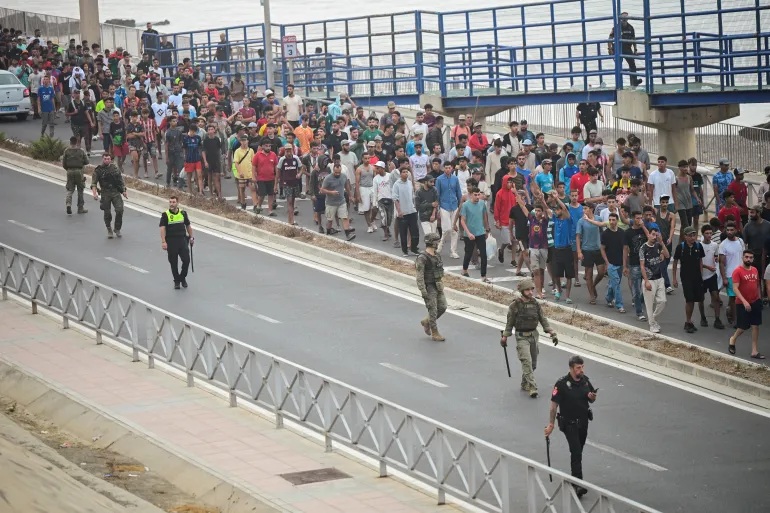


Algeria has overtaken Morocco as the leading country of origin for irregular migrants reaching Spain, marking a shift in the migration pattern across North Africa even as Morocco recently experienced one of the largest mass crossings into Spanish territory.
- Algeria has overtaken Morocco as the main country of origin for irregular migrants arriving in Spain.
- Morocco, despite a recent mass crossing into Ceuta, accounted for only 22% of irregular arrivals to Spain in the same period.
- The IOM data highlights a shift, with Algeria now playing a leading role in maritime migration to Spain
- Algerian migration is increasingly spread along Spain's Mediterranean coast, making crossings more difficult to intercept and control.
Data released by the International Organization for Migration (IOM) on August 12 showed that Algerian nationals accounted for 42% of the 5,647 arrivals recorded in Spain between January and April 2026, compared with 22% for Moroccans.
The figures point to a growing role for Algeria in irregular migration to Spain, with the shift becoming apparent from 2025 after Morocco had historically been the dominant source along the Western Mediterranean route.
The latest figures come shortly after an extraordinary migration surge at Ceuta, Spain's North African enclave bordering Morocco.
DON'T MISS THIS: Up to 9,000 migrants remain in Spain’s African enclave after 72,000 crossed from Morocco
On July 30 and 31, more than 50,000 people crossed into Ceuta from Morocco in a mass movement that overwhelmed the territory's border controls.
At least 57 people were confirmed dead, while Spain said tens of thousands subsequently returned voluntarily to Morocco.
Algeria's maritime route contrasts with Morocco's border pressure
The episode was largely driven by Moroccan nationals and involved people swimming around the border barrier or crossing by land. It generated intense political pressure on Madrid and Rabat and prompted Spain to reinforce security around Ceuta.
The incident, however, does not necessarily contradict the IOM data showing Algeria as the leading nationality among irregular arrivals in Spain.
The Ceuta episode was an exceptional, concentrated surge at one border crossing, while the IOM figures cover arrivals through Spain's wider irregular migration routes. Most of those who entered Ceuta also returned to Morocco, meaning the event did not translate directly into permanent arrivals on mainland Spain.
Morocco's traditional land route therefore continues to generate substantial episodic pressure, while Algeria has emerged as a more important source of sustained maritime arrivals.
According to the IOM data, Algerian departures are increasingly dispersed along Spain's Mediterranean coastline, including the Balearic Islands and the provinces of Almería, Murcia and Alicante.
The pattern makes the crossings harder to contain, as smuggling networks can move departures between different coastal locations and take advantage of favourable weather conditions.
DON'T MISS THIS: Spanish North African city of Ceuta calls for migrant detention as mass influx puts Spain under pressure
The data also points to a decline in Algerian maritime interceptions. Algerian authorities recorded 1,002 interception operations between January and April, a 37% year-on-year decline.
The changing routes also reflect the different relationships Spain maintains with its two North African neighbours.
Spain has deepened migration and security cooperation with Morocco in recent years, helping Madrid manage pressure around Ceuta and Melilla and the wider Western Mediterranean route. The recent Ceuta crisis showed, however, that even extensive cooperation has not eliminated the possibility of sudden mass movements.
Algeria's emergence as the leading nationality among recorded irregular arrivals creates a different challenge for Spain, particularly because maritime departures can occur across a broader geographical area.