An estimated 200 Russian fighters attacked in Mali
Soldiers under the Russian paramilitary Africa Corps in Mali suffered an attack in the northern part of the West African country, according to three security sources and a spokesperson for the armed group.
 Black News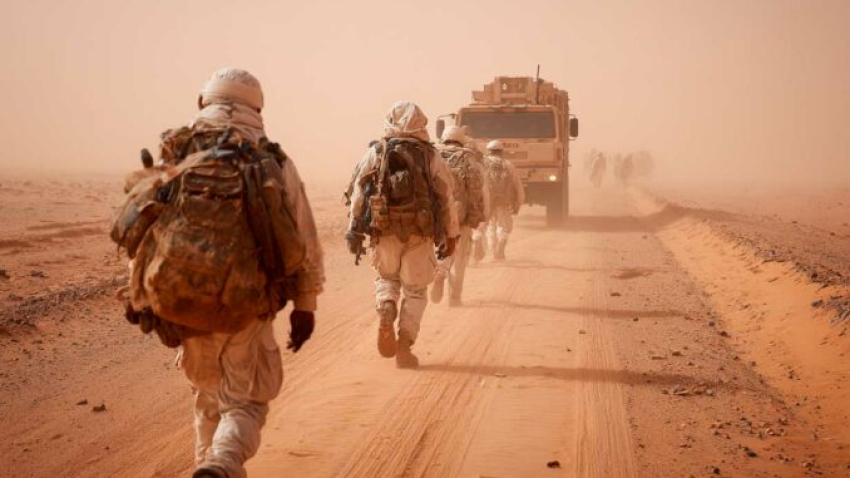
![200 Russian fighters attacked in Mali [Crédit Photo : Avion chasse]](https://ocdn.eu/pulscms/MDA_/5f6a2ab09f8b99b63a44fe2934d048e0.jpg)
Soldiers under the Russian paramilitary Africa Corps in Mali suffered an attack in the northern part of the West African country, according to three security sources and a spokesperson for the armed group.
- Malian fighters cooperating with Russia's Africa Corps suffered an attack in northern Mali, targeting a convoy of over 200 Russians and 100 Malian soldiers.
- The attackers remain unidentified, but similar incidents last week were carried out by the al-Qaeda affiliate JNIM and the Tuareg-led Azawad Liberation Front (FLA).
- Russia's Africa Corps has gradually replaced Wagner as Moscow's main military force in Africa and has formalized military collaboration with Mali.
- Recent months saw Russian instructors providing advanced training for Malian airborne troops, reflecting Russia's growing influence among Mali, Burkina Faso, and Niger.
According to information provided by one of the sources, the targeted individuals were part of a convoy consisting of approximately 200 Russians and 100 Malian soldiers.
While the assailants have yet to be identified, the sources revealed that the convoy was headed for the northern town of Anefis, where fighting has persisted since then.
This is hardly the first such attack, as a similar assault was reported barely a week ago, as seen on Reuters.
Unlike the recent assault, where the attackers are still unknown, the attack last week was orchestrated by the Al Qaeda affiliate Jama'at Nusrat al-Islam wal Muslimin (JNIM) and the Tuareg-led rebel group the Azawad Liberation Front (FLA).
These groups were also responsible for coordinated attacks at an airport in the capital, Bamako, and killed the defence minister.
Russia's Africa Corps, which reports to the Russian Ministry of Defense, has progressively superseded Wagner as Moscow's primary security force on the continent.
In Mali, this move has formalized Russian military assistance while providing Bamako with a partner eager to give training, weapons, and political support.
Mali and Russia's recent military co-ordination
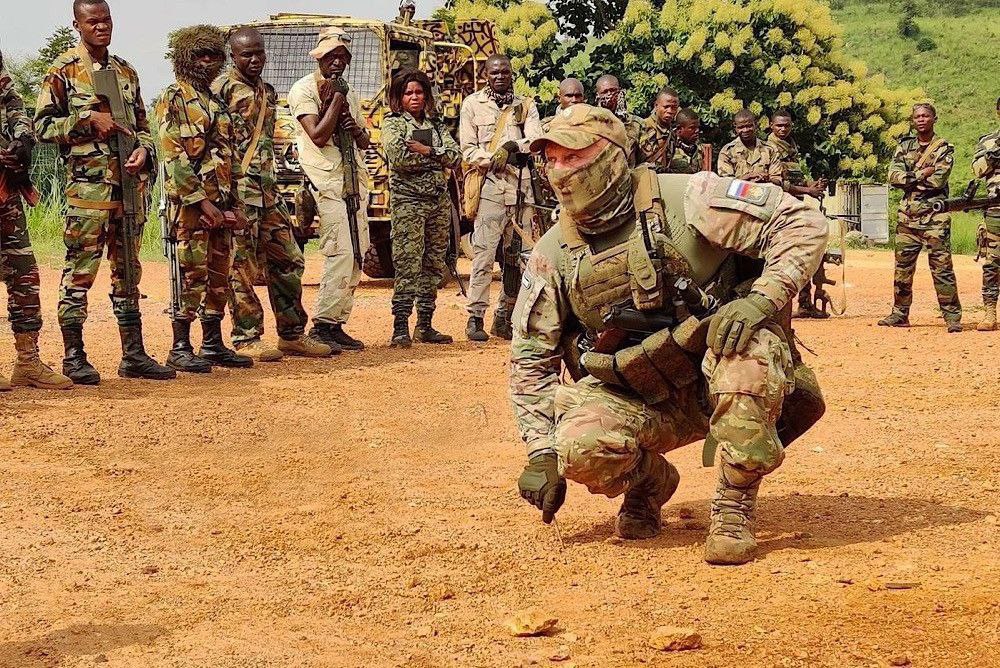
In June, it was reported that Russia bolstered its military cooperation with Mali after instructors linked to Moscow trained more than 20 airborne troops using a Russian-marked Mi-8AMTSh helicopter.
At the time, Malian state media broadcast footage of more than 20 troops from the 33rd Airborne Regiment doing parachute training at Bamako's international airport, which also serves as Mali's primary air base.
According to Janes, the drill used Russian D-6 Series 4 parachutes and a Russian-branded Mi-8AMTSh transport helicopter.
In a wider perspective, the training is a reflection of Russia's efforts to expand its influence throughout the Alliance of Sahel States, which is made up of Mali, Burkina Faso, and Niger after their military-led governments broke away from France and drew closer to Moscow.
Mali places a bounty on jihadist leaders
Earlier in the same month, a multimillion-dollar reward was placed on some of the most sought-after terrorist commanders in the Sahel by Mali's military-led government, highlighting the mounting strain on authorities as armed groups step up their attacks around the nation.
The government offered a reward of 2 billion CFA francs ($3.55 million) for information leading to the capture, arrest, or neutralization of Iyad Ag Ghaly, the jihadist leader who leads Jama'at Nusrat al-Islam wal-Muslimin (JNIM), al-Qaeda's Sahelian affiliate, in a statement signed by Security and Civil Protection Minister Major General Daoud Aly Mohammedine.
Several other well-known militants, such as Amadou Koufa, a crucial JNIM commander, and Alghabass Ag Intalla, a well-known Tuareg separatist leader suspected of taking part in recent assaults against Mali, were also given smaller incentives.