Joe James: “I will never be absent in my children’s lives because I know it doesn’t feel nice”
Hard Feelings — As the silky MC prepares to release his debut album ‘The Ends Never Ends’, he joins our column on fatherhood and masculinity to discuss leaving his childhood home at 16, the manosphere and his risk-embracing approach to life.
 Black News
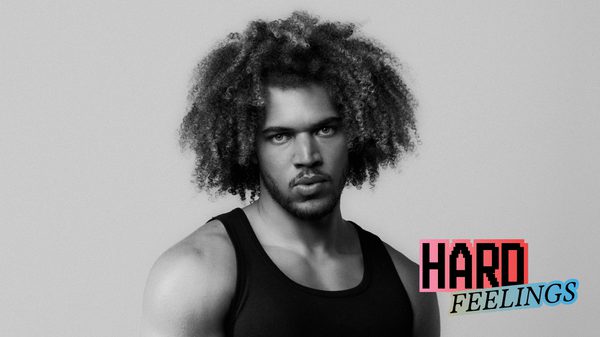
Hard Feelings — As the silky MC prepares to release his debut album ‘The Ends Never Ends’, he joins our column on fatherhood and masculinity to discuss leaving his childhood home at 16, the manosphere and his risk-embracing approach to life.
“Wow, that’s a beautiful pebble… wait, who drew on it?” Joe James asks his eldest daughter, who’s been foraging at the bottom of the family garden. She’s presented us with a round, smooth stone emblazoned with a rainbow heart. “I think the fairies did that, you know,” he concludes with the certainty of a dad who believes in magic. There’s a tent on the lawn where Joe says they’ll spend summer nights to prepare for the camping holidays he’s planning. She’ll turn three soon. His youngest daughter, still a babe-in-arms, babbles away joyfully in the house with her mummy.
Joe is a grime kid with a bluesman’s soul, who raps about love and loss over mellow soundscapes that glow like a bruised sunset. I first interviewed him in August, 2024, in Southend-on-Sea, and we’ve stayed in touch ever since. Then, we walked down his hometown’s high street and sat on the seawall as memories from his troubled past ebbed and flowed. He told me about the long awaited debut album he’d been meticulously crafting in the studio with live instrumentation from the likes of Micha Cooper and Venna. That album – The Ends Never Ends – is finally complete. It’s a deeply personal record; Joe pushes his writing even further into vulnerability, meditating on family, trauma, masculinity and grief with fearless clarity.
Today, before we retreat to his garden in a leafy London suburb, Joe takes me to a charity shop and chooses a few books for me to take home to my daughter with the excitement of a kid in a sweet shop. Once home, he fires up the barbecue and grills burgers while his eldest daughter bounces happily on a mini trampoline. Bathed in sunlight, we reflect together on some of the album’s themes, learning gentleness, breaking cycles and fatherhood.
Normally I’d ask what’s your earliest memory of your dad, but, I know he left when you were a baby. As it’s your mum’s voice who raises the curtain on your album, what’s your earliest memory of her?
At night time my mum would come into my room and rub or scratch my back until I fell asleep, otherwise I wouldn’t go to sleep. I can remember the house I was in when she would do that. That was in Shoebury, so I would’ve been two, but I remember it vividly.
I have a memory of my first stepdad, Mike, too. He was a biker, he had a Harley. I remember his motorbike and the leathers. He was a graphic designer, or something like that. He used to make t-shirts for me on his computer, with all the different Pokémon on, or whatever movie I was into. I remember he made me a Space Jam t-shirt with all the Monstars on it.
What qualities from your mum did you inherit?
I learned morals and integrity from my mum, definitely. My mum is very determined, she never gives up on anything, ever. She’s relentless to the point where she’d rather die than quit on something. These are seen as manly, masculine things but I learned these things from my mum. I come from a family of women.
My mum also told me I could do anything. She never put any limits on me, but she was very humbling at the same time. If she felt you were being too bigheaded, she’d ground you very quickly. If I did good at football and boasted about it too much, she’d tell me to be humble with it. That’s another good value I learnt from her.
I’ve always appreciated that there’s a balance in your music between ruggedness and something softer. Where do you think that comes from?
Well, the biggest father figure in my life was probably my uncle Pete. He’s very soft and passive. He did karate and played rugby but he’s one of those people who never wants an altercation, ever. I learned from him in some ways. Because in my own way I’m very non-confrontational. I’m ok to have a confrontation if it has to go there, and I’m not scared of it. But I’m not an aggressor. The main male role model in my life was like that, too. He was not an aggressor, ever. I learned my gentleness from him.
My dad was very tactile, because Armenian culture dictates that. But I can’t honestly say I learned gentleness from him. Other than plenty of happiness, the emotion he expressed openly was anger. He was never physically abusive, but he would get so visibly angry.
That’s what my stepdad was like [not Mike], but he was physical as well. I didn’t inherit those traits from him, any of that stuff. You do learn some things from your parents, but certain things you choose not to learn. Sometimes we mimic our parents’ behaviour. It’s the oldest council estate story: the parents are abusive so the kids end up as bullies and treat their kids in the same way. But a lot of the time it’s the opposite. You can perpetuate your past experiences with your parents or you can use them as an example of what you don’t want to be. For example, my father was absent in my life. I will never be absent in my children’s lives because I know it doesn’t feel nice, innit. It’s as simple as that for me.

“All that manosphere stuff encourages isolation and stoicism. It’s ‘make money, make money’. But when everything is stripped away, where is your mind actually at? Are you naturally a nice, pleasant person? Do you wake up happy?”
When I heard ‘Back Together’ for the first time, it made me cry. That song describes the abandonment and abuse you experienced as a child, which led to you leaving home when you were 16. I wonder how you reflect on that now?
My mum and stepfather had just split up, and I’d already felt unsafe and unhappy in that environment. Me and my mum weren’t seeing eye to eye. Whether or not she said the words, “you need to leave,” as a 16-year-old kid I felt that house wasn’t a safe, happy environment for me to live in. I would never create an environment for my children that they’re not comfortable living in.
In retrospect it [the experiences with his stepfather] definitely traumatised me in some ways. I was always worried about being in trouble. I told you before, when my stepdad’s car would pull up on the drive I’d literally feel sick. I’d be playing my game and be like, “This guy’s gonna have a problem with something.” If he’d just left to go to work, I’d be gassed because he was gone for a few hours. You shouldn’t be feeling like that about someone who lives in your home.
But to give a positive I took from those negative experiences is where I felt I was so governed by my stepdad and felt like my freedom was taken away from me for the majority of my childhood, now I go the complete opposite way. I don’t really let anyone tell me what to do, which has worked to my advantage sometimes because it comes with a certain fearlessness. I can do whatever I want. It can lead me to take a lot of risks, but risks come with benefits.
Your music has always been coloured by love. On ‘Papercuts’, which is about the cost of the paper chase, you say, “until you got real love, no man is whole”. Tell me a bit more about that. Where does that love come from?
When I say that, I mean family. Or any real love. Until you have something to pour your love into, what’s everything even for? I only like making money to share it with people I love. Until you have people to share things with, and share love with, I feel like no matter what you’re searching for, you’re gonna feel empty.
I’ve got a lyric where I say: “I love money like middle-aged women love Debenhams,” [laughs]. Bro, we’re all guilty of it [chasing money] sometimes. But what do you want it for? Is it to share? Is it to do good things with? There’s nothing wrong with wanting nice things but there’s no possession I have that could be taken away from me and I’d be upset about it.
It’s a timely song because young boys and men who are enticed by the manosphere are told that money and material things define their worth. When all that is stripped away, where do we find our worth?
In how you treat people, and how you treat yourself, how clean your heart is, how clean your soul is. All that manosphere stuff encourages isolation and stoicism. It’s ‘make money, make money’. But when everything is stripped away, where is your mind actually at? Are you naturally a nice, pleasant person? Do you wake up happy? Do you want to do nice things for people without even the thought of receiving anything in return? If the answer is no, maybe work on yourself for a bit instead of falling into that space. They [manosphere influencers] say, “If you’re not on what we’re on, you’re a weak man.” I don’t rate them man there, nah. I’m not on anything that’s not about spreading love. I’m interested in things rooted in love. Anything else outside of that, I don’t really care about, bro.
The album’s title The Ends Never Ends really resonates with me. I moved back to Edmonton for a year with my missus and daughter, and was struck by how troubled I felt when I was there. What are the implications of the ends never ending?
It’s the perpetual cycle. No matter what you’ve achieved, if you’re from where we’re from, there are certain things that ground you back to a place. And that place you’re grounded in is not always a good place. Like, I might go and link someone who I haven’t seen in years, just to check how they are. And they’re on a completely different thing from me. They’re still hitting licks and robbing grows [committing crimes]. You get that survivor’s guilt, where you’re like: “How can I help this person?”
That doesn’t even factor the violence. I might be removed from it but if someone I care about has been hurt because of this, I’m still emotionally invested in that person. So even though I’m not in that place at all, I still feel like I’m involved. It’s difficult. That’s why there’s a hearse in the album artwork. You could be anywhere, you could be Damson Idris from Peckham, doing leading roles in Hollywood but you’re still going to funerals of young men you went to school with. That’s the reality for a lot of people. You don’t have to reach stardom to feel that. You could’ve just moved on from living in a certain environment and be working as an Amazon delivery driver, trying to remove yourself from that place, but there are still things that will bring you back to it.
My first night back in Edmonton with the girls was fireworks night. I was already feeling a sense of guilt about us having to move back in with my mum. Then these lads fired a rocket at the bedroom window that my missus and daughter were looking out from. I resolved to stay calm but before I could do anything my mum was already out the front door, so I’ve gone from not wanting to overreact, to charging out the house, thinking, “Nah, if these pricks disrespect my mum, we’re getting it cracking.” I felt like I was 16 years old and full of rage again. That year put a lot of strain on me psychologically.
I’m sorry, man. When I was a kid, I had a lot of problems with stupid shit, gang shit. I had that madness [an altercation when he was 13] in that car park I showed you in Southend. There was a period of like a year after where I was traumatised. My mind was in a dark place. I was in a constant state of being at war inside my head. I was always thinking the worst is gonna happen. It created a very paranoid space for me to live in.
You have a really beautiful connection with nature. How important has that been in helping you break out of that dark, paranoid space? But also, what’s it been like to share that connection with the guys you grew up with? On the album’s title track, you say, “I’m the one who took the booters hiking.” I love that.
For me, it’s very freeing. When I go to Jamaica, they call me an “earthy yout” [laughs]. I’m naturally that way inclined. I was that kid with a magnifying glass and a book open, looking for different bugs outside. I do these things naturally. I think it’s been important to show people from where we’re from that these things are accessible. All the energy and adrenaline you’re channeling into other, less productive stuff can go into things like hiking or kayaking on the river. We can do these things, bro.
When I’m in Brazil with my friend who’s the same age as me, and has spent eight years in jail, and I know where his mind is at because I’ve grown up with him and seen him in his most paranoid state, suffering from PTSD. And now he’s standing under a waterfall in Brazil, after hiking in the mountains. And I’m just looking at him and he’s the most relaxed I’ve ever seen him, ever. He’s at complete tranquility. That’s very important to me.

“No matter what you’ve achieved, if you’re from where we’re from, there are certain things that ground you back to a place. And that place you’re grounded in is not always a good place.”
We should hold reverence for nature. I think nature is the closest we can get to any sort of God on Earth.
That’s what it all circles back to, for me. Those things make me feel close to God. Even when I’m just camping there [points to the tent on his lawn] and looking at the stars through the little skylight, I feel mad connected. People watch TV. I watch it sometimes, too, don’t get me wrong. But more often, I’ll just put the barbecue on, sit with my book, and watch the flames. That’s like the best TV show ever.
Do you find those moments of connection as a father, too? What’s your favourite part of the day with your daughters?
I really love the period in the morning after I wake up. On some days I put my youngest daughter in the sling and we go for a walk through the park, the village. When I come back, my eldest daughter will be in the living room playing with her toys. Even though it might only be for 15 minutes, we’ll all be there together in the morning, in the stillness. That’s what matters. Everything else is just noise, bro.
The Ends Never Ends by Joe James is out Friday, July 10.
Hard Feelings is Huck’s column on fatherhood and masculinity, hosted by Rob Kazandjian. Read more from the series here.
Buy your copy of Huck 83 here.
Enjoyed this article? Follow Huck on Instagram and sign up to our newsletter for more from the cutting edge of sport, music and counterculture.
Support stories like this by becoming a member of Club Huck.