In Seoul, Queer Art Steps Into the Light
In New York, it’s easy to take queer art shows for granted. When writing my PAPER piece on the best LGBTQ artist shows to see this June in New York, my friends and I joked, “The question isn’t which artists are gay, but which ones aren’t!” The conversation about queer rights in America may be a heated one, but it’s also one that has been developed over the past 60+ years. However, in South Korea, that conversation is one that is still in its early stages. In Seoul, the marginalization of queer people and their allies remains a fact of life. Lesbian bars and clubs constantly change locations, in fear of being shut down or overrun by non-queer interlopers; Itaewon’s gay clubs remain highly concentrated and largely separate from the broader nightlife scene, unlike the integrated queer communities found in cities like Berlin and New York. Gay marriage is still illegal. During Seoul’s Pride march, which was denounced by its Mayor, the 50,000 participants had to face off against a formidable counter-march, which featured 30,000 people loudly protesting against queer rights. Compare this to New York’s Pride march, which attracts millions of supporters annually and is largely devoid of counter-movements. Still, queer joy finds a way to thrive even under hostile conditions. This spring, the Art Sonje Center mounted a groundbreaking group exhibition dedicated to LGBTQ art, featuring primarily artists from Korea's contemporary art scene.. Titled Spectrosynthesis Seoul, the exhibition is part of a traveling series initiated by the Sunpride Foundation, an arts organization founded by Hong Kong collector Patrick Sun to spotlight queer artists from across Asia (previous iterations of Spectrosynthesis have been presented in Taipei, Bangkok, and Hong Kong). I myself have never seen queer Korean art shown on this scale, and when I heard it was happening, I was incredulous. All gay art? In Seoul? Who in the world will come to that? Fearful visions of loud protesters and critics disparaging the show flashed across my imagination.However, curator and director Sunjung Kim was more optimistic than I was. When asked if she had had any reservations bringing the show to Korea, she said, “Art Sonje Center has always been interested in questions of diversity, inclusivity, and social engagement. Since the beginning, we have tried to create a place where different voices and perspectives can be presented and discussed. Rather than hesitation, what we felt was a strong sense of responsibility and excitement about creating an opportunity for these works and histories to be presented in Korea.” Walking to visit the exhibition was a surreal experience. Outside, political banners had been hung over the main pedestrian streets for election season; several of them loudly criticized LGBTQ rights. Sentiments such as “QUEER EDUCATION OUT” and “OPPOSE HOMOSEXUALITY” were emblazoned across the streets in large letters. However, inside the museum, it was clear that its target audience was undeterred by these outside flames of homophobia: they had heard the siren call of queer community, and flocked to the source. All through the museum’s floors, same-sex couples walked around, most of them young and hesitant, all peering at art that told stories of past erasure and love persevering. In Glowjob, by Min-In Cheol, viewers sat in creaky cinema chairs while watching a video montage of abandoned movie theaters that once functioned as gay cruising spots. From the 1960s through the 1990s, such venues were among the very few spaces that served as sites of queer community and connection in Korea. Plastered on the outside of the makeshift theater was Jaeyun Sung’s The Guy Days, composed of a touching series of photographs documenting his lived experience as a trans man. Some of the images are vulnerable to the extreme, including posed nudes and splatters of blood, but they are balanced out by lighthearted moments of affection between friends and lovers.Downstairs, Inhwan Oh’s sprawling floor piece uses green incense to spell out the names of gay bars and clubs in Seoul; the incense is lit at the exhibition’s opening, and slowly burns out throughout its lifespan, transforming the green powder into black ash in a symbolic ritual of remembrance. So many of these pieces deal with queer community in Korea as something transient, and inconsistent; there is a lack of a cohesive group history, of one rallying movement to the cause (think Stonewall in America). “Because of Korea's compressed modernization, political complexity, and rapid digital transformation, queer stories exist in fragments—in personal memories, underground venues, private zines, and online forums. Artists may have more difficulty digging through archives but instead have to work with partial records, ephemera, and traces," Patrick Sun, founder of the Sunpride Foundation, explains. “Seoul’s art feels especially attuned to the politics of memory and the power of the fragmented.” If anything, the ex
 Black News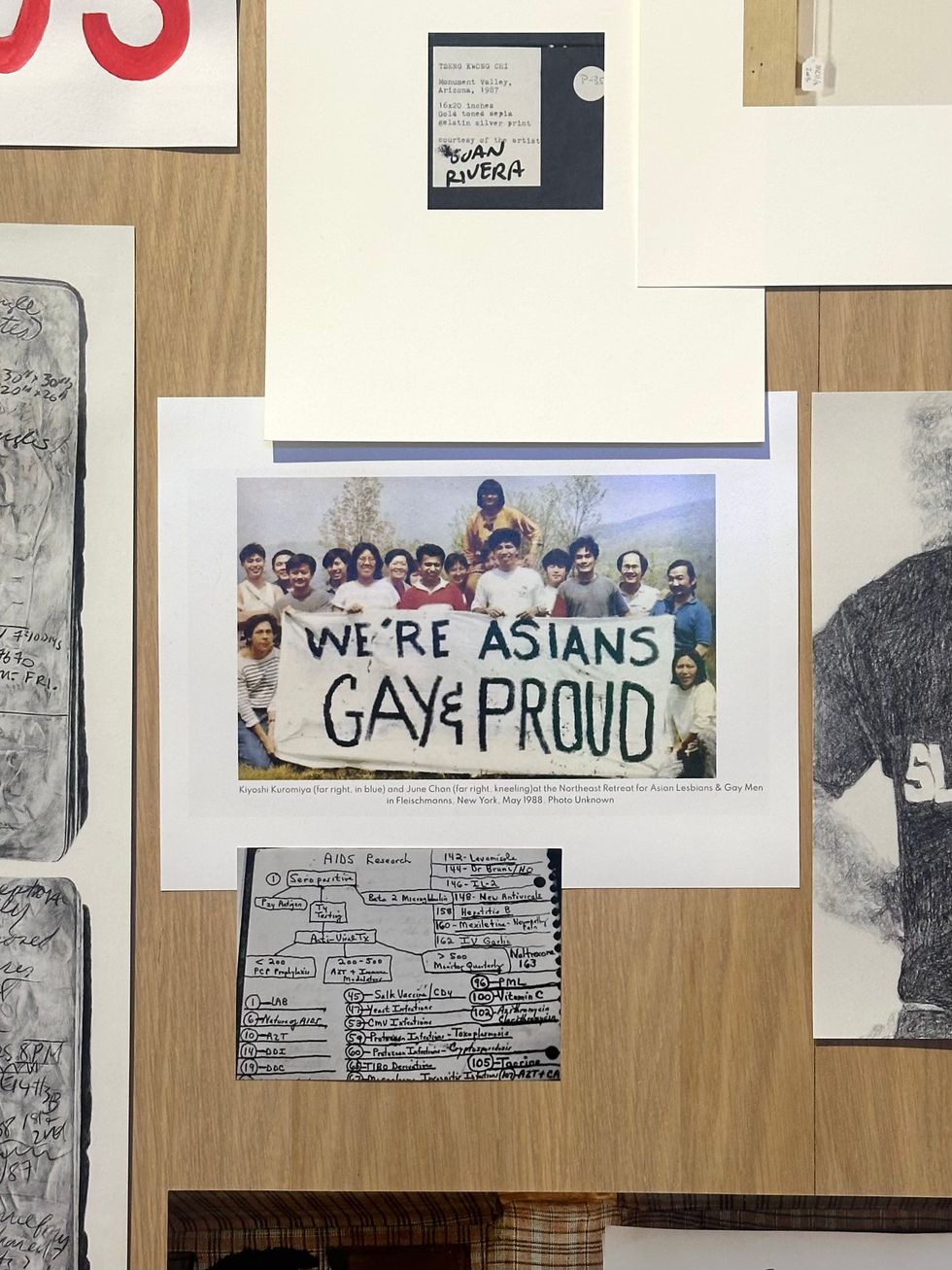

In New York, it’s easy to take queer art shows for granted. When writing my PAPER piece on the best LGBTQ artist shows to see this June in New York, my friends and I joked, “The question isn’t which artists are gay, but which ones aren’t!” The conversation about queer rights in America may be a heated one, but it’s also one that has been developed over the past 60+ years.
However, in South Korea, that conversation is one that is still in its early stages. In Seoul, the marginalization of queer people and their allies remains a fact of life. Lesbian bars and clubs constantly change locations, in fear of being shut down or overrun by non-queer interlopers; Itaewon’s gay clubs remain highly concentrated and largely separate from the broader nightlife scene, unlike the integrated queer communities found in cities like Berlin and New York. Gay marriage is still illegal. During Seoul’s Pride march, which was denounced by its Mayor, the 50,000 participants had to face off against a formidable counter-march, which featured 30,000 people loudly protesting against queer rights. Compare this to New York’s Pride march, which attracts millions of supporters annually and is largely devoid of counter-movements.
Still, queer joy finds a way to thrive even under hostile conditions.
This spring, the Art Sonje Center mounted a groundbreaking group exhibition dedicated to LGBTQ art, featuring primarily artists from Korea's contemporary art scene.. Titled Spectrosynthesis Seoul, the exhibition is part of a traveling series initiated by the Sunpride Foundation, an arts organization founded by Hong Kong collector Patrick Sun to spotlight queer artists from across Asia (previous iterations of Spectrosynthesis have been presented in Taipei, Bangkok, and Hong Kong). I myself have never seen queer Korean art shown on this scale, and when I heard it was happening, I was incredulous. All gay art? In Seoul? Who in the world will come to that? Fearful visions of loud protesters and critics disparaging the show flashed across my imagination.
However, curator and director Sunjung Kim was more optimistic than I was. When asked if she had had any reservations bringing the show to Korea, she said, “Art Sonje Center has always been interested in questions of diversity, inclusivity, and social engagement. Since the beginning, we have tried to create a place where different voices and perspectives can be presented and discussed. Rather than hesitation, what we felt was a strong sense of responsibility and excitement about creating an opportunity for these works and histories to be presented in Korea.”
Walking to visit the exhibition was a surreal experience. Outside, political banners had been hung over the main pedestrian streets for election season; several of them loudly criticized LGBTQ rights. Sentiments such as “QUEER EDUCATION OUT” and “OPPOSE HOMOSEXUALITY” were emblazoned across the streets in large letters. However, inside the museum, it was clear that its target audience was undeterred by these outside flames of homophobia: they had heard the siren call of queer community, and flocked to the source. All through the museum’s floors, same-sex couples walked around, most of them young and hesitant, all peering at art that told stories of past erasure and love persevering.
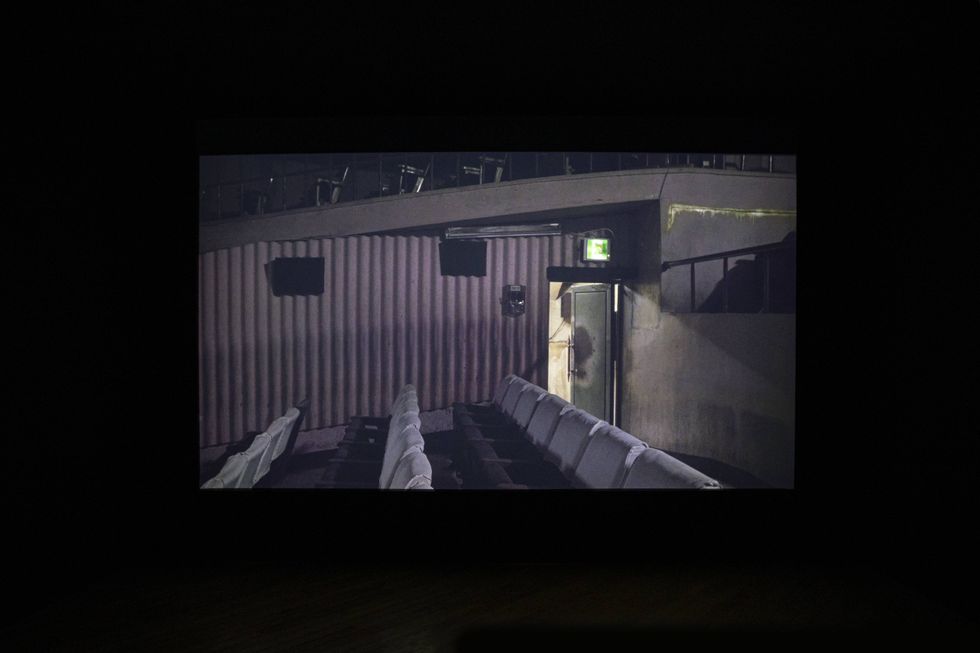
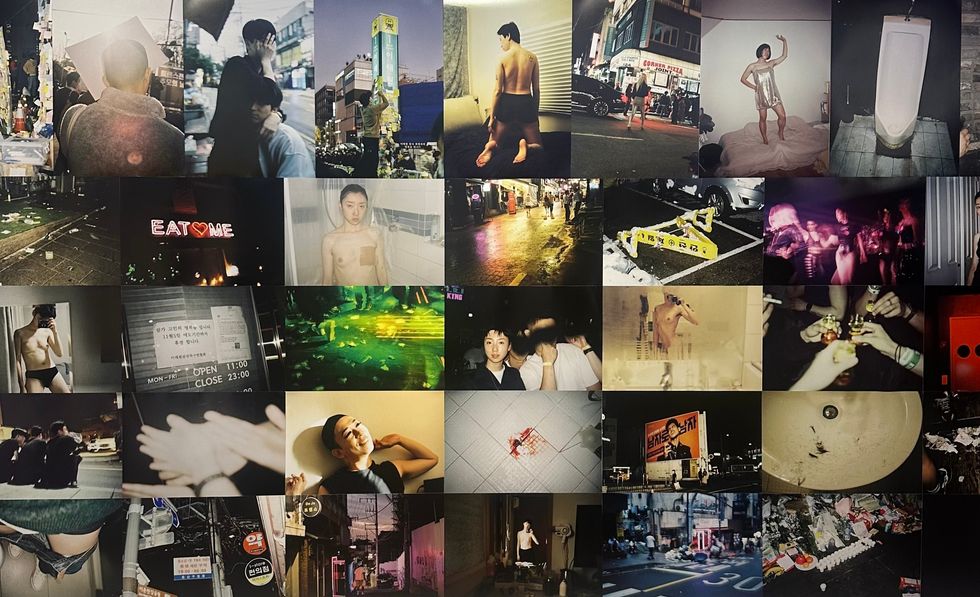
In Glowjob, by Min-In Cheol, viewers sat in creaky cinema chairs while watching a video montage of abandoned movie theaters that once functioned as gay cruising spots. From the 1960s through the 1990s, such venues were among the very few spaces that served as sites of queer community and connection in Korea. Plastered on the outside of the makeshift theater was Jaeyun Sung’s The Guy Days, composed of a touching series of photographs documenting his lived experience as a trans man. Some of the images are vulnerable to the extreme, including posed nudes and splatters of blood, but they are balanced out by lighthearted moments of affection between friends and lovers.
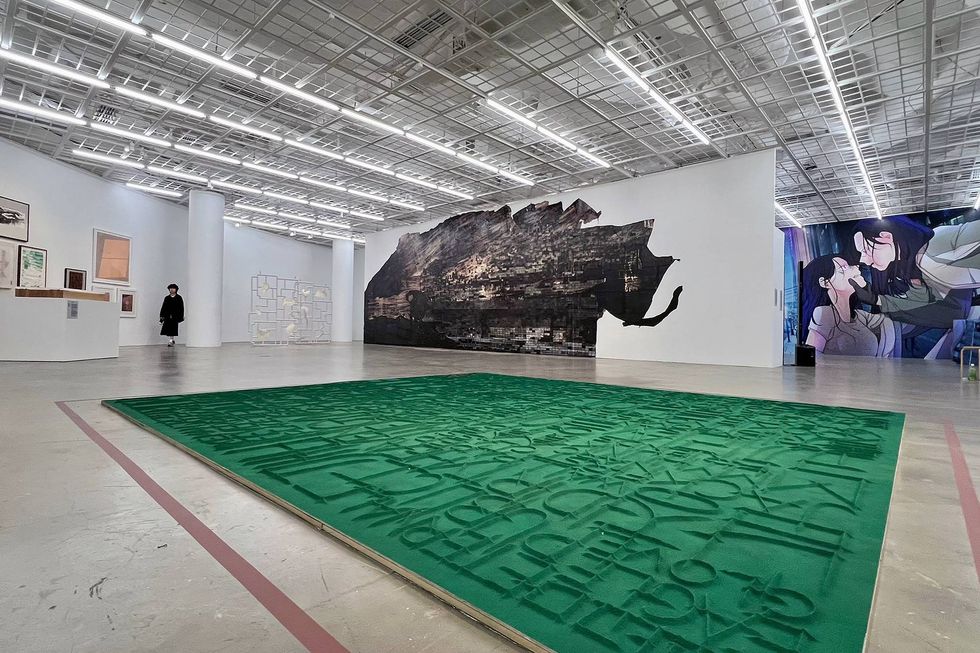
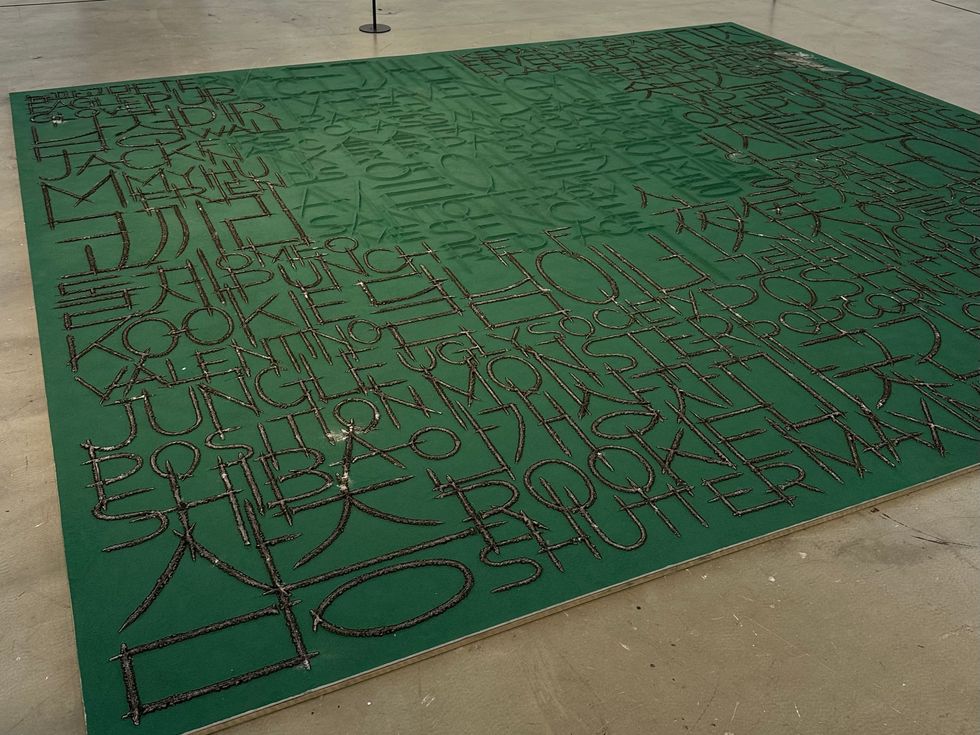
Downstairs, Inhwan Oh’s sprawling floor piece uses green incense to spell out the names of gay bars and clubs in Seoul; the incense is lit at the exhibition’s opening, and slowly burns out throughout its lifespan, transforming the green powder into black ash in a symbolic ritual of remembrance.
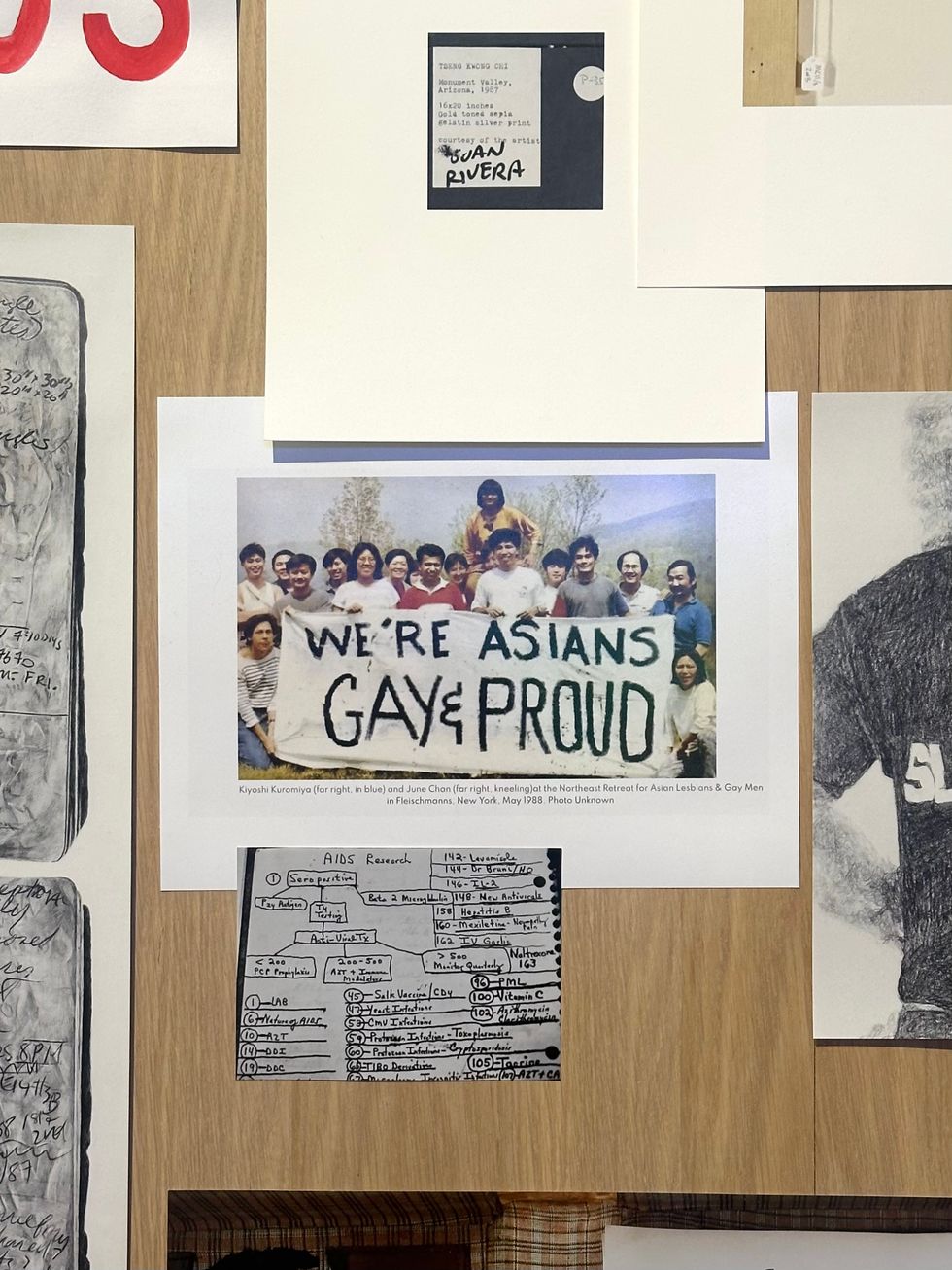
So many of these pieces deal with queer community in Korea as something transient, and inconsistent; there is a lack of a cohesive group history, of one rallying movement to the cause (think Stonewall in America). “Because of Korea's compressed modernization, political complexity, and rapid digital transformation, queer stories exist in fragments—in personal memories, underground venues, private zines, and online forums. Artists may have more difficulty digging through archives but instead have to work with partial records, ephemera, and traces," Patrick Sun, founder of the Sunpride Foundation, explains. “Seoul’s art feels especially attuned to the politics of memory and the power of the fragmented.”
If anything, the exhibition helps uncover fragments of queer history and bring them together into a more coherent narrative, connecting the works of artists across generations and experiences. Kim built off this idea of building community, saying, “What interested me most as a curator was not necessarily individual works, but the relationships created between them…These juxtapositions reflect the exhibition’s central idea of the “two-sided seashell,” where different perspectives can exist simultaneously, not in opposition, but in dialogue.”
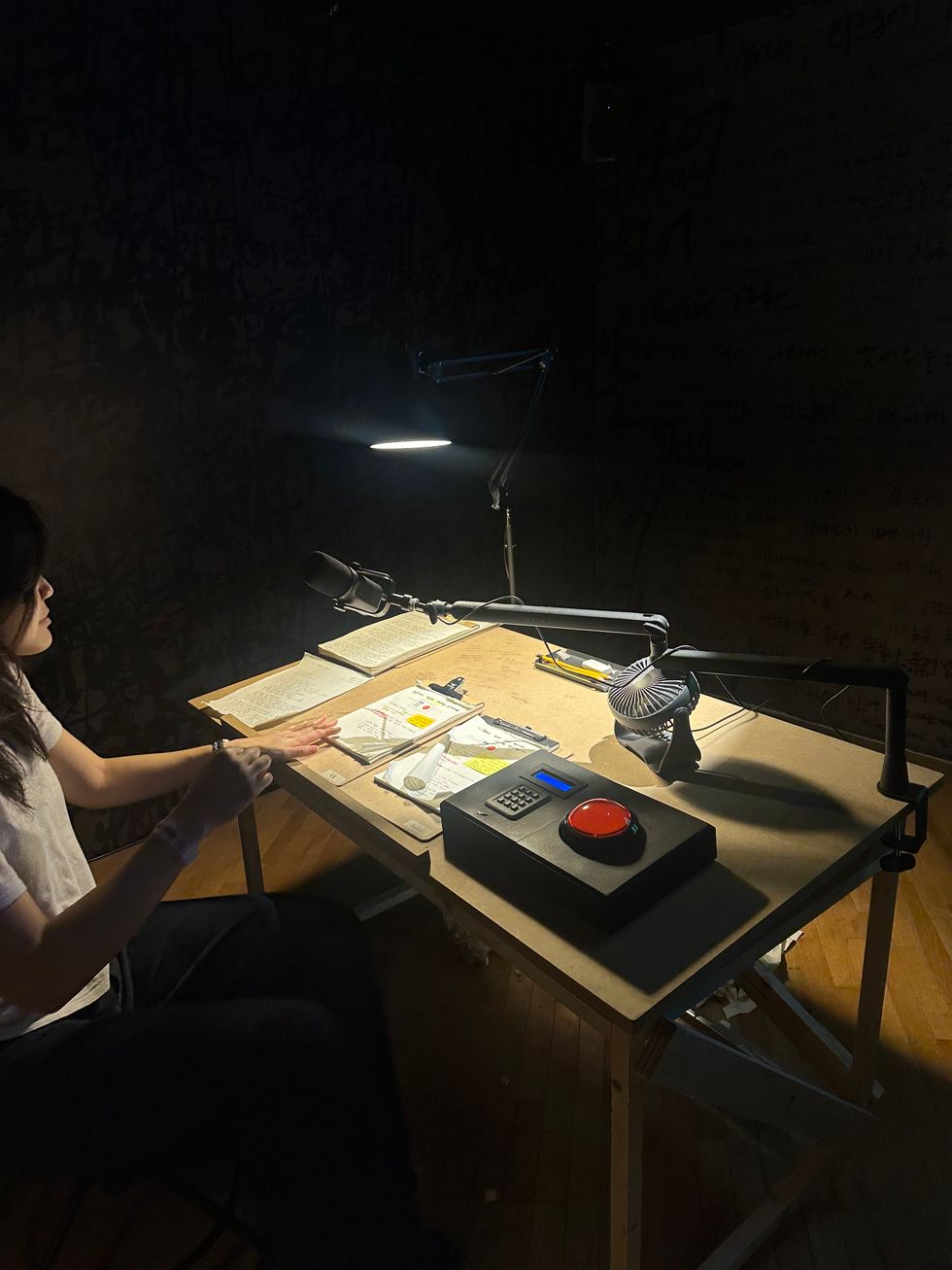
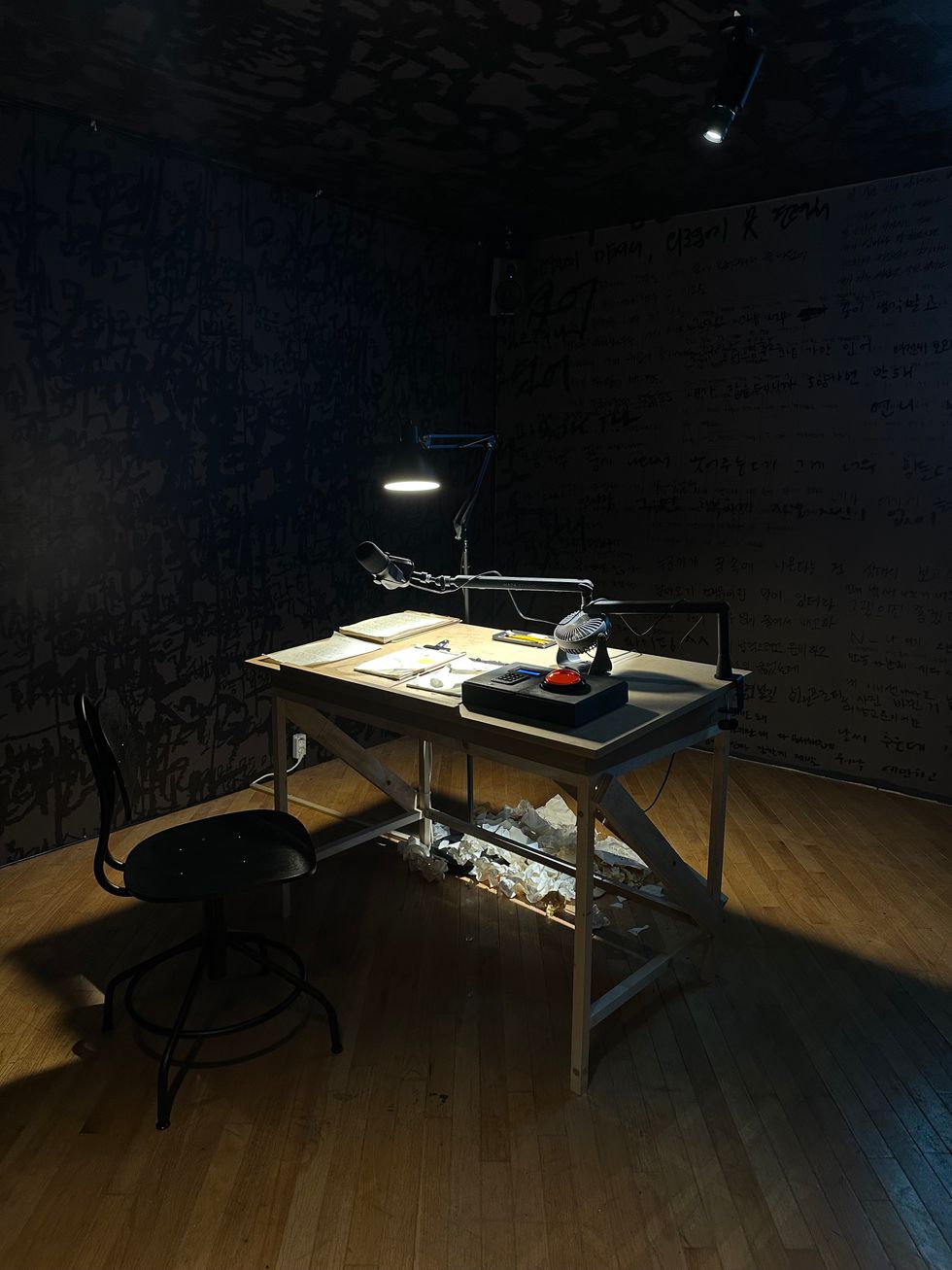
Sanghoon Moon’s installation piece Wish you were here is perhaps the one that moved me the most. Designed as a sound studio which can only be entered one at a time, the artist invites queer women to share their stories as voice recordings, or write anonymous letters down on a notepad. When I entered, the floor was strewn with loose sheets of paper, and both notebooks were filled to the last page.
“We did nothing wrong,” read one note. “Lesbians, let’s live. Don’t kill yourselves,” read another. The pages were crowded with confessions of love for friends, expressions of frustration with family, and reflections on lives spent in hiding. When I stepped back out, a small line of girls had formed in front, waiting for their turn to enter. I saw two of them, who appeared at first to be just friends, tentatively reach for each other’s hands before one of them entered the booth alone. A tender moment of sapphic love, framed by the exhibition’s message of inclusion and celebration.
One exhibition is hard-pressed to change a country. However, Kim believes the exhibition is an indication of positive momentum: “When Art Sonje Center hosted the first Seoul Queer Film Festival in 1998, we received many calls questioning why an institution like ours would support such a program. Looking back 28 years later, it is clear that society has changed, even if many challenges remain. When Spectrosynthesis Seoul opened, there were no major protests or calls of complaint in the way there had been in the past. That, in itself, suggests a slow but meaningful change.” Considering that the museum is set in the middle of Seongbuk-dong, one of Korea’s most traditional neighborhoods, its general acceptance by the community indeed seems to indicate positive progress.
To Patrick Sun, though, the most important audience wasn’t the people who remained skeptical of LGBTQ identities, but the queer individuals who may not have ever seen themselves reflected before.
When I asked him what he’d want to say to a person who may be closeted and struggling with their own identity visiting this show, Sun was thoughtful. “I would say: you are seeing proof that people like you have always existed, have always made art, have always loved and struggled. This exhibition is a record of survival, creativity and hope. The artworks on these walls were made by people who faced similar fears and chose to create anyway. I hope that when you see them, you feel empowered to be comfortable with your true self. And remember: the future is longer than the present pain. There is a community waiting for you—not always visible, but real. This exhibition is part of that community reaching out to you.”
All images courtesy of the artists, photographers, and galleries mentioned in the captions for each.