Between Pezeshkian’s Peace Push and the Guard’s Threats: Who Controls Iran’s Hormuz Strategy?
As the war between Iran and the United States and its allies enters its 176th day, and 67 days since Washington and Tehran signed a memorandum of understanding, the crisis remains caught between two opposing pulls: mounting American pressure to reopen the Strait of Hormuz and tighten Iran’s economic isolation, and an internal Iranian rift […] ظهرت المقالة Between Pezeshkian’s Peace Push and the Guard’s Threats: Who Controls Iran’s Hormuz Strategy? أولاً على African Percentions.
 Black News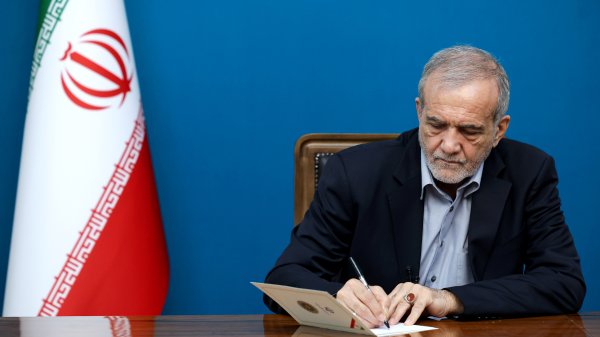

As the war between Iran and the United States and its allies enters its 176th day, and 67 days since Washington and Tehran signed a memorandum of understanding, the crisis remains caught between two opposing pulls: mounting American pressure to reopen the Strait of Hormuz and tighten Iran’s economic isolation, and an internal Iranian rift over the right moment to shift from confrontation to settlement.
While Iranian President Masoud Pezeshkian has called for ending the war “today,” and from a position of strength, Supreme National Security Council Secretary Mohsen Rezaee has warned regional states against joining what he called America’s economic war, threatening to target the interests of participating countries and block their oil exports from passing through the Gulf and the Strait of Hormuz. This difference in tone isn’t simply a division of labor between a civilian president and the military establishment — it points to a deeper struggle over how to convert Iran’s military leverage into political and economic gains before the war exhausts that leverage altogether.
Washington’s “thousand ships” claim, unverified independently
US President Donald Trump reposted a message from commentator Marc Thiessen claiming the United States had escorted more than a thousand ships through the Strait of Hormuz. No independent data confirms that figure, and shipping traffic through the strait remains far below pre-war levels, when it handled between 130 and 140 vessels daily.
American reports point to a modest rise in transits over the past two weeks, aided by the use of a route closer to the Omani side and US escorts for some vessels, though this recovery has restored only a limited share of normal traffic. While Washington insists it now has the upper hand in the strait, Tehran maintains that normal shipping won’t resume until the United States fulfills its commitments under the memorandum of understanding signed on June 17 — which includes lifting the naval blockade on Iranian ports, easing oil export sanctions, releasing frozen assets, and providing guarantees against renewed military strikes.
Pezeshkian: a closing window for settlement
Speaking at a Doctor’s Day ceremony in Tehran, Pezeshkian said it would be “better to end the war today, while we are in a position of strength and dignity,” insisting his country would not make concessions or bow to threats. He defended the memorandum of understanding, saying it contains no clause suggesting Iranian surrender and that it had been approved by the Supreme National Security Council.
But the more striking part of his address wasn’t the language of victory — it was his acknowledgment that the war cannot go on indefinitely, and that keeping the country in a state of “neither war nor peace” is blocking investment and deepening the economic crisis. Oil revenues have fallen, industrial facilities have been damaged, and pressure on public finances and the currency market has intensified.
Seen from this angle, Pezeshkian’s call for peace looks less like a sign of military retreat and more like an attempt to lock in what he considers battlefield gains into an agreement, before the economic toll erodes Iran’s negotiating position. He is, in effect, addressing several audiences at once: Supreme Leader Mojtaba Khamenei, hardline Revolutionary Guard leadership, members of the Supreme National Security Council, and public opinion and economic circles bearing the brunt of the war — with a shared message that true strength lies in choosing the right moment to convert it into a settlement, not simply in prolonging the fight.
Rezaee widens the threat to Iran’s neighbors
Mohsen Rezaee, for his part, issued a direct warning to neighboring states against joining the economic pressure campaign being prepared by the Trump administration. He said Tehran would first pursue dialogue with these countries, but would regard them as “enemies” if they continued cooperating with Washington, threatening to harm their interests and block their oil exports from transiting the Gulf and the Strait of Hormuz. He also hinted at targeting American oil companies and interests in the region, warning that any Iranian response to a new US move would be “like an earthquake.”
These statements shift the crisis from a bilateral US-Iran confrontation into a direct threat against Gulf states, placing their governments in a difficult position: cooperating with Washington on sanctions and protecting shipping could make them an Iranian target, while distancing themselves from the American campaign could expose them to political and economic pressure from Washington.
Araghchi: repeated pressure is “a sign of desperation”
Rezaee’s warning coincided with the US Treasury Department preparing to announce a new sanctions package described by Washington as among the toughest ever imposed on Iran. Foreign Minister Abbas Araghchi responded by saying his country doesn’t fear threats or blockades, and that previous American attempts had failed to achieve their goals, describing the repetition of pressure tactics as “a sign of desperation” and calling for dialogue based on respect and fairness. At the same time, Iran’s military establishment stressed that new weapons systems are now ready, and that what has appeared on the battlefield so far represents only a fraction of Iran’s capabilities.
Through this, Tehran appears to be keeping the door to negotiation open without giving up the threat of military force — a dual message that peace is possible, but not on American terms alone.
Two rival camps within the system?
Iranian statements reveal a clear split between a camp led by Pezeshkian and his foreign minister, which prioritizes ending the war, restoring oil exports, and attracting investment, and a more hardline current within the Revolutionary Guard that prefers to maintain field control over the strait until it secures greater guarantees and gains.
The Wall Street Journal reported that Arab mediators fear Iranian diplomats may lack sufficient authority to implement any agreement concerning the strait, noting that the Guard has pushed to retain the right to impose fees on transiting ships and to obtain explicit guarantees on lifting sanctions and the blockade.
None of this proves the existence of two separate governments or decision-making tracks, but it does reflect a genuine difference in priorities: the civilian camp wants a quick economic payoff, while the Guard views control of Hormuz as Iran’s most important strategic card, one that giving up too early would squander the war’s gains. This divergence may partly serve as a deliberate negotiating tactic, allowing Tehran to project both moderate and hardline messaging at once. But the continued stalling of any deal, and Pezeshkian’s own comments about difficulty reaching the leadership center, suggest the disagreement runs deeper than a simple division of roles.
An absent Supreme Leader complicates decision-making
Decision-making has grown more difficult since former Supreme Leader Ali Khamenei was killed in the war’s opening strikes and his son Mojtaba Khamenei rose to the position, largely avoiding public appearances since. State media reported that Pezeshkian met the new Supreme Leader in late July, in a meeting covering the war, the economy, energy, and foreign relations, which the president later said lasted around seven hours.
Accounts describing an earlier, mysterious first meeting inside a car with darkened windows, and suggesting Pezeshkian was unsure of the identity of the person he met, circulated in media citing unnamed sources, and have not been confirmed by Iranian authorities or any independent party — they cannot be treated as established fact. Even so, the Supreme Leader’s rare public appearances and limited accessibility have fueled doubts about the state’s ability to reach a swift, decisive verdict in the most dangerous crisis Iran has faced in decades.
Who holds the final word?
Iran’s constitution places the president at the head of the Supreme National Security Council, which, under Article 176, sets defense and security policy and coordinates political, military, and economic activities linked to national security. Its membership includes the heads of the three branches of government, military and Revolutionary Guard commanders, the foreign, interior, defense, and intelligence ministers, and representatives of the Supreme Leader.
But Pezeshkian’s chairmanship of the council doesn’t give him the final say — its decisions only take effect once approved by the Supreme Leader, while Article 110 of the constitution grants the Supreme Leader supreme command of the armed forces and the authority to declare war and peace and mobilize forces. Pezeshkian’s call to end the war, then, should not be read as an order, but as an attempt to convince the center of power that the window for settlement may be closing as the economic bleeding continues. The Revolutionary Guard, for its part, cannot unilaterally sign or reject an agreement, but it carries enough weight on the ground to shape the terms of any settlement — particularly since it manages the Iranian side of the confrontation in the strait.
A Pakistani visit at a sensitive moment
Amid this deadlock, Iran’s foreign ministry announced that Pakistani army chief General Asim Munir will visit Tehran on Monday at the head of an official delegation. The visit comes against the backdrop of Pakistan’s role in relaying messages between Iran and the United States, and is expected to touch on the anticipated American sanctions, the future of shipping through Hormuz, and regional security arrangements. It may offer an additional channel to test whether negotiations can resume, but it won’t on its own resolve the core issue: any agreement first requires internal consensus in Tehran on the acceptable price for fully reopening the strait.
Hormuz as a mirror of Iran’s internal struggle
The Strait of Hormuz is no longer simply a shipping lane being negotiated between Iran and the United States — it has become a mirror reflecting a struggle within Iran’s power structure over the meaning of strength and how to wield it. Pezeshkian sees strength as the ability to end the war on terms that preserve the country’s dignity and give its economy room to breathe. The Revolutionary Guard, by contrast, sees continued pressure in the strait as the only thing that will force Washington into genuine concessions.
Standing between these two positions is the Supreme Leader, who holds the final constitutional say, while time, the economy, and shipping traffic weigh on everyone involved. Pezeshkian’s rhetoric, in this light, is aimed primarily at a domestic audience rather than an external one — he isn’t just asking Washington to accept peace, but trying to convince the centers of power in Tehran that ending the war now could be an exercise of strength, not a surrender of it.
ظهرت المقالة Between Pezeshkian’s Peace Push and the Guard’s Threats: Who Controls Iran’s Hormuz Strategy? أولاً على African Percentions.