Beyond the academic shelf: Why African universities need partnerships
DAR ES SALAAM: FOR decades, African universities have played a central role in producing knowledge, training professionals and conducting research on the continent’s most pressing challenges. But a more difficult question is increasingly confronting higher education institutions; What happens to that knowledge after it is produced? Does research remain in academic journals and conference proceedings, … The post Beyond the academic shelf: Why African universities need partnerships appeared first on Daily News.
 Black News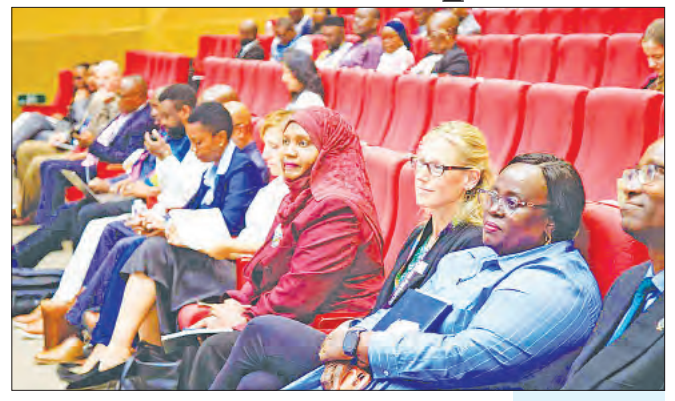
DAR ES SALAAM: FOR decades, African universities have played a central role in producing knowledge, training professionals and conducting research on the continent’s most pressing challenges.
But a more difficult question is increasingly confronting higher education institutions; What happens to that knowledge after it is produced? Does research remain in academic journals and conference proceedings, or does it become a new business, a public policy, a technology, a job, a stronger institution or a practical solution for communities?
That question was at the heart of the 2026 Annual Meeting of the Alliance for African Partnership (AAP), hosted by the University of Dar es Salaam (UDSM) under the theme “Reimagining Higher Education for Africa’s Future: Leadership, Innovation and Global Partnerships.” The meeting brought together university leaders, researchers, policymakers, entrepreneurs, innovators and industry representatives from Africa and beyond, with a common message: African universities need partnerships that go beyond signing agreements or implementing individual projects.
They need partnerships that leave behind people, institutions, research capacity, innovation and solutions. UDSM Vice-Chancellor Prof William Anangisye, said universities must rethink how they prepare young Africans for a rapidly changing world.
“We cannot prepare young Africans for tomorrow using only the assumptions and structures of yesterday,” Prof Anangisye said. Africa’s changing economic and social landscape is placing new demands on universities. A youthful population, rapid tech nological advances, evolving labour markets and mounting climate pressures require higher education institutions to prepare graduates for more than conventional employment.
“A university is a place where society invests in knowledge. We must therefore enable young people to think critically, investigate problems, create new knowledge and use their skills to serve society. Universities must equip young people with the knowledge, skills and creativity to generate new ideas, solve real-world problems and contribute to economic transformation, from knowledge to action,” Prof Anangisye insisted.
UDSM Deputy Vice-Chancellor–Research, For Prof Nelson Boniface said producing knowledge is only part of the university’s responsibility. He said African challenges are too interconnected to be addressed by individual disciplines or institutions working separately.
ALSO READ: Matinyi seeks Algeria’s support for agricultural industrialisation
“They demand collaboration. Scientists, social scientists, humanities scholars, policymakers, entrepreneurs and communities must work together through interdisciplinary and transdisciplinary research, particularly to address challenges such as food security, climate change, public health, energy, urbanisation, digital transformation and employment,” Prof Boniface said.
Prof Boniface said universities must increasingly look beyond the completion and publication of research and ask what happens next.
“We must increasingly ask: What happens next?” he said. The question goes to the heart of research impact: Can findings inform public policy? Can an invention be developed into a product or service? Can a university innovation create jobs? And can knowledge generated in a laboratory translate into solutions that improve people’s lives? These questions point to a broader shift in how universities understand and measure research success.
While academic publications remain important for advancing knowledge and scholarly debate, African societies also need research that moves beyond the academic sphere, from laboratories to industry, classrooms to communities and ideas to enterprises. Why partnerships matter This is where partnerships become important. No university can possess all the expertise, infrastructure, financing, technology and networks required to address complex challenges alone.
The recently AAP brings together 12 institutions from 10 African countries, anchored by Michigan State University. Its participating institutions provide an opportunity to exchange experience across different economic, educational and social environments. Dr Laura McIntyre, Deputy Vice-Chancellor for Academic Affairs at Michigan State University, said collaboration allows institutions to combine their strengths.
“We can do more when we partner together. Institutions of higher education play a critical role. It is not just the number of degrees or students graduated. It is really the power of people coming together to solve realworld problems,” Dr McIntyre said. For African universities, the value of international partnerships therefore should not be measured only by the amount of funding received or the number of conferences held.
The more important question is what capabilities are developed through the relationship. Dr McIntyre said universities must connect academic knowledge with practical experience.
“It is not just about the knowledge that is being taught. It is about creating opportunities to translate the knowledge into action,” she said.
That translation requires links between universities and the private sector, government, civil society and communities. Companies can help identify problems that require research. Governments can identify policy challenges and create pathways for evidence to influence decisions. Universities can provide research and skilled people, while entrepreneurs can take ideas towards the market.
African universities as innovation ecosystems The discussion at UDSM also challenged the traditional image of the university as mainly a place for lectures, examinations and degrees. Ms Faraja Kota, Founder of Shule Direct, described the modern university as a “boiling pot of innovation.” The description points to a university environment where researchers, students, entrepreneurs, industry and communities interact rather than operate in separate spaces.
For Dr Maryam Ismail, Assistant Director of Higher Education in the Ministry of Education, Science and Technology, innovation must be grounded in society’s needs and aligned with the country’s development priorities. She challenged educators to rethink how academic programmes are designed and called for flexible and accessible courses that respond directly to national priorities.
That approach is particularly relevant as artificial intelligence changes workplaces and professional roles. Prof Boniface said cooperation between universities, governments and other institutions is needed to ensure graduates leave university with skills they can apply to real-world challenges.
“We need to strengthen our relationship so that we can produce students and graduates who are productive, who when they leave here, can directly bring change and solve issues facing our society,” he said.
Prof Boniface also warned that AI is no longer limited to specialists. “AI is for everyone. There are those who code and programme, but everyone is a user. A person who does not know how to use AI may be left behind,” Prof Boniface said. For universities, that means updating curricula, strengthening lecturers’ capabilities and ensuring students understand how technology can be applied responsibly in their fields.
What Tanzania stands to gain For Tanzania, stronger university partnerships can create several pathways for national development. Stronger partnerships can significantly expand Tanzania’s research capacity by exposing researchers and students to new methodologies, equipment, expertise and international academic networks. They can also open pathways to collaborative research proposals, international funding, student and staff mobility and joint academic programmes. Beyond academia, such partnerships can help move research towards innovation and enterprise. Stronger links between universities, entrepreneurs and industry can create pathways for research findings and university inventions to be developed into products, services and businesses, creating opportunities for commercialisation and job creation. Prof Boniface emphasised the importance of investment in research. “Countries cannot move forward if we do not invest significantly in research,” he said, calling for companies, banks and other institutions to work with universities to develop research and solutions rather than operating independently. Further, he said strong partnerships also contribute to human capital development. Students and early-career researchers who participate in international and interdisciplinary networks can gain new skills, experience and professional relationships that extend beyond individual projects and strengthen their future contributions to academia, industry and society. They can also facilitate the circulation of knowledge and experience across Africa. Prof Boniface said African institutions can learn from one another while adapting lessons to their different economic, social and educational contexts. This is particularly important because solutions developed in one African country may offer valuable lessons elsewhere, but often need to be adapted to local conditions to be effective.
Partnerships must leave something behind Ultimately, the strongest partnerships are not those that simply produce activities. They are those that build something that continues after the project ends. Deputy Vice Chancellor–Academic, Prof Rose Upor said lasting partnerships should leave behind stronger research capacity, new programmes, innovation hubs, companies, policy solutions and technologies adapted to local needs. For African universities, she said, this means building stronger pathways between scholarship and society. “Meet a researcher from another university, identify a possible doctoral collaboration. Discuss a joint research proposal, explore an opportunity with industry and engage with a young innovator.
The post Beyond the academic shelf: Why African universities need partnerships appeared first on Daily News.