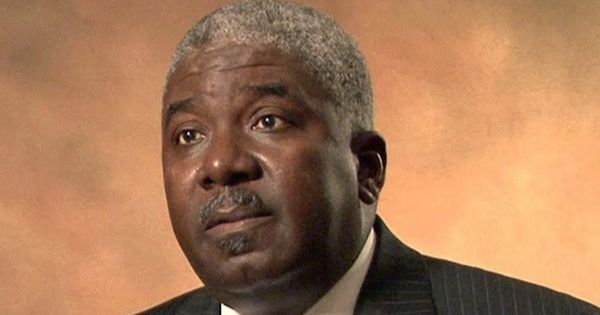
Beyond the Bottom Line: How Entrepreneur Farah Pate Is Navigating Menopause While Running a Business.
For many women, entrepreneurship is already a balancing act of leadership, financial responsibility, client expectations, family obligations, and the constant pressure to perform. For women over 50, another major life transition can quietly enter the boardroom: menopause. For entrepreneur Farah Pate, navigating business while experiencing menopause highlights a conversation that is still too often absent from…
 Black News

For many women, entrepreneurship is already a balancing act of leadership, financial responsibility, client expectations, family obligations, and the constant pressure to perform. For women over 50, another major life transition can quietly enter the boardroom: menopause.
For entrepreneur Farah Pate, navigating business while experiencing menopause highlights a conversation that is still too often absent from professional spaces. Menopause is commonly discussed as a personal or medical issue, but its effects do not disappear when a woman walks into a meeting, manages employees, travels for work, or makes decisions about the future of her company.

Menopause is a natural biological transition, but the years leading up to it known as perimenopause can bring a wide range of physical and emotional changes. Hot flashes and night sweats may be the most recognizable symptoms, but women may also experience disrupted sleep, fatigue, mood changes, difficulty concentrating, headaches, changes in body composition, and what many describe as “brain fog.”
For an entrepreneur, these symptoms can directly affect the way business gets done.
Running a company often requires long days, quick decisions, presentations, networking, financial planning, creativity, and the ability to manage multiple responsibilities at once. When sleep is disrupted or concentration becomes more difficult, tasks that once felt routine may suddenly require more energy.
One of the most misunderstood experiences during the menopause transition is difficulty with memory and focus. An entrepreneur may walk into a meeting and briefly lose her train of thought, struggle to recall a name, reread an email several times, or feel overwhelmed by a schedule she previously managed with ease. These moments can create unnecessary self-doubt.

For women like Pate, however, the experience can also become an opportunity to recognize that changing how you work does not mean you are becoming less capable. It may simply mean your business systems need to evolve with you. Using stronger calendars, task-management systems, automated reminders, administrative support, and delegation can reduce unnecessary pressure. What initially feels like a challenge may ultimately encourage a business owner to create a company that is less dependent on her doing everything herself.
Sleep can also become a business issue.
Night sweats, insomnia, or waking repeatedly throughout the night may leave an entrepreneur trying to lead a team after getting very little meaningful rest. Over time, exhaustion can affect patience, creativity, motivation, communication, and decision-making.
For entrepreneurs accustomed to celebrating “the grind,” menopause can challenge the belief that productivity should always be measured by how many hours someone works.
Rest can become part of the business strategy.
That may mean protecting mornings after demanding events, building recovery time into travel schedules, avoiding unnecessary late-night work, or recognizing that every opportunity does not require a yes.
Menopause may also influence confidence. Changes in weight, hair, skin, sleep, energy, or overall appearance can affect how women see themselves, particularly those whose businesses require them to be highly visible. Speaking engagements, networking events, social media, television appearances, and client meetings can suddenly feel different when a woman is also adjusting to changes in her body.
That is why Pate’s experience represents something larger. Women should not have to disappear professionally simply because their bodies are changing.
In fact, women over 50 often enter entrepreneurship with advantages younger business owners are still developing: years of industry experience, stronger professional networks, greater self-awareness, financial knowledge, and a clearer understanding of what they want.
Entrepreneurship may even provide flexibility that traditional workplaces cannot. Business owners can adjust schedules, create more comfortable work environments, work remotely when needed, delegate responsibilities, or organize their days around periods when they feel most productive.
Most importantly, menopause can encourage women to reconsider what sustainable success actually looks like.
Successful companies are rarely built by one person doing everything. Hiring support, outsourcing administrative responsibilities, empowering team members, and creating strong operational systems can protect both the entrepreneur and the company.
Women experiencing persistent or disruptive symptoms should also consider speaking with a qualified healthcare professional, since symptoms and treatment options vary from person to person.
Perhaps the most important lesson in Farah Pate’s journey is that menopause and professional growth can exist at the same time.
Women are launching companies after 40, expanding brands after 50, entering new industries, mentoring younger entrepreneurs, and creating entirely new chapters in their careers.
Menopause does not erase ambition. It may simply change how ambition is managed.
For Pate and countless women like her, entrepreneurship after 50 can become less about proving how much one person can endure and more about building intentionally protecting energy, creating boundaries, strengthening systems, and focusing on long-term impact.
Menopause does not have to represent the end of something.
For an entrepreneur, it can become another chapter in the evolution of leadership, confidence, and success.