Bishop Barber Takes the Fight for Voting Rights to the Streets
Bishop William Barber II is turning faith into action, organizing marches to polling places nationwide. His ambitious campaign aims to mobilize millions of infrequent voters and connect the ballot to health care, wages and economic justice. The post Bishop Barber Takes the Fight for Voting Rights to the Streets appeared first on Word In Black.
 Black News
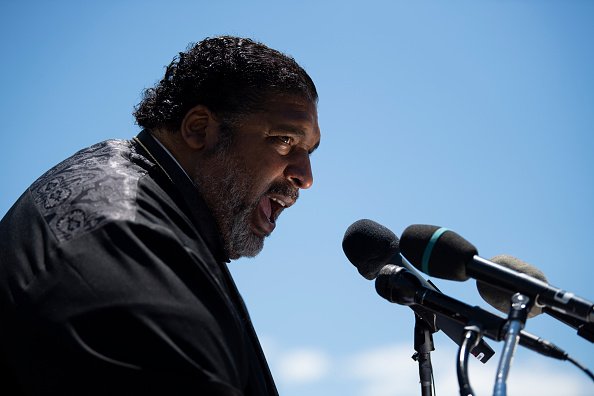

With the Nov. 3 midterm elections approaching, Bishop William J. Barber II and Repairers of the Breach are turning a national call for voter participation into hundreds of community marches to local voting booths.
The campaign, “100 Days; 1,000 Marches to the Polls,” asks faith communities and neighborhood organizations to accompany voters to early-voting sites and continue mobilizing through Election Day.
LEARN MORE: From the Pews to the Polls, Black Churches Are Mobilizing Voters
By Oct. 15, the organization reported reaching past the halfway point, with 652 marches organized in 428 locations nationwide.
Organizers describe the effort as nonviolent and nonpartisan, with an invitation extending beyond sanctuaries to campuses, lodges and other community gathering places.
Power of the Ballot
For Black communities, the effort connects protecting voting rights with understanding the everyday consequences of who holds public office.
Barber carried that message to North Carolina Central University in Durham on Oct. 15, the first day of early voting in North Carolina. Marchers gathered at St. Joseph AME Church before walking to the university’s law school, where voting was underway, NC Newsline reported.
You cannot have a democracy unless you have participation.
Bishop William J. Barber II, Repairers of the breach
“We marched for it. We fought for it, mobilized,” Barber told reporters.
His message linked participation in the election – and who’s elected – to health care, funding for historically Black colleges and universities, and whether working families earn a living wage. He challenged political candidates to explain the policies they support, rather than simply identify what they oppose.
Barber’s national Love Forward Together initiative aims to mobilize 5 million low-wage, infrequent voters, particularly in Southern and battleground states. In addition to marches, organizers are using peer-to-peer text messages, phone banking and door-to-door canvassing to reach people who may otherwise sit out the election.
“You cannot have a democracy unless you have participation,” he said.
That approach places personal relationships at the center of the work: A congregation organizing its members, neighbors contacting neighbors and local groups helping turn an intention to vote into a plan.
From Seattle to St. Croix
The campaign’s reach was expanding earlier this month. Religion News Service reported that, as of Oct. 9, more than 600 individuals, churches and other groups had signed up in more than 400 locations, stretching from Seattle to St. Croix in the U.S. Virgin Islands. Those signups reflected organizing commitments, rather than a tally of completed marches.
Barber has urged participants to demonstrate “conspicuous courage,” linking public participation with the sacrifices of earlier generations who fought for access to the ballot. His appeal comes as Black faith leaders broaden voter outreach beyond traditional worship services.
The organizing builds on Barber’s years of connecting faith, racial justice and economic policy. A former North Carolina NAACP president, he helped lead the Moral Monday movement beginning in 2013 and revived the Poor People’s Campaign in 2018.
Acting Locally
Now, the immediate task is local. A march in Asheville, North Carolina, is planned for Oct. 22, with participants heading to the Wesley Grant Center to cast ballots. Elsewhere, the national campaign asks communities to organize around their own early-voting calendars and prepare for Election Day, when early voting is unavailable.
RELATED: Arrests Mark Moral Monday’s Shift From Washington to the States
Repairers of the Breach offers an online signup for march organizers and a link to find nearby events. Its invitation includes churches and synagogues, students and community groups — people willing to bring others with them.
For Barber’s coalition, the coming weeks will test whether those commitments become participation. The larger purpose is to bring people who seldom vote into decisions that shape their daily lives.
The post Bishop Barber Takes the Fight for Voting Rights to the Streets appeared first on Word In Black.