Brazilian jetmaker targets Africa with 13-tonne cargo planes as continent carries under 6% of global traffic
Brazilian aircraft manufacturer Embraer is targeting African airlines with converted passenger jets capable of carrying 13 tonnes of cargo as it seeks to profit from the continent’s weak air, road and rail connections.
 Black News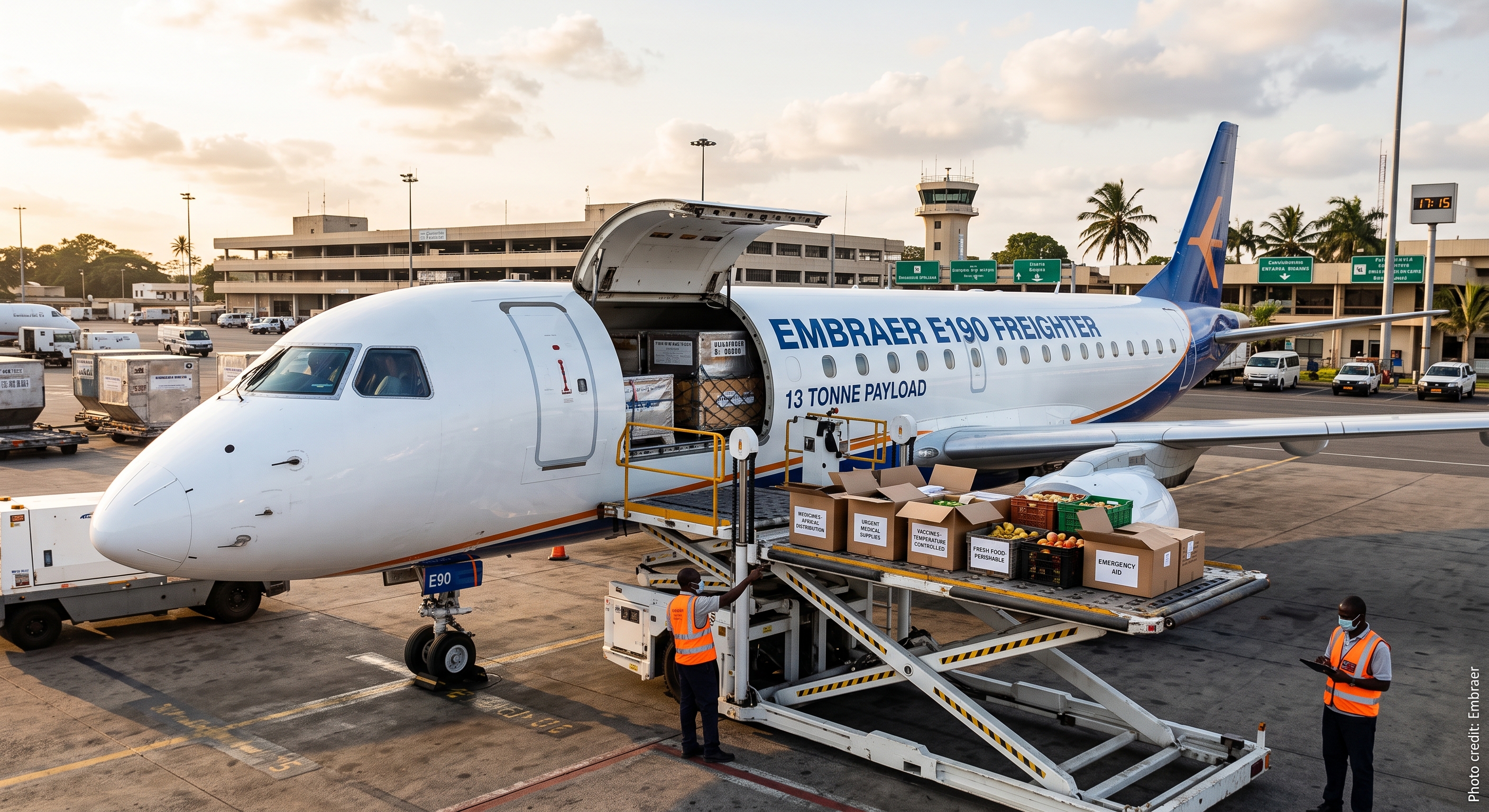

![Embraer is promoting converted E190 passenger jets as 13-tonne freighters for medicines, food and other time-sensitive African cargo. [Gemini Generated Image]](https://ocdn.eu/pulscms/MDA_/e6b3c37ddfc51e9e5b2b3a2ba8cbbe40.jpg)
Brazilian aircraft manufacturer Embraer is targeting African airlines with converted passenger jets capable of carrying 13 tonnes of cargo as it seeks to profit from the continent’s weak air, road and rail connections.
- Embraer wants to sell more regional passenger aircraft and converted E190 freighters in Africa.
- Its converted aircraft can carry up to 13 tonnes of cargo.
- The company sees weak roads, railways and direct air links as a commercial opportunity.
- Embraer has not disclosed an African cargo customer, order or delivery date.
Hussein Dabbas, Embraer’s managing director for institutional relations in Africa and the Middle East, said the continent’s limited connections created opportunities for smaller aircraft operating more frequently.
Dabbas made the comments in an interview with Brazilian publication Exame, subsequently reported by UOL.
He said Africa accounts for less than 6% of global air traffic despite having a population exceeding 1.2 billion.
Flying through Europe to reach Africa
Many journeys between African cities remain indirect.
DON'T MISS THIS: New West African flight route set to boost trade between Ghana, Burkina Faso
Passengers can be required to connect through European or Middle Eastern airports because no airline operates a commercially viable direct service between their origin and destination.
Dabbas cited journeys routed through Paris as an example of the inefficiency.
Embraer argues that smaller aircraft can help airlines open thinner routes without taking the financial risk of trying to fill a large Boeing or Airbus jet.
A carrier operating two or three weekly flights may also be able to offer a daily service with a smaller plane, making the route more attractive to business passengers.
Embraer already has a significant African presence through airlines including Airlink, Kenya Airways and EgyptAir, which operate or have operated its regional jets.
DON'T MISS THIS: Kenya’s national carrier adds the world's quietest and most efficient passenger jet to its growing fleet
Passenger jets become freighters
The company is now promoting cargo versions of its first-generation E-Jets, particularly the E190.
Embraer removes the passenger seats, strengthens the cabin floor and installs a large cargo door, converting an older passenger plane into a freighter capable of transporting up to 13 tonnes.
The aircraft could carry medicine, fresh food, e-commerce parcels and other time-sensitive goods between cities where surface transport is slow or unreliable.
Road and rail constraints make the proposition particularly relevant in landlocked countries and regions where moving cargo a relatively short distance can take several days.
The freighters currently operate principally in Europe. Embraer has not announced an African order or disclosed which airlines it is negotiating with.
The economics must still work
Poor infrastructure alone does not make an air-cargo route profitable.
Air freight is considerably more expensive than moving goods by road, rail or sea. Airlines require cargo valuable or urgent enough to justify the higher cost.
Converted E190s would also compete with turboprop freighters, older Boeing 737s and unused capacity in the holds of passenger aircraft.
DON'T MISS THIS:African airlines beat global aviation growth with 11.7% passenger demand and an 18% cargo surge in early 2026
African airlines frequently face high financing costs, shortages of foreign currency and expensive maintenance requirements. Those constraints could limit purchases even where cargo demand exists.
Embraer’s plan is therefore a commercial target, not evidence of completed sales.
The stronger test will be whether the manufacturer can identify routes where 13 tonnes is sufficiently large to make money but small enough to avoid the risk of an underfilled conventional freighter.