Daniel Bailey Talks … Pressure @ THE HOUSEMATES FESTIVAL
This month, the Housemates Festival returns to Brixton House inviting artists to take over the House for three weeks from 1-19 Sep. The Brixton House Housemates Festival 2026 explores themes of women’s healthcare, queer faith, politics, race, loneliness, and contemporary survival, while staying rooted in South London communities. The festival is part of Brixton House’s […]
 Black News


This month, the Housemates Festival returns to Brixton House inviting artists to take over the House for three weeks from 1-19 Sep.
The Brixton House Housemates Festival 2026 explores themes of women’s healthcare, queer faith, politics, race, loneliness, and contemporary survival, while staying rooted in South London communities.
The festival is part of Brixton House’s deep commitment to invest in artists to develop their creative potential. Alongside new works, this year’s expanded Housemates Festival also includes three weeks of wrap-around events aimed at career and creative development.
We spoke to some of the wonderful cast and creatives involved in this year’s festival.
Pressure by Danny Bailey is part of Brixton House’s flagship Housemates Festival for new work, 1-19 Sep. Tickets £17
Please introduce yourself … Tell us about your production and the story you’re bringing to Housemates Festival this year… By 2011, Paulette barely recognises herself. But when the police killing of Mark Duggan ignites the Tottenham Uprising, the unrest tears open a portal between past and present. Pulled through memory, hallucination, and ancestral invocation, Paulette is thrust into a living history of revolt, journeying through the 1981 Brixton Uprisings, Jamaica’s traditions of resistance, and the revolutionary spirits that refuse to stay buried. As the streets erupt once more, Paulette’s living room becomes a battleground where personal awakening and collective struggle collide. Blending Kumina, sound-system culture, and the vibration of rebellion, Pressure traces a path from Nanny Town to Brixton, asking whether riot is the language of the oppressed, what it means to inherit a legacy of resistance, and whether every revolution begins at home. Tell us a little about your team and the people helping you bring the production to life … How does it feel to be part of Housemates Festival 2026 and to have Brixton House supporting the development of your work?Brixton House has been a creative home for me. They have really nurtured and championed me as a cultural curator and artist. So, when the opportunity arose for my play to be a part of Housemates Festival, it felt like the perfect home. I’m really grateful for the support that I have received from Brixton hHouse and look forward to the future. Pressure follows a Brixton family through three generations of uprisings. What interested you in looking at Black British history through one family’s experiences, and what does moving across those generations allow you to say about Britain and the Black communities experiences today? For Black British people, revolution has often been marked by violence, not only in its physical forms, but in the everyday realities of racism and systemic inequality. Alongside that, we have created spaces of joy, resistance, and peace through our music, food, culture, and communities. Those traditions have sustained us, but they have never erased the struggle. This play asks what revolution costs across generations. What keeps us rising despite everything? What do families lose in the process? What is changed, inherited, or left behind? It is also important to acknowledge that, as Caribbean people, we continue to live within the legacy of the Middle Passage. As Black British people, many of us experience another form of displacement, a life lived at a distance from our ancestral source. This play is, in part, an attempt to document that survival: the resilience, the grief, the memory and the love that continue to shape who we are. What does this story mean to you personally? Was there a particular moment, experience or conversation that first sparked the idea for the piece? Each of the productions this year tackles some pretty big themes, from race, identity and mental health to faith, healthcare and survival. How did you decide on the way you wanted to approach the themes within your own work? What has been the most challenging part of developing this project, and was there a moment when you really had to dig deep to push through? Tell us about a memorable moment from the development or rehearsal process so far… Is there a particular scene, character or moment that best represents what you love about this project? Housemates is about championing new voices and new work. What do you think British theatre needs to be doing more of when it comes to supporting emerging artists and the stories they want to tell? Considering your journey as a creative so far, where does this project sit for you personally? What other production from this year’s Housemates Festival are you most looking forward to seeing? If not this, then what? A Creative Arts Therapist What’s made you sad, mad, & glad this week?
Sad, the floods in Nepal. Glad, Carnival 2026. Mad, I dont really get that mad – irritated though – I can do, waiting or looking for people at carnival. What are you watching?
I am watching Possession and Project Runway What are you reading?
Annie John by Jamaica Kincaid The last film you watched?
I actually watched Love and Basketball at the rooftop cinema. That was fun. The last play you saw?
Choir Boy at Stratford East The last live music event? Notting Hill Carnival What’s currently on your playlist? I really like KWN and am listening to Dustin Conrad. But my most played is Kelis Glow. Which podcast are you listening to? Skin Out hosted by Toni Murphy and Busy Being Black by Joshua Rivers What’s on your bucket list?
To get my Bajan Citizenship and do more work in the Caribbean with and for Caribbeans. Where’s your happy place? My happy place is Carnival, but cos that’s only once a year, Brazil, Brussels, winter in my bed with my dog. Celebrate someone else … I rate anyone who gets up and does what they want to do everyday. Regardless of the fake constructs that we’re forced to live in, to honour themselves, create, breathe and see themselves. Celebrate yourself … I’m coming up to 2 years in therapy. What’s next?
I’m filming my first short film in October which I have written and Directed called The Price Of Plantain Where can we find you? My instagram @ItsDannyBwoi and Brixton House is @BrxHouseTheatre Where can we watch you at work? You can come see the play at Brixton House from the 8th-12th of September or follow my platform @ThePalaceOfTheDogs for more on work that I do with supporting Black and Brown artists. Pressure by Danny Bailey is part of Brixton House’s flagship Housemates Festival for new work, 1-19 Sep. Tickets £17
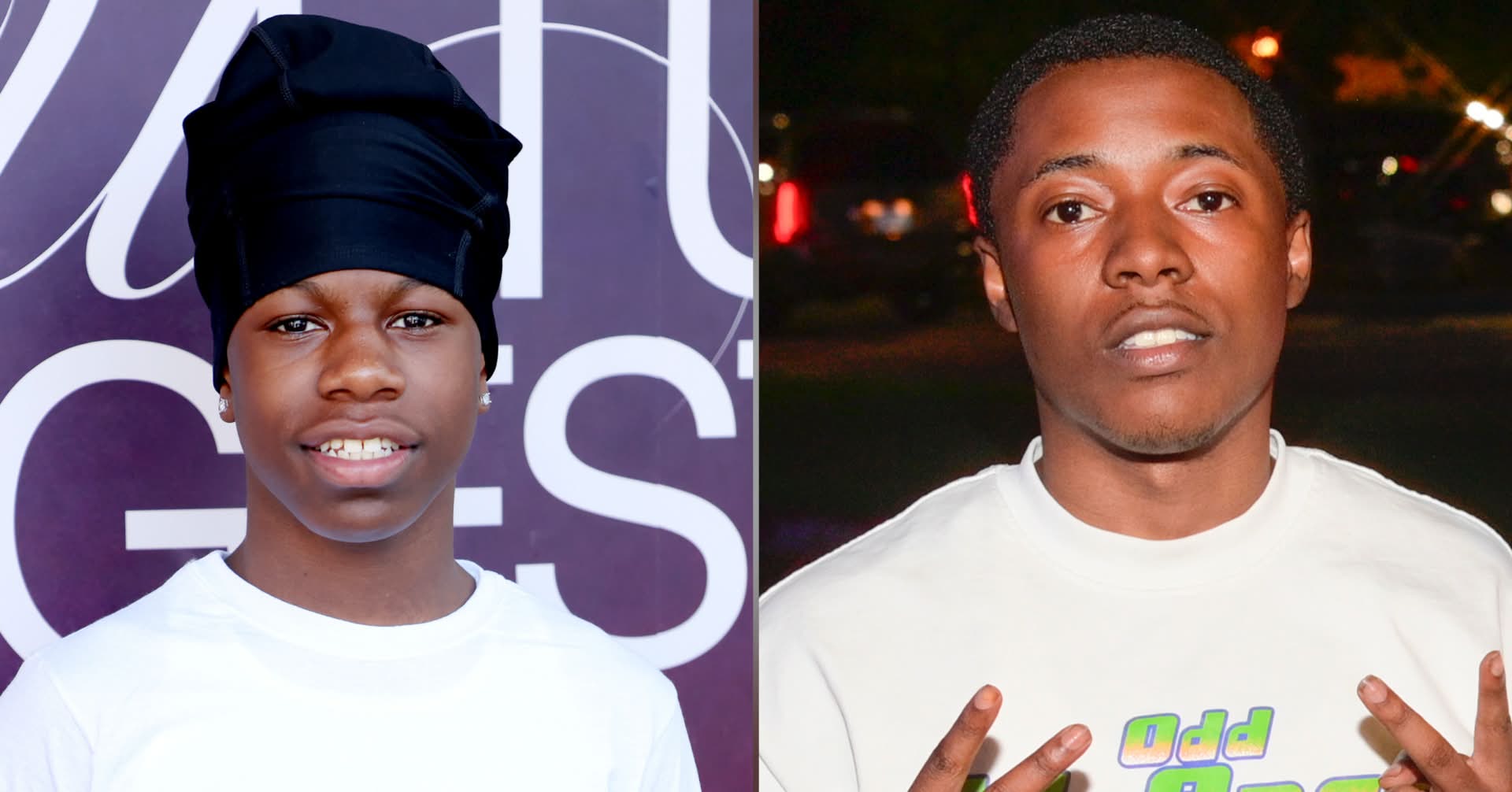
I am Danny Bailey aka @ItsDannyBwoi from Hackney NorthEast London.
Driven by the basslines of lovers rock, reggae, dub, sound-system culture, dance, and ritual, the play follows Paulette, a Jamaican woman in Brixton living under the shadow of the barrel child and the revolutionary legacy of Jamaica’s Blue Mountains.
I am so privileged to have a brilliant creative team and cast working on this project, including Jade Lewis (Director), Xana on sound design and Jade Hackett on movement. It was so important for me to have a team that really understands Caribbean British culture to bring this show to life. I think there is great importance around us championing and holding the baton for our narratives, as that is not always the case. So I am extremely pleased about our likkle Bad breed team.
First and foremost, this play is dedicated to my Uncle Anthony, who tragically lost his life as a result of neglect while in mental health care. His story sits at the heart of this work. I believe there is something vital to be said about the intersection of his mental health decline and what it meant to grow up during the emergence of Black British identity.
It is also important to acknowledge that, as Caribbean people, we continue to live within the legacy of the Middle Passage. As Black British people, many of us experience another form of displacement, a life lived at a distance from our ancestral source. This play is, in part, an attempt to document that survival: the resilience, the grief, the memory, and the love that continue to shape who we are.
This story was gifted to me through my communities, my family, my friends and my culture. All of these characters, I know. They are an aunty in Iceland, a man drinking Special Brew on the bench, a radicalised breddah on a street corner preaching freedom. It’s my contribution to revolution and protest for my people.
I really love the early Black British films like Burning An Illusion by Menelik Shabazz and Pressure by Horace Ové. These films note how the social politics of the 1980s affected Black families, and I wondered what a modern-day version of that would like.
They are big themes, and one thing I didn’t want to do is cause Black people any harm with this play so I concentrated on the way we survive, thrive and overcome rather than sitting in the mess. Every character, though flawed, is a hero. They all want peace and they all want freedom.
I wrote the play over three years, and I wouldn’t necessarily say that it was challenging, but each time I went back to the script, I noticed that I had changed and my thoughts around revolution and what it means to me had changed. So it was like updating old versions of myself each time. I think the most challenging thing was deciding that this was the version that I wanted to show.
My favourite moments are always when I hear the text out loud for the first time. The characters coming to life is such an amazing experience.
I wrote some lovers rock and some dub sound system chatting-on-di-mic tunes which I’m really proud of and will have you whining in your seats.
It’s interesting because “theatre” is a business run by humans. In a sense, by proxy of it being something to make money, it is inherently flawed. How do we fix something that is flawed? You have to break it. So, in a dream world, I’d love to see theatre in a way that doesn’t cost your whole monthly food shop to go and watch. I’d love to see theatre outside of the theatre, in markets, in estates or in an old swimming pool or something like that.
I’ve been an actor for many years, and I have had the privilege to be telling some brilliant Caribbean stories. I want more of them, and I want to be a part of the rooms that are leading them. I’m very excited!!
I’m really looking forward to seeing Tube Chronicles and Runner Girl.GETTING TO KNOW …