Bringing YE (Kanye West) to Jakarta: Inside Raw Vision Collective’s biggest swing yet
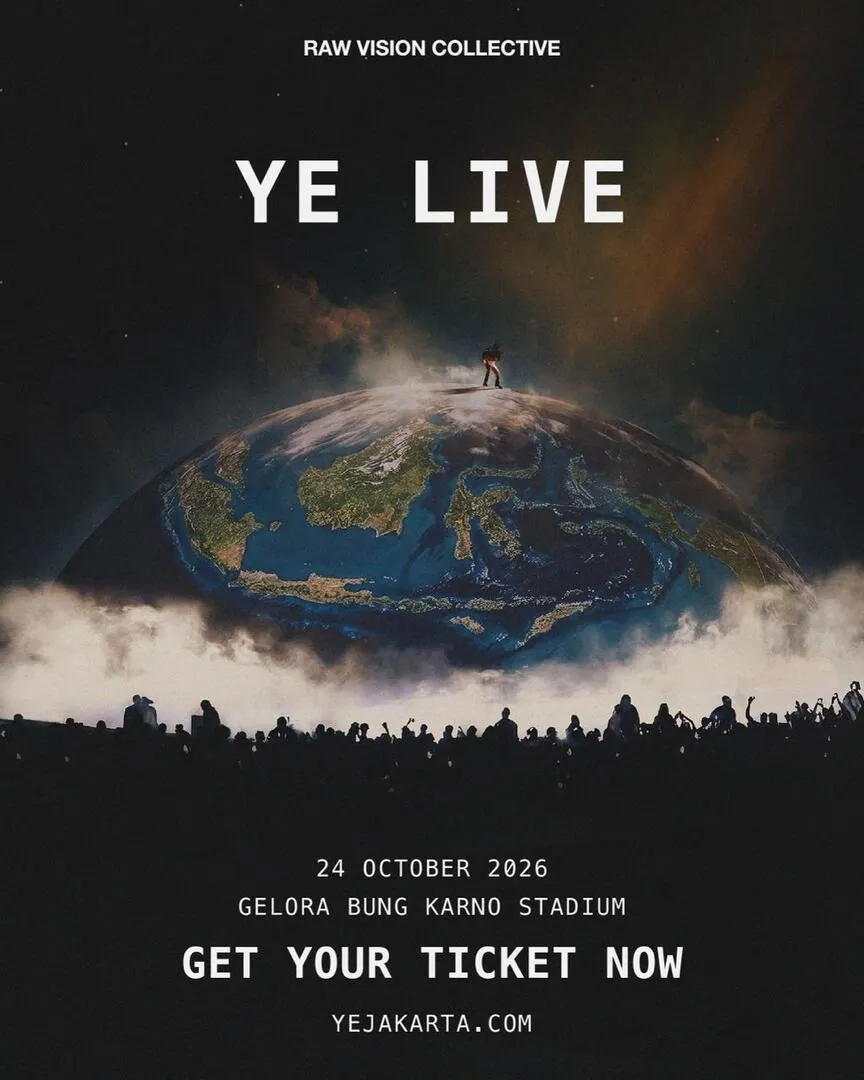
YE (fka Kanye West) is set make his Indonesian concert debut on 24 October at Gelora Bung Karno (GBK) Main Stadium, bringing his 360-degree Globe Stage to a venue that can hold up to 77,000 fans. The show is currently his only announced Southeast Asian stop, giving Jakarta a rare moment at the centre of his regional touring plans. For promoter Raw Vision Collective, the concert is bigger than a one-night spectacle. Anchored by CEO Micha Nanda and Chief Marketing Officer Karen Tjahja, the collective sees the show as a chance to prove Jakarta can host major global productions while also drawing attention to the city’s wider creative culture. Early demand suggests that ambition is already travelling, with ticket purchases coming in from across Asia Pacific and beyond, while Category 4 — the most affordable tier — is nearing sell-out. Here, Raw Vision Collective traces the journey from meeting YE in the U.S. and seeing the Globe Stage firsthand in Kazakhstan to the realities of producing a stadium show with local and international teams. Along the way, the collective reflects on Jakarta’s growing place on the touring map, the value of concert tourism, and what projects like this could mean for Indonesia’s live music ecosystem. YE LIVE IN JAKARTA is YE's only announced Southeast Asian stop. Can you walk us through how this opportunity first came about? The opportunity developed over time through conversations, relationships, and trust. We went to the U.S. to meet YE and his team, share our vision for Indonesia, and discuss what it would take to bring a production of this scale to Jakarta. As part of that journey, we also attended YE shows overseas to experience the production firsthand. Most recently, the Raw Vision Collective team travelled to Almaty, Kazakhstan, to see the latest execution of the Globe Stage up close and meet members of YE’s creative circle, including Tony Williams and Andre Troutman. Being there gave us a much clearer understanding of how YE’s live experience comes together, from the Globe Stage and technical elements to the overall production and audience experience, and helped us look more practically at what needs to be prepared locally. At the same time, we see this relationship as a two-way cultural exchange. While we are learning from YE and his team about the creative vision behind the show, we also want to present YE with a window into Indonesian culture and art. YE has consistently drawn inspiration from different cultures and creative disciplines around the world, from the visual references surrounding BULLY, which draw inspiration from traditional Mexican wrestling, to his appreciation for Japanese art, architecture, and photography, including figures such as Daido Moriyama and Tadao Ando. Interestingly, there is already a connection to Indonesia. 'Jukebox Joints', YE’s collaboration with A$AP Rocky, samples 'Doa Untuk Kekasih' by Indonesian band Rasela. For us, that creates an interesting starting point to introduce him to even more of Indonesia’s creative heritage. We are preparing a curated selection of Indonesian music, art, and cultural references from different eras to share with YE, and we hope it gives him an opportunity to discover more of the richness of Indonesian culture and perhaps find inspiration that could become part of his future creative work. It is not only about bringing YE’s creative world to Indonesia, but also about showing what Indonesia can bring to the global stage. At what point did you know this was a realistic possibility rather than just an ambition? There wasn’t really one single moment where everything suddenly became real. It happened step by step, starting with conversations and relationship-building with YE’s management team. One moment that really stood out was when we were invited to meet YE personally in the U.S. while he was working on a music video. Up until that point, most of our conversations had been with his management, so finally meeting YE directly felt like an important moment in the journey. During that meeting, YE asked us a very simple but important question: “Why should I come to Jakarta?” That opened up a much more direct conversation about Indonesia, its audience, cultural energy, creative talent, and why we believed Jakarta was capable of delivering a production of this scale. From there, things became increasingly concrete, moving into detailed discussions around production, venue, logistics, technical requirements, and timelines. Seeing the Globe Stage firsthand in Almaty also gave us a much clearer understanding of what would be required to bring that experience to Jakarta. It was really the combination of the personal conversation with YE, the increasingly detailed production discussions, and seeing the show up close that made the opportunity feel much more tangible. View this post on Instagram A post shared by Raw Vision Collective (@rawvision.collective) So why
 Black News
YE (fka Kanye West) is set make his Indonesian concert debut on 24 October at Gelora Bung Karno (GBK) Main Stadium, bringing his 360-degree Globe Stage to a venue that can hold up to 77,000 fans. The show is currently his only announced Southeast Asian stop, giving Jakarta a rare moment at the centre of his regional touring plans.
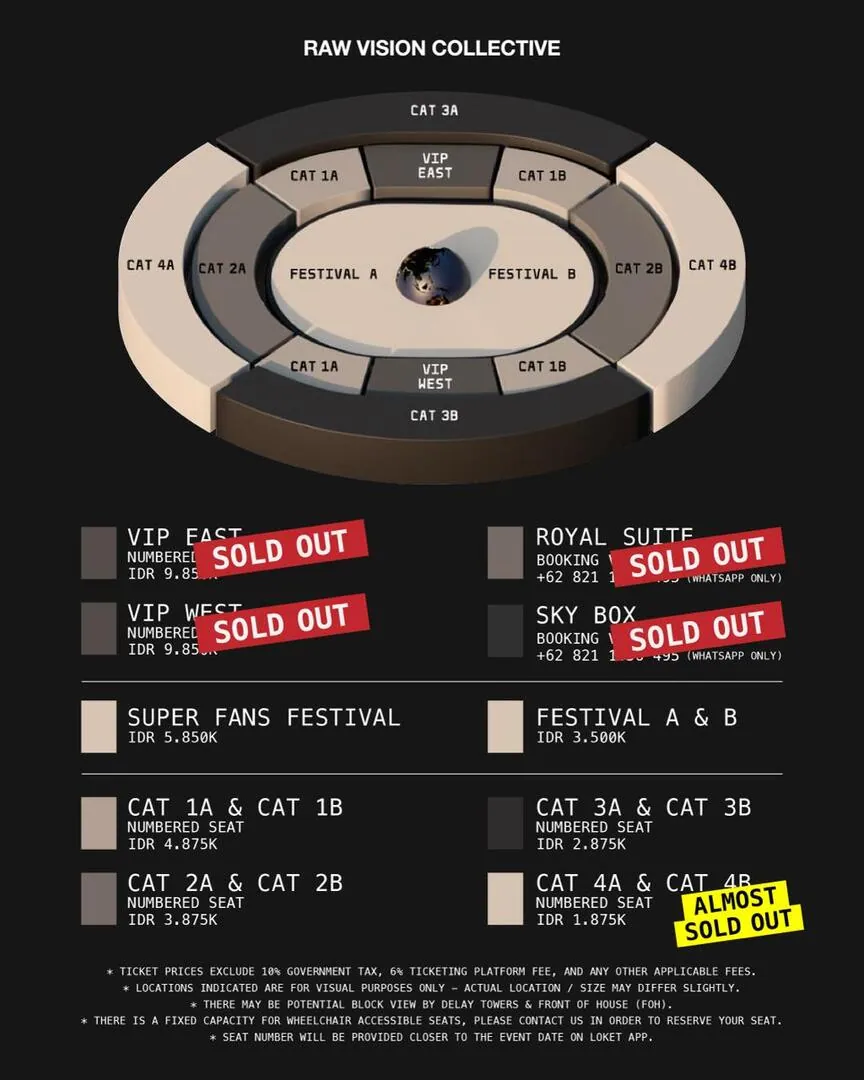
For promoter Raw Vision Collective, the concert is bigger than a one-night spectacle. Anchored by CEO Micha Nanda and Chief Marketing Officer Karen Tjahja, the collective sees the show as a chance to prove Jakarta can host major global productions while also drawing attention to the city’s wider creative culture. Early demand suggests that ambition is already travelling, with ticket purchases coming in from across Asia Pacific and beyond, while Category 4 — the most affordable tier — is nearing sell-out.
Here, Raw Vision Collective traces the journey from meeting YE in the U.S. and seeing the Globe Stage firsthand in Kazakhstan to the realities of producing a stadium show with local and international teams. Along the way, the collective reflects on Jakarta’s growing place on the touring map, the value of concert tourism, and what projects like this could mean for Indonesia’s live music ecosystem.
YE LIVE IN JAKARTA is YE's only announced Southeast Asian stop. Can you walk us through how this opportunity first came about?
The opportunity developed over time through conversations, relationships, and trust. We went to the U.S. to meet YE and his team, share our vision for Indonesia, and discuss what it would take to bring a production of this scale to Jakarta. As part of that journey, we also attended YE shows overseas to experience the production firsthand. Most recently, the Raw Vision Collective team travelled to Almaty, Kazakhstan, to see the latest execution of the Globe Stage up close and meet members of YE’s creative circle, including Tony Williams and Andre Troutman. Being there gave us a much clearer understanding of how YE’s live experience comes together, from the Globe Stage and technical elements to the overall production and audience experience, and helped us look more practically at what needs to be prepared locally.
At the same time, we see this relationship as a two-way cultural exchange. While we are learning from YE and his team about the creative vision behind the show, we also want to present YE with a window into Indonesian culture and art. YE has consistently drawn inspiration from different cultures and creative disciplines around the world, from the visual references surrounding BULLY, which draw inspiration from traditional Mexican wrestling, to his appreciation for Japanese art, architecture, and photography, including figures such as Daido Moriyama and Tadao Ando.
Interestingly, there is already a connection to Indonesia. 'Jukebox Joints', YE’s collaboration with A$AP Rocky, samples 'Doa Untuk Kekasih' by Indonesian band Rasela. For us, that creates an interesting starting point to introduce him to even more of Indonesia’s creative heritage. We are preparing a curated selection of Indonesian music, art, and cultural references from different eras to share with YE, and we hope it gives him an opportunity to discover more of the richness of Indonesian culture and perhaps find inspiration that could become part of his future creative work. It is not only about bringing YE’s creative world to Indonesia, but also about showing what Indonesia can bring to the global stage.
At what point did you know this was a realistic possibility rather than just an ambition?
There wasn’t really one single moment where everything suddenly became real. It happened step by step, starting with conversations and relationship-building with YE’s management team. One moment that really stood out was when we were invited to meet YE personally in the U.S. while he was working on a music video. Up until that point, most of our conversations had been with his management, so finally meeting YE directly felt like an important moment in the journey.
During that meeting, YE asked us a very simple but important question: “Why should I come to Jakarta?” That opened up a much more direct conversation about Indonesia, its audience, cultural energy, creative talent, and why we believed Jakarta was capable of delivering a production of this scale. From there, things became increasingly concrete, moving into detailed discussions around production, venue, logistics, technical requirements, and timelines. Seeing the Globe Stage firsthand in Almaty also gave us a much clearer understanding of what would be required to bring that experience to Jakarta. It was really the combination of the personal conversation with YE, the increasingly detailed production discussions, and seeing the show up close that made the opportunity feel much more tangible.
So why was Jakarta the right city for this show, and what made Raw Vision Collective the right team to bring it together?
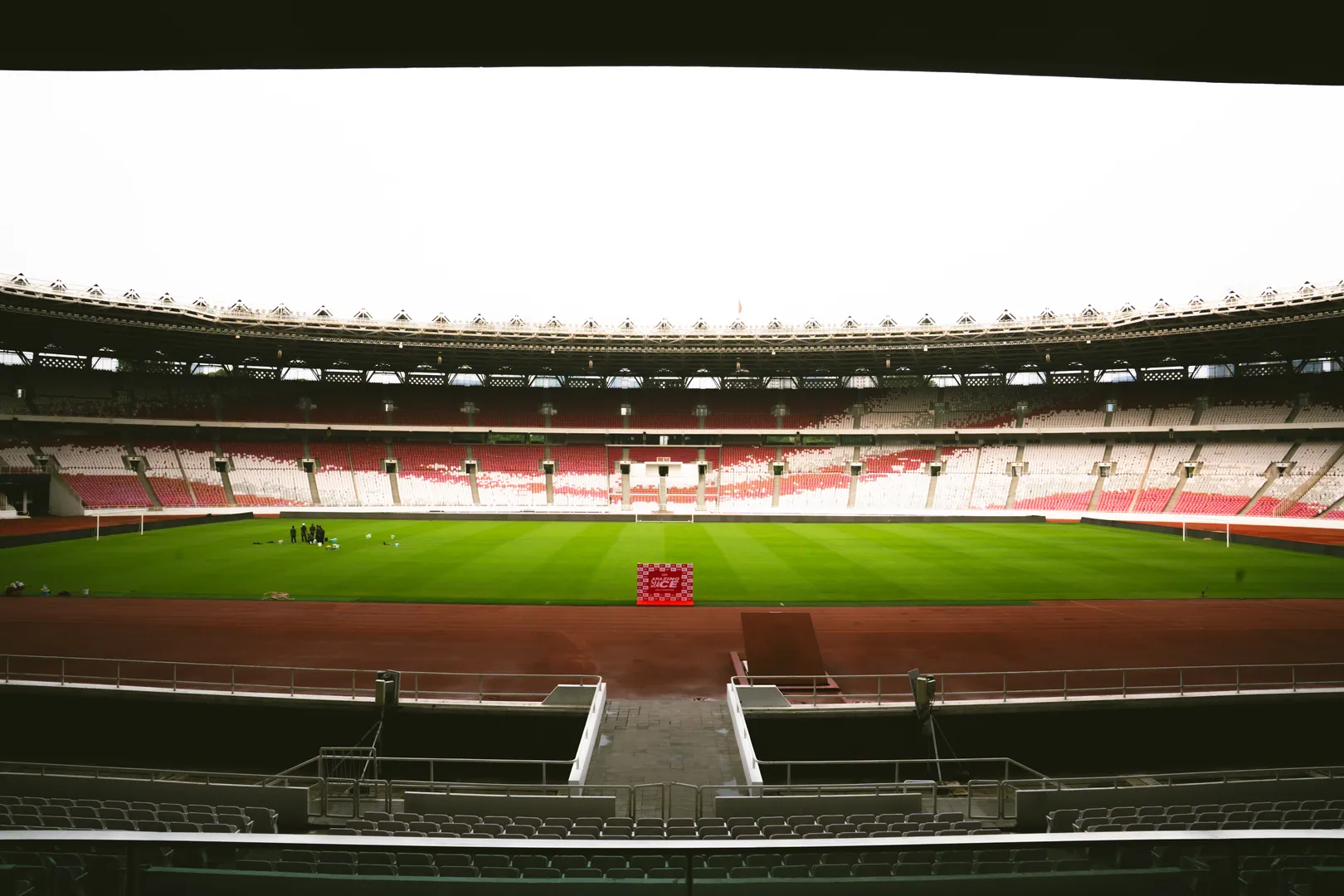
For us, what makes Jakarta exciting is the combination of audience, cultural energy, and scale. Indonesia has a large and highly engaged music audience, supported by a strong creative ecosystem across music, fashion, art, and culture. Jakarta also has the infrastructure needed for a production of this magnitude, with GBK stadium providing the capacity and scale required for a major international stadium show.
Importantly, we see this as an opportunity to showcase what Jakarta and Indonesia can offer as a destination for international live music. We are already seeing interest from overseas markets, including Singapore, Australia, the Philippines, Vietnam, and other countries, which shows that the opportunity extends beyond the domestic audience. Fans travelling for the concert can also experience Jakarta’s food, culture, fashion, hospitality, and creative scene, making the city part of the overall journey.
This reflects what Raw Vision Collective stands for. We believe live music can offer more than a conventional concert experience. As a creative collective, we aim to build cultural experiences that bring together music, art, food, travel, and community in a more immersive and meaningful way. YE was a natural fit for that vision because his work has always gone beyond music, bringing together visual art, fashion, stage design, and storytelling. So for us, YE LIVE IN JAKARTA is not only about bringing a major international artist to Indonesia, but also about showing what Jakarta and Indonesia can offer to audiences and international touring teams.
Were there any moments during the planning process when you thought the concert might not happen?
The very first and most crucial moment was convincing YE that Jakarta was the right place for this show. Once we had that commitment, the focus shifted to bringing that vision to life. Since then, we have been working closely with YE’s team and our Indonesian production professionals to understand the technical requirements and everything it takes to execute a show of this scale. There are a lot of moving parts behind the scenes, from production and logistics to safety and crowd management, and our focus has been on making sure everything comes together seamlessly. At the end of the day, all of that preparation comes down to one thing: giving fans in Jakarta a truly once-in-a-lifetime experience.
The Globe Stage has become synonymous with YE’s recent performances. What are some of the biggest logistical and technical challenges of bringing a production like this to Indonesia?
The Globe Stage is definitely one of the elements we are most excited to bring to Jakarta. It has become such a defining part of YE’s recent performances, and experiencing it in person is very different from watching a conventional stadium show. What makes it special is the 360-degree concept. Instead of a traditional front-facing stage, the Globe Stage creates an immersive environment where the production surrounds the audience, bringing together the performance, visuals, lighting, audio, and pyrotechnics as one integrated experience.
Having attended several YE shows overseas, including the recent show in Almaty, we have been able to see firsthand how complex the production is and how every element needs to work together. What audiences see on stage is only one part of the story. From the structure and electrical systems to audio, lighting, special effects, logistics, crowd movement, and safety, every detail has to come together.
A big part of making that happen is the expertise of our Indonesian production teams. They are working closely with YE’s international production team and GBK to bring the production to life here in Jakarta. They understand the local environment, the technical requirements, and what it takes to execute a show of this scale safely and professionally. But our ambition goes beyond delivering the Globe Stage itself. We want YE LIVE IN JAKARTA to feel like a complete experience, especially for fans travelling from outside Indonesia — one that extends beyond the stadium and beyond one night.
How much of the production is travelling internationally, and how much is being built or supported by local Indonesian crews?
It is very much a collaborative production, and that is one of the things we really value about the project. Certain specialised elements naturally travel with YE’s production so the show can maintain its technical and creative standards. At the same time, a stadium production of this scale needs significant Indonesian involvement across production, logistics, venue operations, security, hospitality, transportation, and other areas.
We are not putting a specific percentage on that split because the production continues to evolve as we move closer to the show. What matters most is how both teams work together. Indonesian professionals gain firsthand experience alongside an international touring production, while the international team benefits from local expertise and knowledge of the market. That exchange is important for us because the goal is not only to deliver one great concert, but also to build experience and capability that can support future world-class productions in Indonesia.
Raw Vision Collective describes itself as a purpose-driven cultural collective rather than simply an event promoter. What does that distinction mean in practice?
Raw Vision Collective was established with the belief that live music can offer more than a conventional concert experience. We see ourselves not simply as a promoter, but as a creative collective that brings together music, production, visual culture, atmosphere, and audience experience in a more immersive and meaningful way.
That starts with the artists and projects we choose to work with. We are drawn to artists with a strong creative identity and a distinct point of view, not only in their music, but in how they approach performance, production, and culture. That can range from global figures like YE to influential electronic artists such as Jeff Mills and Moodymann, each of whom has shaped music and culture in their own way.
In practice, it also means thinking beyond what happens on stage. We look at the entire audience journey — how people discover the experience, how they enter and engage with the space, how the production brings the artist’s vision to life, and ultimately what they take away from it. Raw Vision is independent in its vision, serious about production standards, and committed to building live music experiences that feel distinctive, thoughtful, and relevant for today’s audiences.
As you mentioned, Raw Vision had already organised projects like the official BULLY listening party and Jeff Mills’ Jakarta show. How have those experiences shaped your approach to producing large-scale international events?
For every project, we pay close attention to the full audience journey, from the music and production design to the energy of the space and the way people experience the performance. Each project has taught us something different about creating a meaningful cultural experience.
The official BULLY listening party showed us the power of bringing people together around music and creating an experience that feels authentic to the artist and relevant to the audience. Jeff Mills reinforced another important lesson: when you work with an international artist, respecting the artist’s creative vision is just as important as delivering the production to a world-class standard. Those projects also helped us strengthen our understanding of production, audience experience, and collaboration between international and Indonesian teams.
YE LIVE IN JAKARTA is obviously on a completely different scale, but the principle is still the same: understand the artist’s vision, build the right team around it, and create an experience audiences will remember.
Beyond Indonesia, which audiences are you hoping will travel to the show, and why was regional tourism such an important part of your strategy?
We have been really encouraged by the international interest so far. From the beginning, we saw YE LIVE IN JAKARTA as more than an Indonesian concert. This will be YE’s first concert in Indonesia, which makes the moment especially exciting for local fans and also creates an opportunity for audiences from overseas to experience the show here.
The early signals have been encouraging. We are seeing interest from both Indonesia and overseas markets, including Singapore, Australia, the Philippines, Vietnam, even the UAE, and other countries. We are not sharing detailed country-by-country ticketing figures at this stage, but the geographical spread already shows that the conversation is reaching beyond Indonesia.
What excites us is the bigger opportunity around that. A fan may come to Jakarta because of YE, but while they are here, they can also experience the city’s food, culture, fashion, hospitality, and creative scene. That means the impact does not stop at the stadium. It can extend into flights, hotels, F&B, transportation, retail, and other local businesses.
A successful production at this scale can also demonstrate that the country has the audience, infrastructure, scale, and local talent needed to deliver major international productions, while building greater confidence among international touring teams in the market. In the longer term, we hope this can help make Southeast Asia a more natural part of global touring routes, with Indonesia playing a meaningful role in that growth.
Finally, what kinds of artists or cultural projects would you like Raw Vision Collective to be associated with over the next few years?
We are very excited about what could come next, but rather than starting with specific names, we think more about the kind of experiences we want to create. We want to work with artists and projects that bring world-class cultural experiences to Indonesia while creating opportunities for Indonesian talent, production professionals, and the wider creative ecosystem.
YE LIVE IN JAKARTA is an important step in that direction because it brings together international touring expertise and Indonesian professionals on a major production. Every successful collaboration helps build more capability, experience, and confidence for the next project.
Over the next few years, we hope Raw Vision can be associated with projects that are ambitious, culturally meaningful, and capable of creating impact beyond the event itself. For us, success would be seeing more world-class artists and productions choosing Indonesia, with local professionals playing an increasingly important role in making those experiences happen.