Built to fail: The untold story of Black housing in San Francisco
Built to fail: The untold story of Black housing in San Francisco — Housing Series, Part II The post Built to fail: The untold story of Black housing in San Francisco appeared first on San Francisco Bay View.
 Black News

Our co-op investigation has opened into a larger story about federal oversight, underused housing tools and why a city in crisis is still failing to house our people.
by Tabari Morris
Before the bulldozers came, the Fillmore was alive. Duke Ellington played there. Billie Holiday sang there. On any given night, you could walk down Fillmore Street and hear five different stars at five different clubs. Black people owned those blocks. They had built something.
Then the city called it blight.
What followed was one of the most extreme cases of government-mandated displacement in urban America. Blocks of the Fillmore were bulldozed. They tried to rename it the Western Addition to make people forget. People were relocated. Business establishments that formed the backbone of Black life were obliterated overnight. Photos and some people have survived — a bird’s-eye view of the cleared area, in the words of an eye-witness, looked like a war zone.
And out of the rubble came the promise of federal housing. Limited Equity Cooperatives. Policies that would ensure that Black families were not only able to rent their homes in the city but have some ownership interest as well. And Martin Luther King-Marcus Garvey Square (King-Garvey) represented one such promise.
Decades later, the documentation shows an entirely different story. A REAC (HUD Real Estate Assessment Center that inspects and evaluates the financial and physical condition of HUD-assisted housing) rating of 37. An almost defaulted building. An amount in excess of $44 million spent over many years to save the building with the deteriorating conditions experienced by its residents Vouchers made available but never used. Oversight mechanisms in place that evaluated compliance but never provided safety or stability.
The people are still waiting. The question this series asks is simple: Who was this system actually built to serve?
The whole purpose of HUD was to serve poor people primarily. It did not turn out that way.
San Francisco’s current housing crisis did not start with today’s waitlists, inspections or voucher backlogs. For Black residents, it is part of a much older story: the destruction of the Fillmore, the promises of federally backed housing, the rise of limited-equity cooperatives, and the long experience of being told that relief is coming while displacement keeps moving forward.
When the Fillmore was Harlem of the West
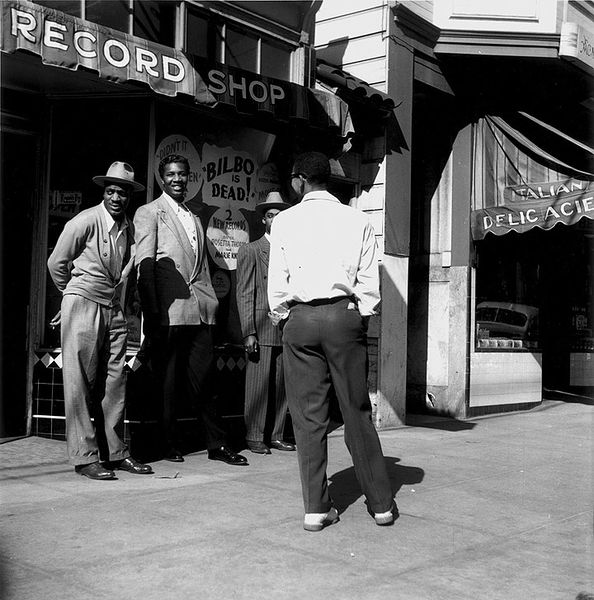
The Fillmore became the center of culture and the economic heart of Black San Francisco in the 1940s and 1950s.This area of San Francisco was referred to as “Harlem of the West” due to its jazz bars, Black-owned businesses, Black churches, Black newspapers, and a strong social organization that led to a thriving Black community.
This quick expansion of the Black population was also due to the movement of Blacks during the World War II years in order to find work and other opportunities in San Francisco. The Black population peaked in San Francisco in 1970; and, at the same time, there were elements that would lead to the demise of the Black community.
Black people had the neighborhood that was the biggest tourist attraction in San Francisco — and the City destroyed that revenue source in order to get rid of Black people.
The redevelopment plan for San Francisco had identified the Western Addition area as blighted and conducted a large-scale demolition of the area under the name of “urban renewal.” This process has been widely acknowledged as Black removal, where houses, businesses and whole communities were torn apart, with the Black cultural capital being split up and made to look like progress..
The photographs from that era show so much destruction, the area really did look like a war zone. Thousands of families were dislocated, hundreds of Victorian homes torn down, and Black business strips destroyed by urban renewal policies.
HUD and a broken promise
When HUD was created in 1965, it carried hope for Black community. It was supposed to concentrate federal power on housing and urban problems and serve poor people in a way no other federal department had been built to do.
Ther history of federal housing has also full of contradictions. The same federal framework that expanded subsidies and public housing also inherited urban renewal machinery, and later generations of residents would watch HUD oversight, private development interests, and local housing politics collide in ways that did not protect the people that became the most at risk.
The whole purpose of HUD was to serve poor people primarily. HUD did not turn out to be poor people’s savior. It turned out to belong to the developers.
Out of the destruction came developments such as King-Garvey and other limited-equity cooperatives. They offered more than shelter. For many Black families, they represented a chance to get security in the City through shared ownership, community governance and the possibility of stability after urban renewal had already taken so much.
That is why deterioration at these properties cannot be treated as just a maintenance issue. When a co-op created as part of the response to Black displacement began to fail, the damage became historical as well as physical. The promise being weakened is not only about one building; it is about whether Black San Franciscans were ever truly allowed to hold on to the city they helped build.
Jobs, ownership and Section 3
Section 3 of the HUD Act of 1968 requires that, to the greatest extent feasible, HUD-funded projects direct training, employment and contracting opportunities to low-income people in the community.
This matters because housing was never supposed to be just a roof. The people living in subsidized housing were supposed to have a stake in repairing it, maintaining it and building economic stability through it. Housing, jobs and local control were supposed to reinforce each other.
Look up the jobs, the homes, talk about being able to own your own place with your neighbors.
A city still shrinking Black belonging
Black numbers peaked at 13.4 percent in the city of San Francisco in the census of 1970 and dropped to 5.4 percent in 2020. The drop in the number is not only due to market forces. It reflects a more extensive pattern of policies and practices that have increasingly constrained Black inclusion within the city.
When tenants talk about problems in today’s housing market such as delayed vouchers, rising prices, pending maintenance, proposed construction projects, or technologies that threaten their housing, they do not describe distinct events. Instead, they tell yet another episode in the same story.
SF Bay View Managing Editor Tabari Morris can be reached at tabari@sfbayview.com.
———————–
The post Built to fail: The untold story of Black housing in San Francisco appeared first on San Francisco Bay View.