Laura Henry-Allain Talks Maya & Marley, Black Childhood and the Joy of Reading
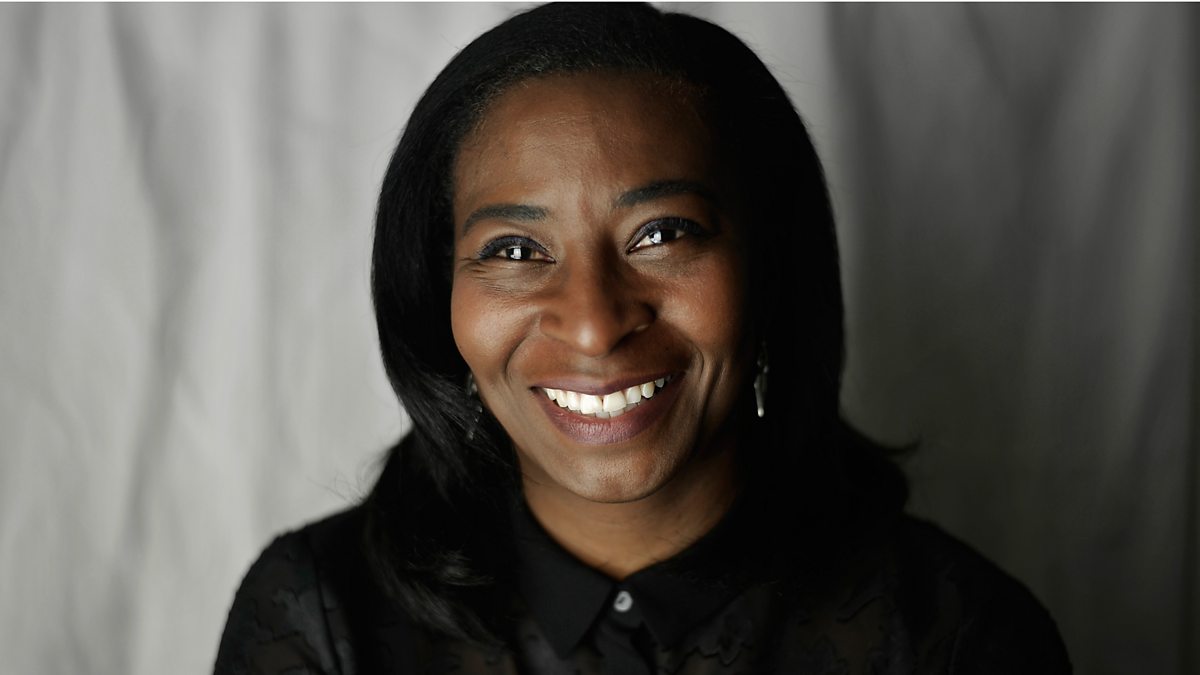
Laura Henry-Allain is an author, educationalist, producer and consultant whose work has transformed the landscape of children’s storytelling in the UK. Best known as the creator of the beloved CBeebies series JoJo & Gran Gran and the Maya & Marley books, Henry-Allain has spent her career championing joyful, authentic stories that celebrate Black childhood while […]
 Black News

Laura Henry-Allain is an author, educationalist, producer and consultant whose work has transformed the landscape of children’s storytelling in the UK.
Best known as the creator of the beloved CBeebies series JoJo & Gran Gran and the Maya & Marley books, Henry-Allain has spent her career championing joyful, authentic stories that celebrate Black childhood while nurturing curiosity, belonging and a lifelong love of reading.
As she releases the latest instalment in the series, Maya, Marley and the New Friend, and continues her work as an ambassador for the National Year of Reading 2026, Henry-Allain reflects on creating worlds where every child feels seen, why representation matters both on and beyond the page, and the enduring power of stories to shape young lives.
Please introduce yourself…
Laura Henry-Allain, author, educationalist, producer and consultant. I am a Gemini; my parents are from St Lucia, I was raised in Notting Hill, and I currently live in South London.
Describe your life in one word or a sentence…
Truly scrumptious.
Why are we here?
Talking all things children’s books and TV.
Since we last spoke, you have released Maya, Marley and the New Friend. What inspired this new chapter for Maya and Marley, and why did now feel like the right time to tell this story?
Maya and Marley and the New Friend is the new book in the series. I wanted to continue celebrating the community aspect of Maya and Marley. In this book, they celebrate a Great Big Community Lunch – my values are all about community, belonging and welcoming others. It was important to write about how Maya and Marley welcome their new friend Kasuki to Grove Adventure Playground.
Maya and Marley have become much-loved characters. How have they evolved since readers first met them, and what have they taught you as a storyteller?
They have evolved in terms of empowering others, as they do with Kasuki, empowering his voice and sense of belonging. Yabaewah, our illustrator, brought my words alive with her outstanding illustrations. Every time I read the book, I notice a tiny attention to detail that Yabaewah has included.
You’re an ambassador for the National Year of Reading 2026. At a time when reading for pleasure continues to decline, what do you think needs to change to help more children, particularly Black children, fall in love with books?
Stop closing libraries and ensure that every child and their family has a library within a suitable and accessible walking distance. There needs to be more emphasis on children being able to read for pleasure. More support for schools and parents. For publishers to know and understand that books featuring Black children do sell, and to partner and support Black literary events, such as the Black British Book Festival.
It’s important to share that I do not just write books featuring Black characters. Black people are not a monolith. I recently wrote a children’s book for Ascot Racecourse, Side Glance, Life After The Finish Line, available online at Ascot, and I have other books in the pipeline that do not feature a Black character as the protagonist. This highlights the diversity in my writing and that Black children can be inspired to read and write any genre when they read books written by Black authors on different themes.
Across your books, television work and podcast, you’ve consistently centred Black children in stories filled with joy, curiosity and possibility. Why is it still so important to create narratives where Black childhood is celebrated and what does meaningful representation look like to you today?
It is super important that Black children see themselves positively, doing everyday activities; I truly believe this has a positive impact on their self-esteem and self-worth, especially when the main protagonists are Black. The Grove Nursery School in Peckham shared Maya and Marley with children, and they responded with comments such as, “That’s my dad!” “He looks like my daddy,” and, “She looks like my mummy, she’s got hair like me. All the people have skin like me.”
We can cross-reference with the well-known research by psychologists Dr Kenneth Clark and Dr Mamie Clark in their 1940s study, the ‘doll test’. Their research on the impact of racial segregation on Black children showed that given a choice, white children and Black children favoured white dolls, illustrating the negative impact on the Black children’s self-esteem and internalised racism. We can’t shy away from the fact that books that feature Black children can have a positive impact on Black children’s sense of self and identity. We should also remember the important essay by Dr Rudine Bishop, Mirrors, Windows and Sliding Glass Doors. The mirrors are children seeing themselves, their family and culture in a book, and the windows and sliding glass doors are a way for them to see other children, to become curious and acknowledge positive differences.
You move between publishing, television, education and podcasting. How does each platform allow you to reach children and families in different ways, and how do they shape one another creatively?
I am honoured to work across many sectors. This helps my work reach a range of children in the UK and globally. I am also dyslexic, and my creativity is a way for me to express my thoughts and ideas.
From creating JoJo & Gran Gran to building the Maya & Marley series, what has surprised you most about the impact your work has had on children, families and educators?
It’s not a surprise per se when children, families and educators share the impact my work has had on them, but I always feel grateful and honoured that they have taken the time to do so. I always think little me, the dyslexic girl from Notting Hill.
As someone who has dedicated so much of your career to nurturing young readers, what stories first sparked your own imagination, and how do they continue to influence the stories you tell today?
I wasn’t officially diagnosed with dyslexia until I was in my 30s. I remember as a child, I was always daydreaming, which was more than likely creating stories in my head. When I am out and about, I may see or hear something that might spark an idea for a story, albeit to use in a book or TV.
Stories often become starting points for bigger conversations. If a parent or teacher shares Maya, Marley and the New Friend with a child for the first time, what conversations do you hope it sparks about Black identity, belonging and the confidence to know you deserve kindness, friendship and joy?
I would say, read the book with the child from start to finish, then use open-ended questions to point out, for example, do Maya and Marley look like them and/or family members? What about hairstyles, food for the community lunch, other characters? How may they welcome someone new? How do they feel when going somewhere for the first time? At the back of the book are some supporting pointers for adults to use with children whilst reading. Ladybird Books have also devised a few creative activities for children to do that lean into welcoming others, which are available on my website – or readers can email me.
Throughout your career, you’ve championed literacy, early years education and authentic representation, helping to shape what Black children’s storytelling looks like in the UK. As you look ahead, what legacy do you hope you’re building, and what still feels like the next chapter in your journey?
I remember a conversation where Oprah Winfrey spoke to one of my sheros, Maya Angelou. Oprah was excited to share that her school in South Africa will be her legacy. Maya told her that it is not you who says if your work will be a legacy; it is for others to share. Likewise, I believe it is not for me to say; it is for others. This could be family, friends, colleagues, admirers of my work, a stranger I met, etc., who can identify what my legacy will be.
GETTING TO KNOW YOU …
If not this, then what? Florist.
What’s made you sad, mad, & glad this week? Sad, with the school holidays starting, that many families on a low income will experience food poverty. Mad, I don’t do mad, although I’m frustrated at public transport delays, especially in the hot weather. Glad, spending time with my family and friends.
What are you watching? FIFA World Cup. Side note: why do we not have a West Indies football team, as we do with the cricket?
What are you reading? Emma Grede’s Start With Yourself: A New Vision for Work & Life.
The last film you watched? Toy Story 5.
The last play you saw? Can I change this question to the last creative experience? This would have to be Hurvin Anderson, the renowned Black British painter, at Tate Britain.
The last live music event? Swing ‘n’ Dine, a monthly session at The Tabernacle.
What’s currently on your playlist? Soca, rare groove, revival. I have so many favourite songs, I would say Jilly from Philly, Jill Scott, Golden.
Which podcast are you listening to? IMO with Michelle Obama and Craig Robinson.
What’s on your bucket list? To book on to a floristry course.
Where’s your happy place? My home.
Celebrate someone else… Selina Brown, founder of Europe’s largest Black literary event, the Black British Book Festival.
Celebrate yourself… Despite being dyslexic, I am a global award-winning creative.
What’s next? Hoping that my animation, Daddio & Co gets greenlit.
Where can we find you? @LauraHAllain