Cold camping in Svalbard, at the edge of the world
Longyearbyen — The Norwegian archipelago is just 800 miles from the North Pole, where temperatures languish far below freezing, but it’s also one of the world’s fastest warming areas. Steph Pomphrey sleeps on the ice with Db to find out more.
 Black News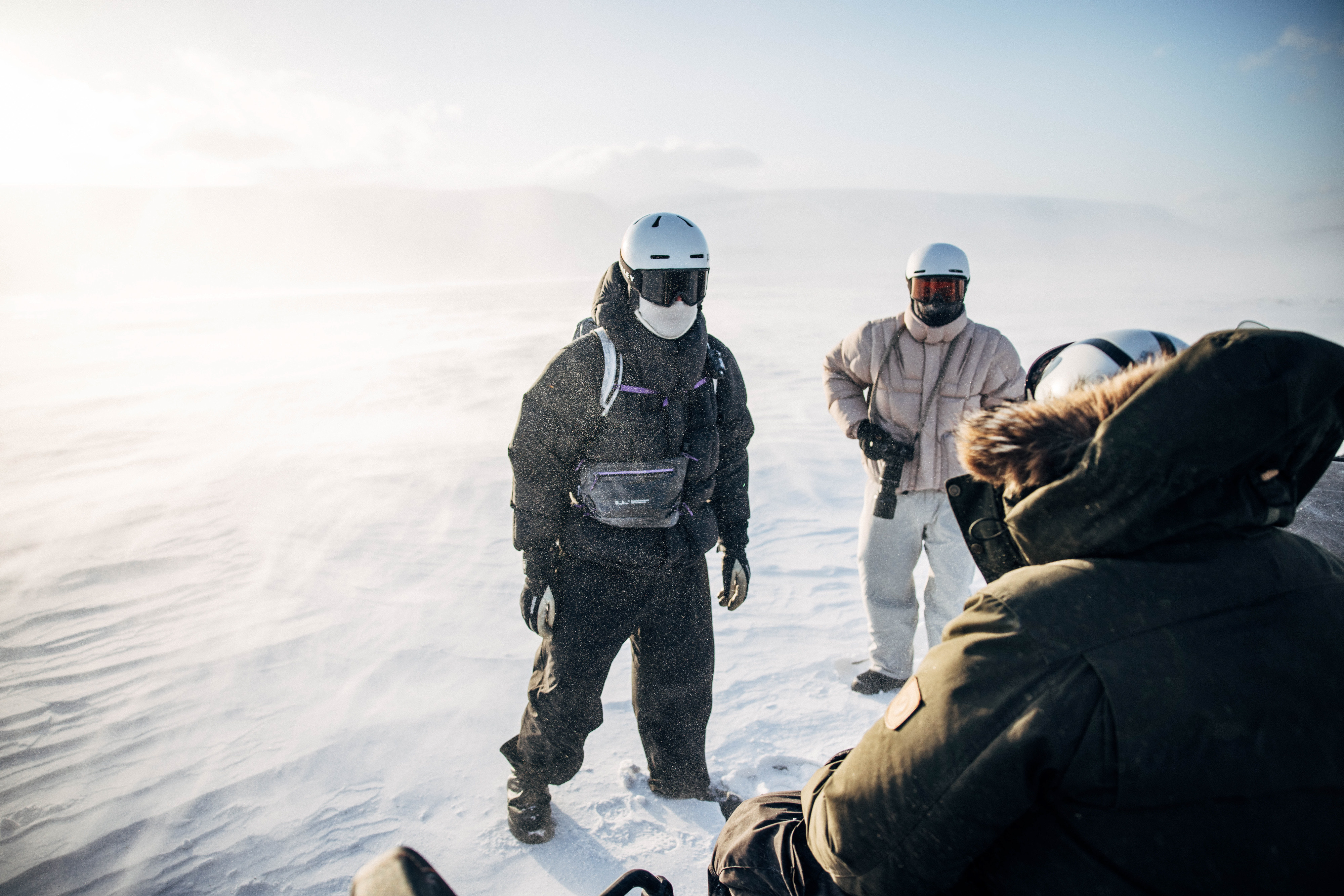


Longyearbyen — The Norwegian archipelago is just 800 miles from the North Pole, where temperatures languish far below freezing, but it’s also one of the world’s fastest warming areas. Steph Pomphrey sleeps on the ice with Db to find out more.
The signs are everywhere in Longyearbyen – the world’s northernmost town. They are on restaurant doors. On the streets. They inform: ‘No guns inside’ and they warn ‘watch for bears’. The polar bear is the Norwegian Svalbard archipelago’s icon, and also the world’s symbol of melting ice and receding glaciers. Our base for the trip, The Svalbard Hotel, is an homage to them: paw prints, photographs, the hulking silhouette. You see bears everywhere.
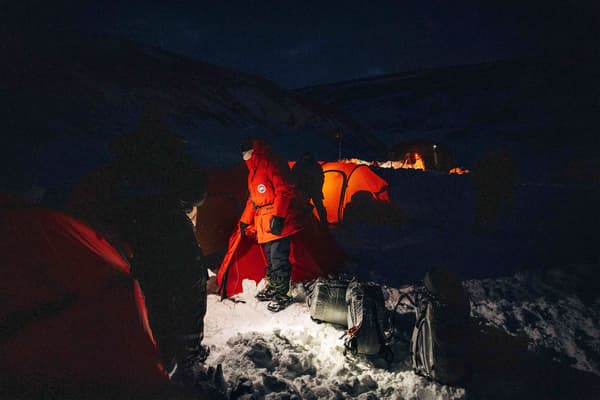
We arrive fresh on a Monday morning with our hosts Db to camp out on the ice in -25C and properly test their latest gear. And just maybe encounter a polar bear. There are more bears than humans living here. Spoiler, we did not, and nor did they find us in our tents. And somewhere between stepping off the plane into bright sunlight and whiteness, and driving a snowmobile across the tundra back to civilisation, I stopped needing to. Kind of glad, sad for the crew but happy not to have disturbed this legend of the ice.
Longyearbyen is the fastest-warming town in the world, but for a place of real extremes this is an easy tag. Hard to reconcile as we return, crossing the ice right up to the edge of town, the wind starting to get up and home comforts beckoning. Hard to also reconcile how the first explorers here fared as we take off our outer layers and secure our Db Weigh Darker bags from the snowmobiles and slip into a restaurant. Survival is priority one.
Read next: The wild, gruelling beauty of fell running
The scenery and conditions make you forget about everything. Nigeria has recently announced it is storing its archives and data here at the Arctic World Archive, alongside works of Chopin, Vatican artefacts and European Space Agency records. An act of preservation in case of catastrophe, a shelf life of 2000 years on special, digitised film. There is also the global seed bank vaulted in the hills above the town. Planetary insurance in sub zero conditions.The museum and university draw in a highbrow gaggle of worldwide visitors and academics. Out on the tundra, drenched in shifting light and landscape, the brain gets a serious reboot. A highly common feeling from a solid break anywhere if you’re doing it right, but this feels a good number of levels beyond that. A system update.
Though the residents I speak to are mostly long-term inhabitants and all the regular habits of town life are the norm, the thawing permafrost is slowly changing wildlife patterns. The storms are more extreme and human infrastructure here is challenged as a result.
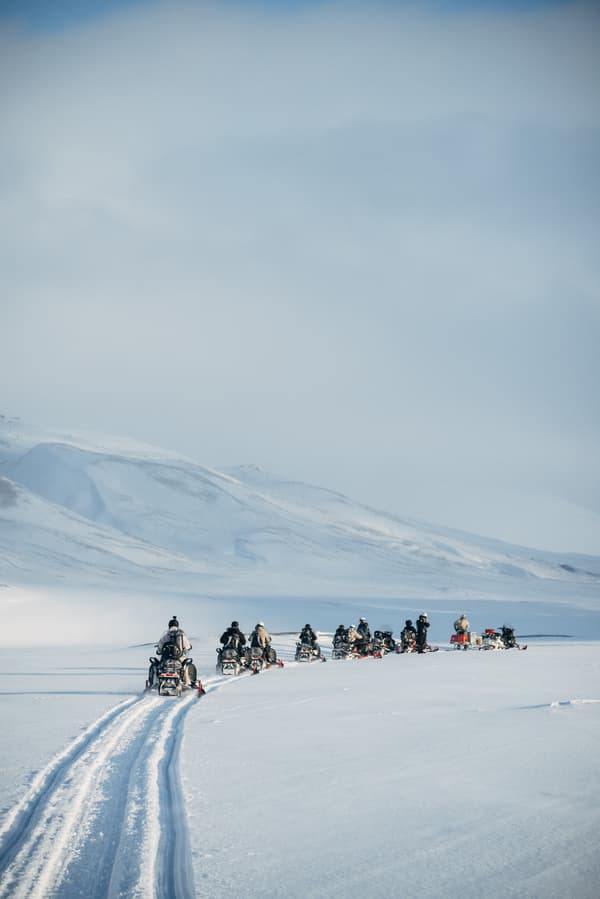
The constant wind-driven snow snakes across the ice. At eye level, the neck swivels – scenic drama, the rider in front, a protruding rock, the possibility of something moving. 60km in from the coast, via an icefall pit stop that on any other day would be the highlight, we found the sea once more. Again blown away by the light, multiple blue shades, and the possibility of a bear going about its business. From high, high up on a soaring cliff, someone spots bear tracks on the shoreline far below. Birds wheeling and a view across the sound to rival any I’ve witnessed.
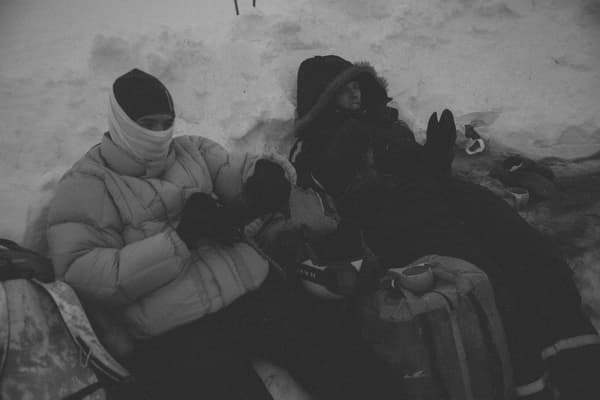
I love camping. But this experience was a new level of extremity, albeit for one night but still the barometer does not lie. And an all-night patrol for our elusive furry friends, should they take interest. Because the body temperature inevitably drops overnight, taking a glove off outside for five minutes the next morning was a painful experience. Lesson learned. I still love camping.
The next day topped the previous one. Something about the weather and conditions under foot, the light seemed even sharper. A faint rainbow and an arctic fox spotted. Dogs hauling their cargo and a possible bear sighting from another passing crew upped the ante. We visited an ice cave with its glacial, fisheye beauty and years captured. As we leave the area a chopper circles, the potential sighting of a bear draws a crowd. Alas no further signs and we leave with our hopes in the snowmobile tracks behind us.
The planet is blessed with places like this. Not just the edge-of-the-world isolation, the scale, the light — but the conceptual ones too. A place that functions as a reminder of what's at stake. Svalbard does that whether the bear shows up or not. Coming here to test gear or simply to witness the standout beauty and wildness is intense, but it is also thought-provoking. We have to do our best to leave it be.
Db embarked on an expedition to Svalbard, renowned for its harsh conditions: sub-zero temperatures, heavy snow, and wind chill. A journey to another world.
For Spring/Summer ‘26, Db introduces Weigh Darker™, an evolution of its partnership with ALUULA, the British Columbia-based fabric innovators, which harnesses outdoor sensibilities to create hybrid.packs and equipment built for ski touring and life in the city.
ALUULA Graflyte™ is an ultra-lightweight composite fabric that is 100% waterproof and recyclable.
Steph Pomphrey is Huck’s co-founder and special projects lead. Follow him on Instagram.
Buy your copy of Huck 83 here.
Enjoyed this article? Follow Huck on Instagram for more from the cutting edge of sport, music and counterculture.
Support stories like this by becoming a member of Club Huck.