Cripping Culture: Chris Tally Evans recalls Wales’ First Disability Arts Cabaret
Our Community Contributions call for Cripping Culture: a journey into disability arts is your chance to submit a story about disability arts projects or events you were involved in or witnessed. We want to know how they had an impact on you personally as well as the disability arts movement as a whole. We have ... Cripping Culture: Chris Tally Evans recalls Wales’ First Disability Arts Cabaret
 Black News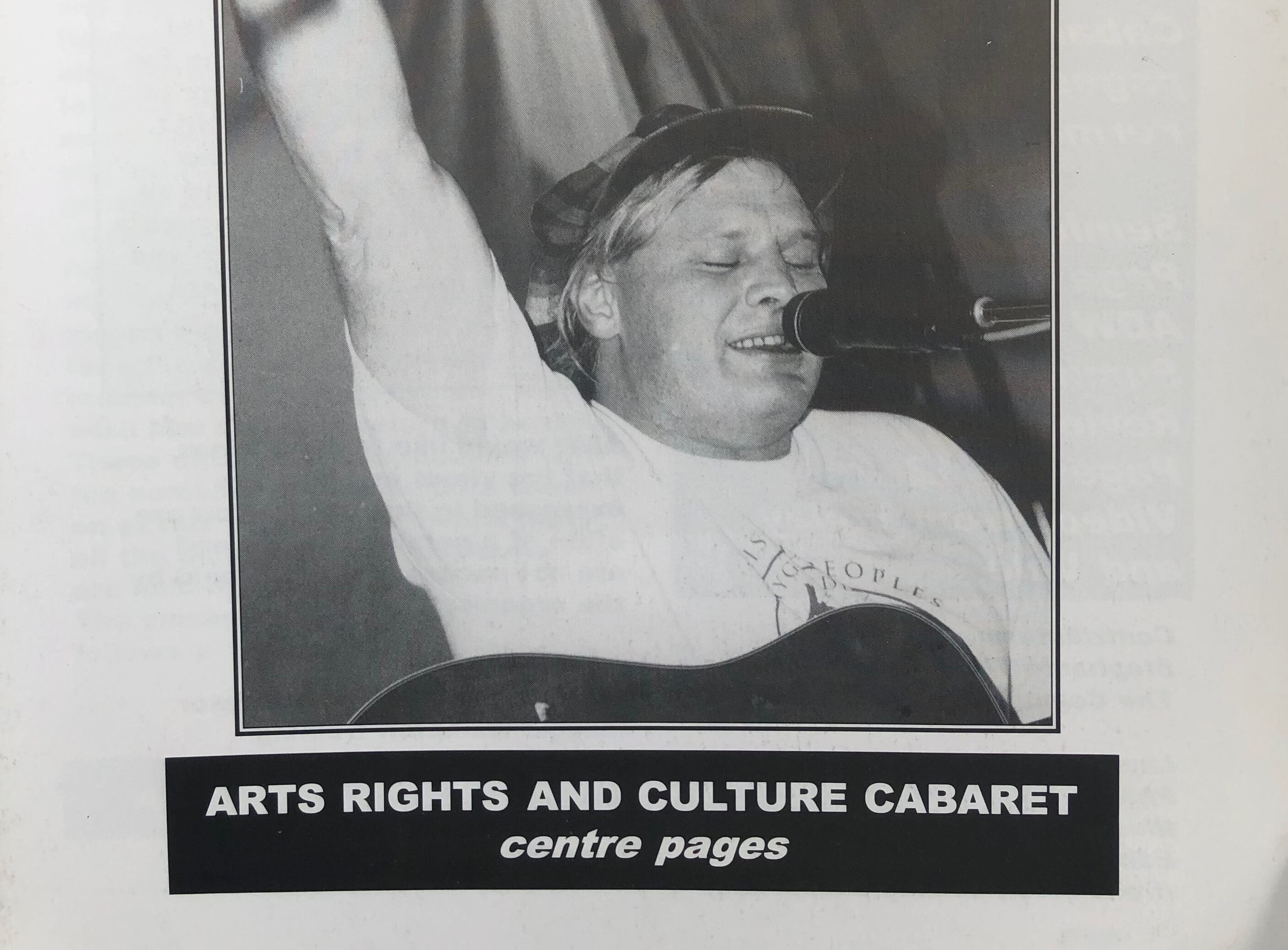

Our Community Contributions call for Cripping Culture: a journey into disability arts is your chance to submit a story about disability arts projects or events you were involved in or witnessed. We want to know how they had an impact on you personally as well as the disability arts movement as a whole.
We have received lots of questions about what sort of information and stories people should submit so we wanted to share some examples of brilliant contributions that we have received so far.
Please don’t forget that 3 minute audio or video submissions are very welcome and don’t have to be recorded on professional equipment.
Last week we published a story from Chris Tally Evans. Here is another to whet your appetite.
I’m taking you back over 30 years to September 1995 when the disability arts and rights scene was gathering momentum here in Wales. Arts Disability Wales (now Disability Arts Cymru) and the then fairly newly formed Cardiff and Vale Coalition of Disabled People joined forces to put on Wales’ first disability arts cabaret, a celebration of disabled people’s culture and our fight for rights and independence.
Amazingly enough the only venue we could find which was accessible enough to cope with those sort of numbers of disabled people being both performers and audience was Cardiff City Hall’s Assembly Rooms. What a coup! It felt like we were storming the corridors of power and seeing so many disabled people amidst the civic splendour of the Assembly Rooms was both empowering and ironic.
It felt very much like the start of something big. I was part of the programming team and the compere for the night and also was the editor of ADW’s quarterly magazine ADWaith so here’s an article from that summing up what an incredible night it was:
“ADWaith – Arts Disability Wales Newsletter Winter ’95
The date was the 25th September 1995. The venue was Cardiff’s City Hall. The event was a first for Wales. In the splendour of the Assembly Rooms a privileged audience watched Arts Disability Wales and The Cardiff and Vale Coalition of Disabled People launch themselves with Wales’ first ever Disability Arts, Rights and Culture Cabaret.
The speakers included Julie Fernandez (remember Eldorado!) as well as representatives from ADW and the Coalition (Jeanette Thomas, Peter Hope). David Bower (who can forget Four Weddings and a Funeral!) did a live stage interview with me and then the party started in earnest.
Common Ground Sign Dance Theatre took us to the outer limits of the avant garde with their thought provoking performance of ‘Let the Painter Sing.’ Next on were home grown musicians Dave Levett and Ian Cooper, layering improvisations on samples with their excellent mixture of techno-jazz fusion. Then came former Graeae members Katie O’Reilly and Maggie Hampton with a simultaneous reading and signing of Kaite’s piece “Fragments on a Fragmentary Vision,” that mesmerised the audience. Top of the bill was Alan ‘Johnny Crescendo’ Holdsworth who had us all singing his disability anthems.
As Jon Luxton (Chair, Cardiff and Vale Coalition of Disabled People) said – “You can’t have culture without rights and you can’t demand rights if you haven’t got a culture”. This man is the embodiment of both!
What a night to remember!”
So it was the start of something pretty big. I’m now a Trustee of Unlimited and I’ve had the privilege of taking my own brand of disability art to 4 continents. Yet it still seems that we are under fire and that we have to continually prove again our worth in a hostile society. However, the flame of that long ago cabaret night I hope still burns brightly in the hearts of many.
This contribution is a good example because:
- It tells us when and where the event happened: September 1995 in Cardiff City Hall’s Assembly Rooms
- It names lots of key people involved and key organisations that were connected like Arts Disability Wales (ADW) and The Cardiff and Vale Coalition of Disabled People
- It brings the story to life through descriptions of the setting what happened, what was performed and how people reacted
- Chris tells us why it was important to the disability arts movement