Gondwana Kalahari Park’s 2026 Game Count
AT first light on 20 June, teams of Gondwana colleagues, guests and conservation partners set out across the red dunes of the Gondwana Kalahari Park for the annual game count. Armed with maps data sheets and warm blankets, their task was to keep their eyes peeled and record every animal sighted along the designated routes. […] The post Gondwana Kalahari Park’s 2026 Game Count appeared first on The Namibian.
 Black News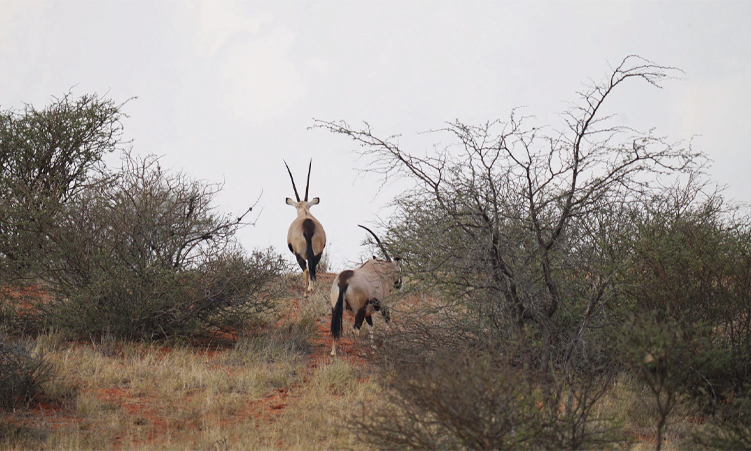
AT first light on 20 June, teams of Gondwana colleagues, guests and conservation partners set out across the red dunes of the Gondwana Kalahari Park for the annual game count.
Armed with maps data sheets and warm blankets, their task was to keep their eyes peeled and record every animal sighted along the designated routes.
The count is about far more than spotting wildlife. It provides important scientific data that helps Gondwana monitor population trends, veld condition and whether the number of animals remains within what the land can sustainably support.
The 9 800-hectare Gondwana Kalahari Park was established in 2006 to rehabilitate a collection of previously overgrazed sheep farms and restore the area as a healthy wildlife sanctuary.
Over the years, indigenous species such as giraffe, eland, gemsbok, blue wildebeest and plains zebra have been reintroduced.
Careful veld management and regular wildlife monitoring have helped rebuild biodiversity across this ecologically diverse landscape, situated where the Savanna and Nama Karoo biomes meet.
Two decades later, the 2026 results tell an encouraging story of recovery.
A total of 823 animals were physically recorded during the 2026 count, compared with 580 in 2025, an increase of 42%.
Because a game count only covers a sample of the park and not every animal will be visible from the routes, the sightings are converted into population estimates using the surveyed area and species-specific correction factors.
The park’s total estimated wildlife population increased from 1 211 animals in 2025 to 1 588 in 2026 – an overall increase of 31%. This is the first increase recorded since 2023.
The recovery follows an exceptional rainfall season. The park received 436mm of rain – the highest recorded since 2011.
The result is excellent veld condition, abundant grazing and improved habitat across the park.
These favourable conditions also allowed Gondwana to introduce 128 gemsbok and 15 eland in the year preceding the 2026 game count. This marked the first eland introduction into the park since before 2015.
Growing wildlife numbers are positive only when the land can support them sustainably.
The park’s carrying capacity is assessed annually by comparing its grazer stocking rate with a modelled carrying capacity based on rainfall, veld condition and available forage.
The long-term average carrying capacity for the area is approximately 12kg of grazer biomass per hectare (ha). Following the exceptional rainfall season, the 2026 modelled carrying capacity increased to 16.5kg/ha.
The current grazer stocking rate is only 10.3kg/ha – comfortably below both figures. This confirms that the park remains within sustainable ecological thresholds and that current wildlife numbers are not placing excessive pressure on the recovering vegetation.
We also look at what kind of feeders are in our game populations. Animals can be grazers (eat only grass), browsers (eat only twigs, leaves, and shrubs), and/or a mixed feeder (eat both grass and shrubs), since different species and their different feeding behaviours have ecological shaping effects on landscapes.
This year’s results showed that overall, grazers (highly selective grazers and low selective grazers) make up majority of the game species composition, while browser species have increased (+1%) and mixed feeders decreased (-3%).
The post Gondwana Kalahari Park’s 2026 Game Count appeared first on The Namibian.