Moyale and the Limits of Kenya’s Silence on Ethiopia
At the end of October, staff from UNHCR and the Kenya Red Cross began issuing coded wristbands to Ethiopian families sheltering in schools and churches in Moyale, a town in Kenya’s Marsabit County that shares its name, and in practice its streets, with the Ethiopian town across the border. By 29 October around 50,000 people had crossed in little more than a week, most of them women and children, and the Kenyan government and its humanitarian partners are now planning for as many as 80,000. These people are not fleeing the war in northern Ethiopia, where fighting resumed in Tigray […] The post Moyale and the Limits of Kenya’s Silence on Ethiopia appeared first on African Arguments.
 Black News
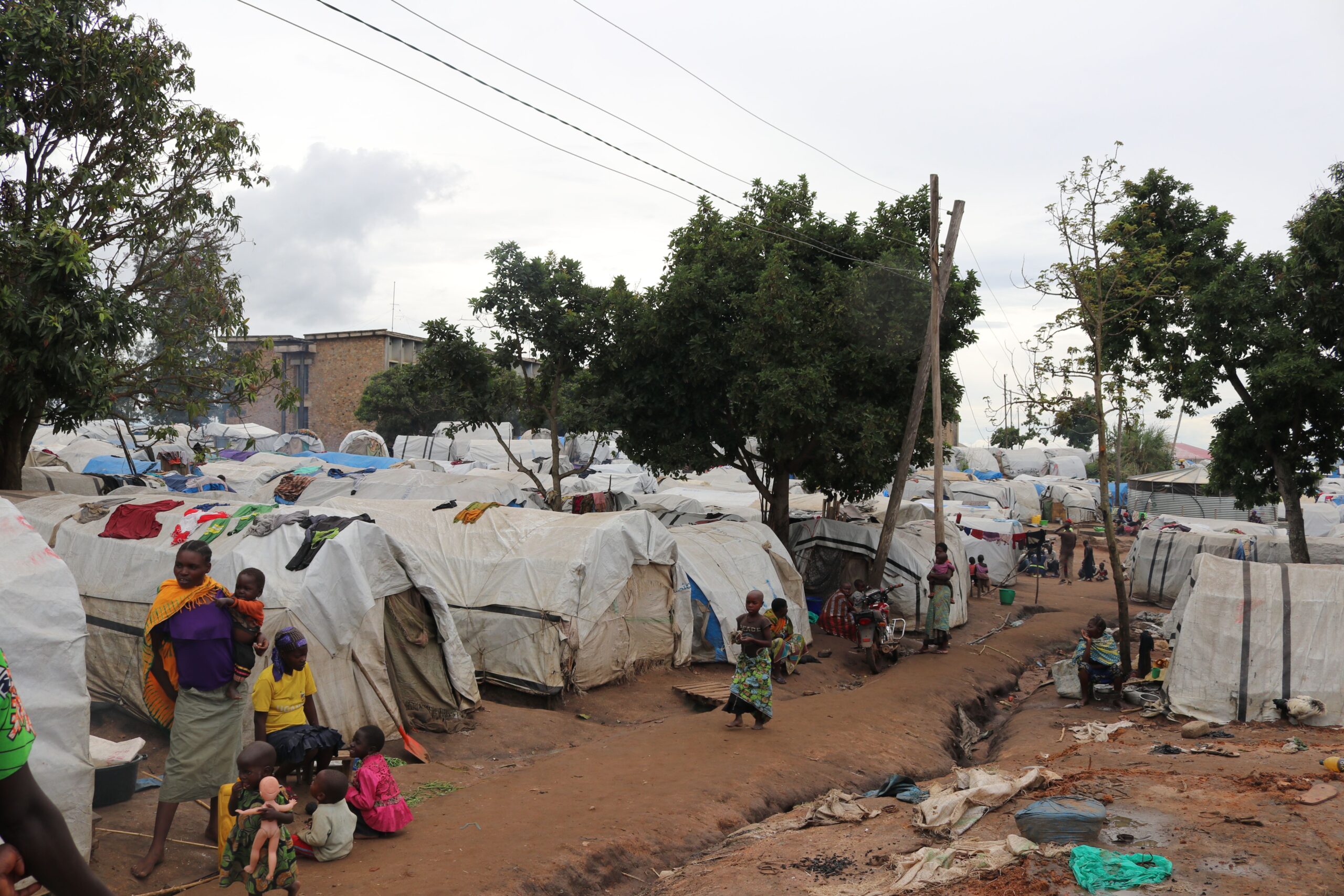
At the end of October, staff from UNHCR and the Kenya Red Cross began issuing coded wristbands to Ethiopian families sheltering in schools and churches in Moyale, a town in Kenya’s Marsabit County that shares its name, and in practice its streets, with the Ethiopian town across the border. By 29 October around 50,000 people had crossed in little more than a week, most of them women and children, and the Kenyan government and its humanitarian partners are now planning for as many as 80,000.
These people are not fleeing the war in northern Ethiopia, where fighting resumed in Tigray in late September and federal troops retook Mekelle on 3 October. That conflict has also brought Ethiopia and Eritrea to the edge of open war, as the two governments have broken off diplomatic relations and accused each other at the United Nations of starting a war. They are fleeing a separate conflict more than a thousand kilometres further south, between two of Ethiopia’s own regional governments. Nevertheless, the two crises are connected, and the connection matters for Kenya, because a war between Ethiopia and Eritrea would make the present numbers at Moyale look small.
A dispute inside Ethiopia, on Kenya’s border
Ethiopian Moyale is shared between the Oromia and Somali regions, which run the town jointly and have argued for decades over the land around it. In the middle of October, Somali regional officials opened a new office in a district that Oromia claims and raised their regional flag over it, and a girl of thirteen was killed in the violence that followed. Within a few days the security forces of the two regions were fighting each other with heavy weapons inside the town, and the violence spread to the districts of Gumi Eldallo, Wachile and Arero.
Clashes along this same boundary in 2017 displaced hundreds of thousands of people, which suggests that the problem lies in the way Ethiopia’s federal system works rather than in a single provocation. The system gives territory to regions defined by ethnic identity and leaves mixed towns such as Moyale to argue over where they belong. What has changed since 2017 is that the federal army is now heavily committed in the north, and the regional forces in the south have been left to settle the question among themselves. In this sense the two crises meet, since every unit that Addis Ababa sends towards Tigray and the Eritrean border is a unit no longer available to keep rival regional forces apart elsewhere in the country.
Because the border at Moyale runs through the middle of a single town and through communities that live on both sides of it, the fighting has not stayed in Ethiopia. Kenyan police reported stray bullets landing on the Kenyan side within the first week, Kenya Defence Forces teams have since found and destroyed several grenades, and a woman in Kenyan Moyale has been killed by what appears to have been a stray bullet. Kenya’s acting Commissioner for Refugee Affairs, Mercy Mwasaru, now describes the situation as a matter of national security.
Kenya’s selective role in the region
Kenya is sometimes described as a passive observer of conflict in the Horn of Africa, but its record suggests a country that intervenes where it judges its interests to be at stake and stays quiet elsewhere. It sent troops into Somalia in 2011 and still has soldiers there, it hosted the talks that led to the 2005 agreement ending the war between northern and southern Sudan, and in November 2022 it hosted the meeting of Tigrayan and federal commanders that produced the Nairobi Declaration. Under President William Ruto, Kenya went further on Sudan than any other neighbour by hosting the Rapid Support Forces as they launched a charter for a rival government, a decision that led the military authorities in Sudan to ban Kenyan imports.
On Ethiopia, by contrast, Kenya has chosen to say very little, and the reasons for that choice are practical. Ethiopia is Kenya’s largest neighbour and a central economic and security partner. The two governments revived their 2012 Special Status Agreement in 2024, signed a defence cooperation agreement the following year, and in March this year agreed to carry out joint military operations along the road corridor that links Moyale, Marsabit and Turkana. Nairobi has generally treated disorder inside Ethiopia as Ethiopia’s own affair and has handled its effects on Kenyan soil as a humanitarian question, to be managed by UNHCR, the Kenya Red Cross and international donors. The events at Moyale are putting both parts of that approach under strain.
The cost of the current approach
The UN agencies have asked for $8.9 million to cover the next three months, a modest sum that must nevertheless be raised for a refugee system already short of money. Kenya hosts more than 836,000 refugees, most of them in the Dadaab and Kakuma camps, both more than thirty years old. Cuts in aid last year forced the World Food Programme to reduce food rations by 40 per cent. The Shirika Plan, launched in 2025 to turn the camps into settlements integrated with the surrounding towns, depends on donor funding that continues to fall.
Most of the new arrivals are not in camps at all but are staying with local families in a county where many households were already short of food and water. Political leaders in Marsabit have warned that the influx could overwhelm the host communities, and the Kenya Red Cross has already reported tensions between refugees and hosts at one of the sites. Humanitarian aid can ease these pressures, but it cannot resolve the territorial dispute that produced them.
A war between Ethiopia and Eritrea would place much heavier demands on Kenya than a single disputed town. Ethiopia’s south and east contain many contested regional boundaries, and a federal army fighting a neighbouring state would have even fewer troops available to control them. War also brings mass mobilisation, which tends to push young men to flee, as happened in Tigray this summer when forced recruitment drove many into hiding. Kenya shares a border of more than 800 kilometres with Ethiopia, and in a wider war it would be likely to receive people from many points along it, at a time when its refugee system can barely cope with the arrivals it already has.
What Kenyan action could look like
No one is seriously suggesting that Kenyan troops should cross the border. Action in this case would mean using political influence in Addis Ababa, by pressing the federal government to separate the regional forces at Moyale, to settle a boundary dispute that it has been left open for three decades, and to accept that a conflict which sends refugees and weapons into Kenya can no longer be treated as a purely internal matter. Mwasaru says that extensive engagement is under way, although the government has not said what this involves.
Kenya’s ability to play this role depends on its reputation as a fair broker, and the Sudan episode has damaged that reputation considerably. In February the International Crisis Group still named Kenya among the governments with access to Asmara that could encourage Eritrea to step back, and that access has become more valuable now that the two countries are close to open war. A government that avoids speaking frankly to Addis Ababa about violence on its own border, however, is unlikely to be taken seriously when it speaks to Asmara.
Between observer and participant
Whether Kenya becomes an actor in the region or remains an observer is a question that geography has already answered. Fifty thousand people, a town divided by the border and a frontier that is easy to cross have made Kenya a party to Ethiopia’s southern crisis, whatever its government chooses to say. What Nairobi can still decide is whether to use the relationship it has built with Addis Ababa to push for a settlement while the crisis is confined to Moyale, or to continue registering new arrivals and waiting for donors, and then to face a war between Ethiopia and Eritrea, which its long frontier will not allow it to avoid, with a refugee system that is already stretched.
The post Moyale and the Limits of Kenya’s Silence on Ethiopia appeared first on African Arguments.