Opinion : Before I had the WRods to Answer Back
By Kuol Malou I remember being in fifth grade in America, a South Sudanese child trying…
 Black News
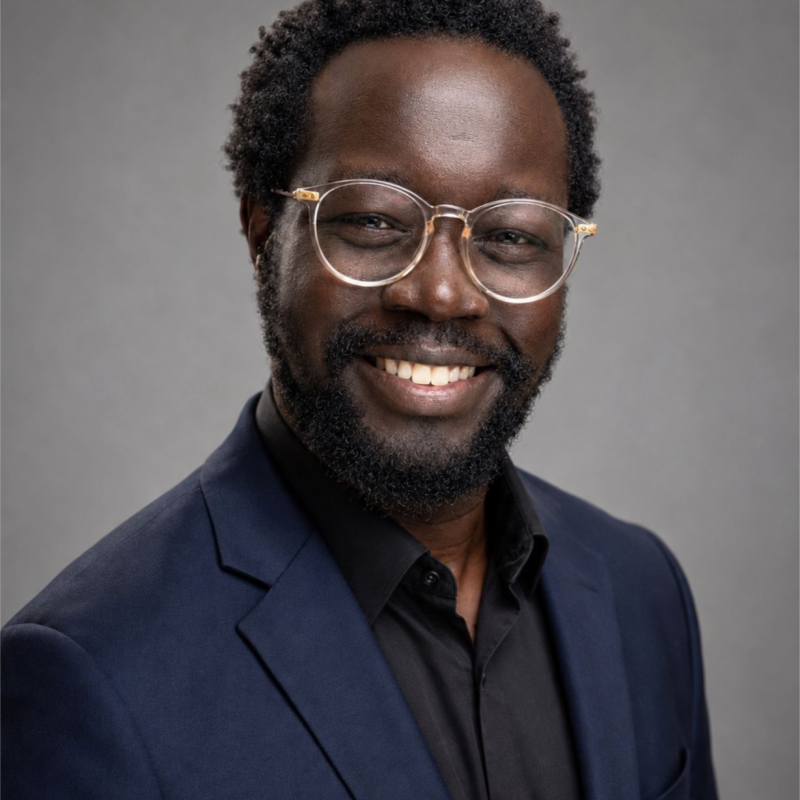
By Kuol Malou
I remember being in fifth grade in America, a South Sudanese child trying to find my place in a school where I did not yet speak English.
I was bullied for my English. I was also bullied for how dark my skin was.
Those two things were beyond my control. One was a language I was still learning. The other was the skin I had lived in from birth. Yet, in that classroom, both became reasons for other children to make me feel different.
There is something difficult about being judged in a language you cannot yet use to defend yourself. A classroom is supposed to be where a child is allowed to get things wrong, ask questions, learn new words and try again. When speaking becomes a reason for ridicule, even the ordinary act of learning can feel exposed.
I do not want to pretend I had the vocabulary then to explain racism, colourism or the way children learn prejudice. I was in fifth grade. I knew what it felt like to be picked on. I knew my English was different. I knew that my skin colour had become something other people thought they could comment on.
That is enough for a child to carry.
A post I recently came across discussed the prejudice that can exist between Black communities: people being mocked for where they come from, the accents they speak with, or the shade of their skin. It brought me back to my own experience. We often talk about racism as a line between Black and white, but people also create hierarchies within racial and cultural communities.
I cannot tell you that every person who bullied me was motivated by the same prejudice. I can tell you what they targeted. And I can ask a question that matters beyond my own childhood: who teaches children that an accent or a darker complexion makes someone less worthy of respect?
Children notice differences. That is ordinary. What they do with those differences is shaped by what they hear, what adults laugh at, what adults correct, and what everyone chooses to ignore.
I think about the word belonging differently now. When a child arrives in a new country, adults may focus on whether they can settle into school, catch up with the curriculum or learn English quickly. Those things matter. But the child is also learning what it costs to be seen. Whether their name is welcome. Whether they can speak without embarrassment. Whether they will be treated as a person before they have mastered the language of the place.
I have spent much of my adult life working with communities and institutions. That work has taught me to ask what happens to people inside systems that describe themselves as welcoming. A school can have a diversity statement on its wall and still leave a child alone with the daily experience of being singled out. The statement tells us what the school believes. The child’s experience tells us what needs attention.
I do not share this memory because I think it explains every South Sudanese child’s journey, or because I want to turn the experience into a neat story about overcoming adversity. I share it because the way children treat one another is often dismissed as a small part of growing up.
For the child living through it, it is part of how the world is introduced to them.
Looking back, I wish the simple things had been understood without explanation: that learning English takes time, that dark skin is not an invitation for ridicule, and that a child should not have to become unusually strong just to feel ordinary at school.Author : Kuol Malou: Founder & Fractional Strategy and Operations Executive | Third Space Narrative | AfroNile Foundation