Pope Leo Finally Addresses His Black Ancestry and Slavery
Leo acknowledges a family history that spans slavery, immigration and America's enduring debate over race and identity. The post Pope Leo Finally Addresses His Black Ancestry and Slavery appeared first on Word In Black.
 Black News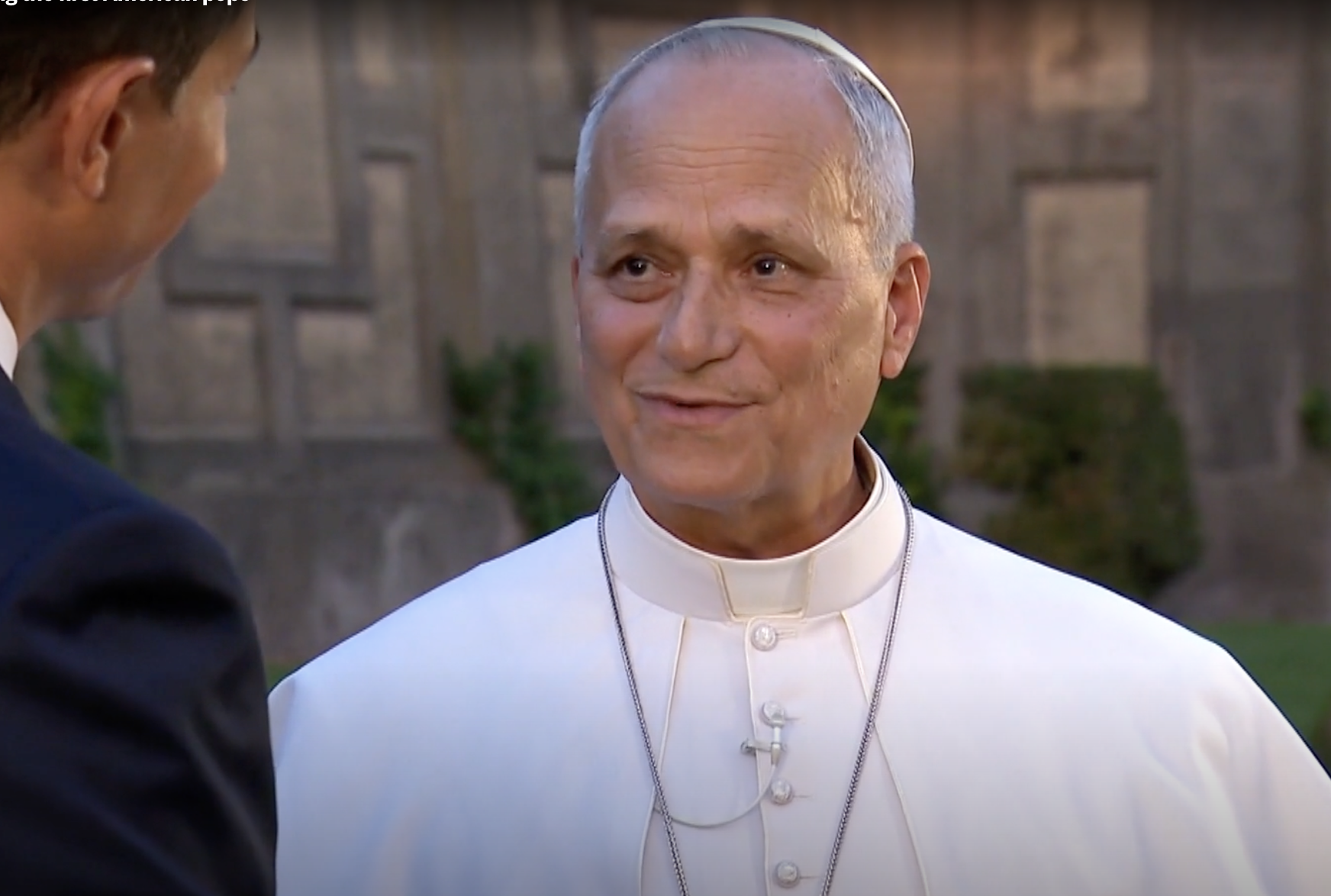

Since his election last year, Pope Leo XIV sidestepped one of the most unexpected questions to emerge from his historic election: Is the first American pope also Black?
Now, in his clearest public comments yet, the first American-born pope has acknowledged the complicated family history that spurred widespread discussions about race, identity and belonging.
LEARN MORE: Is the New Pope Black? The Answer Isn’t So Simple
Speaking to NBC News, the pontiff said his mother’s family included both enslaved people and slaveholders — a striking admission from a pope who had previously declined to publicly discuss genealogical research tracing his ancestry to New Orleans’ historic Creole community.
“On my mother’s side, we have people who were both slaves and slaveowners,” Leo said. “There’s a history of… growing up in the kind of experience that helps me to recognize myself, one of the greatest wealths of the United States.”
America’s ‘Greatest Wealths’
The pope did not describe himself as black. But he publicly confirmed his family’s mixed racial heritage, a fact that historians and genealogists uncovered within hours of his election. And they also reopened one of America’s oldest, thorniest conversations about race.
In a single sentence, the leader of 1.4 billion Catholics worldwide confirmed that his lineage runs through both sides of slavery’s ledger. The pope framed that history not as a statement about racial identity but as an expression of the American experience.
“I come from a family that my grandparents were immigrants,” said Leo, who grew up on the South Side of Chicago — a popular Great Migration destination. That history, the pope said, helps him to recognize the welcoming of migrants as “one of the greatest wealths of the United States.”
On my mother’s side, we have people who were both slaves and slaveowners.
Pope Leo xiv
The remarks, made during an interview to promote the Global Concert for Peace, represent the first time Leo has personally addressed the ancestry that first came to light after his election in 2025. It was first revealed through research led by New Orleans genealogist Jari Honora and later expanded by Harvard scholar Henry Louis Gates Jr.
Creole Roots
Those investigations found that Leo’s maternal grandparents, Joseph Martinez and Louise Baquié, were identified in historical records as Black and lived in New Orleans’ Seventh Ward, one of the nation’s oldest centers of Creole and Black Catholic life.
Gates’ subsequent family tree identified at least 17 ancestors described in records as Black, Creole, mixed-race or free people of color. But it also documented ancestors who owned enslaved people.
The findings immediately triggered celebration, skepticism and soul-searching.
Pope Leo’s official Vatican biography made no mention of his African American heritage. His brother, John Prevost, emphasized that the family does not currently identify as Black. Leo himself remained silent, allowing speculation to flourish while refusing to define himself through America’s racial categories.
That silence made Wednesday’s comments notable. Rather than embracing or rejecting a racial label, Leo acknowledged the historical facts while placing them inside a broader American narrative of immigration, diversity and shared history.
No ‘One Drop Rule’
That approach echoes what many scholars argued from the beginning.
Shortly after Leo was elected, both Boston University sociologist Phillipe Copeland and writer and filmmaker Fanshen Cox DiGiovanni told Word In Black that Blackness goes beyond the so-called “one drop rule.”
Copeland said Leo’s ancestry forces Americans to reconsider assumptions usually taken for granted while grappling with the question of how Blackness is defined. DNA alone doesn’t always cut it, he said: “Is having a Black ancestor sufficient? Is it perception from others? Is it how you self-identify?”
Cox Giovanni, on the other hand, said Black identity is defined more by culture than skin color.
“There’s no blood test that can tell you,” she said. “The way you receive it is by your community, by your parents, by your family, by the stories they tell.”
Leo’s remarks neither resolve nor avoid that distinction. He did not say he identifies as Black, but he also did not deny his Black ancestry. Instead, he acknowledged a family history shaped by both oppression and privilege, reflecting the tangled reality of American history itself.
Oppressor and Victim
The timing is especially significant because Leo has already demonstrated a willingness to confront slavery’s legacy inside the Catholic Church.
Earlier this year, he issued the Vatican’s most direct apology for its historic role in legitimizing slavery, calling the church’s record “a wound in Christian memory” and asking forgiveness for centuries of complicity. His acknowledgment of his own family’s connection to slavery now gives that apology an unmistakably personal dimension.
RELATED: Why Black Catholics Have Hope for Pope Leo XIV
By acknowledging ancestors who lived on both sides of America’s racial divide, the pope has publicly embraced a truth that millions of Americans share: that the nation’s story cannot be neatly divided into Black and white, victim and oppressor, enslaved and enslaver.
Sometimes, the same family contains all of them.
The post Pope Leo Finally Addresses His Black Ancestry and Slavery appeared first on Word In Black.