Royal Caribbean Is Building Out Its Icon Class Through 2030 With 7 Mega-Ships Planned
Royal Caribbean’s Icon Class is no longer a one-ship story. It’s a pipeline — and it now stretches all the way to the end of the decade. The cruise line has mapped out a seven-ship expansion plan for its next-generation fleet, with new vessels arriving every year through 2030. The lineup starts with Icon of the Seas (2024) and […] The post Royal Caribbean Is Building Out Its Icon Class Through 2030 With 7 Mega-Ships Planned appeared first on Caribbean Journal.
 Black News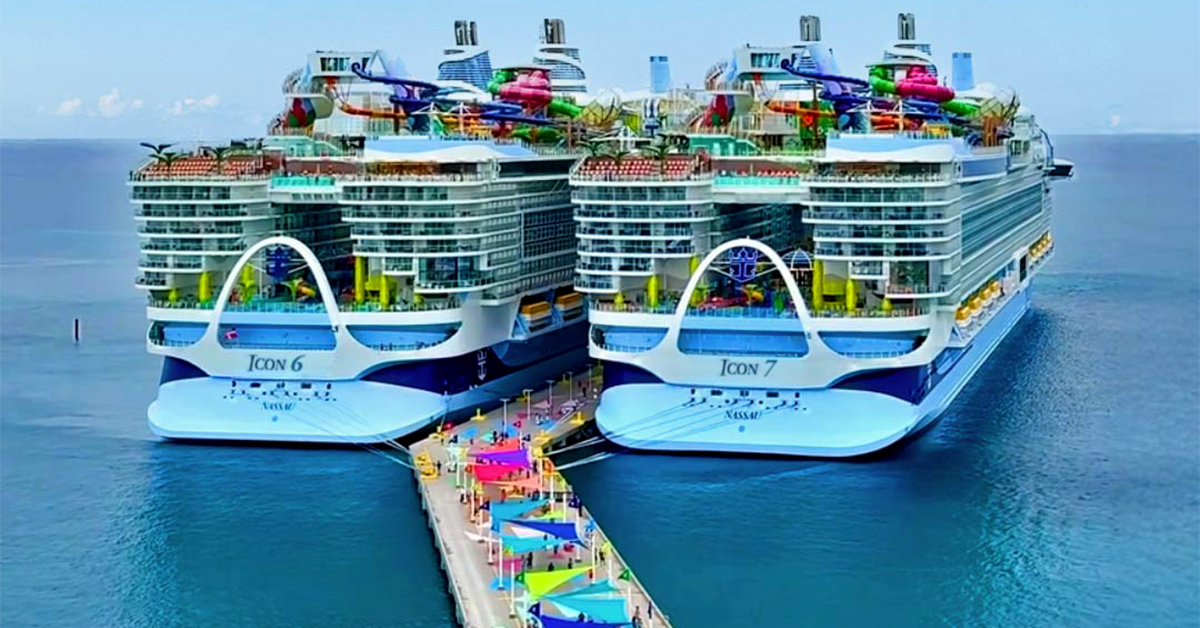

Royal Caribbean’s Icon Class is no longer a one-ship story. It’s a pipeline — and it now stretches all the way to the end of the decade.
The cruise line has mapped out a seven-ship expansion plan for its next-generation fleet, with new vessels arriving every year through 2030. The lineup starts with Icon of the Seas (2024) and continues with Star of the Seas (2025), followed by Legend of the Seas (2026) and Hero of the Seas (2027) — before moving into newly revealed ships Icon 5 (2028), Icon 6 (2029) and Icon 7 (2030).
It’s one of the most aggressive fleet builds in modern cruising — and it’s centered entirely on the largest, most amenity-packed ships Royal Caribbean has ever constructed.
A Full-Decade Rollout of Icon-Class Ships
The sequence is now clearly defined:
Icon of the Seas — 2024
The first in the class introduced a new design direction for Royal Caribbean, combining neighborhood-style planning with record-breaking water attractions and a strong focus on families.
Star of the Seas — 2025
The second ship continues that platform, with similar core features and refinements based on early demand and guest feedback.
Legend of the Seas — 2026
The third vessel extends the class further into the Caribbean deployment cycle, reinforcing Royal Caribbean’s focus on warm-weather itineraries.
Hero of the Seas — 2027
The fourth ship continues the annual rollout cadence, maintaining consistency in size, layout, and onboard programming.
Icon 5 — 2028
Icon 6 — 2029 (newly confirmed)
Icon 7 — 2030 (newly confirmed)
The final three ships push the class into long-term dominance, signaling Royal Caribbean’s commitment to scaling the concept across multiple homeports and itineraries.
What Defines the Icon Class
Across the lineup, the defining elements remain consistent: large-scale waterparks, multi-deck neighborhoods, open-air social zones, and a design that emphasizes variety across short and long sailings.
You see it immediately in the ship profiles — expansive upper decks with multiple pools, layered activity zones, and signature features like enclosed aqua domes and open stern-facing structures.
These ships are designed to function as destinations themselves, with enough onboard programming to anchor both short Caribbean cruises and longer itineraries.
A Caribbean-Centered Strategy
Royal Caribbean continues to position the Icon Class primarily in the Caribbean, where demand for large, amenity-driven ships remains strongest.
The cadence of annual deliveries gives the line flexibility to rotate ships across major cruise hubs, including South Florida and other regional ports, while maintaining a steady pipeline of new product.
That also aligns with the company’s broader investment in private destinations and shore experiences, creating a more controlled end-to-end vacation model.
What the 2029 and 2030 Ships Signal
The confirmation of Icon 6 (2029) and Icon 7 (2030) is the clearest indication yet that the Icon platform is not a short-term experiment — it’s the backbone of Royal Caribbean’s future fleet.
By the end of the decade, the line will operate multiple ships of similar size and capability, allowing for consistent branding, repeat guest familiarity, and operational efficiency across markets.
It also sets up a long runway for incremental innovation, with each new ship offering opportunities for refinements in design, entertainment, and onboard experiences.
The Bottom Line for Travelers
You’re going to see more Icon ships — and you’re going to see them often in the Caribbean.
With a new vessel arriving every year through 2030, the lineup ensures a steady stream of availability, new itineraries, and evolving onboard features across Royal Caribbean’s biggest ships.
That means more choice within a single class — and more chances to experience what has quickly become one of the defining concepts in modern cruising.
The post Royal Caribbean Is Building Out Its Icon Class Through 2030 With 7 Mega-Ships Planned appeared first on Caribbean Journal.