Safe Space 4 Her marks five years of supporting women and girls
Established in 2021, SS4H was created in response to what its founder and Executive Director, Sophie Manneh, described as a gap in support for girls and young women experiencing violence, harmful traditional practices and psychological distress. Over the past five years, the organisation said it has established safe spaces in four rural schools, trained 30 Sexual and Gender-Based Violence (SGBV) Ambassadors as peer counsellors, reached more than 500 girls and young women through safe space circles, referred 26 girls for professional clinical care and held four women’s retreats. It has also provided free one-on-one counselling to 50 young women and girls. Speaking at the ceremony, the Chairperson of the SS4H Board of Trustees, Mam Lisa Camara, said the five-year milestone marked both the organisation’s achievements and the beginning of a new chapter. She said her role as board chair comes with a responsibility to provide strategic leadership, strengthen systems and ensure that decisions are made with integrity and accountability. “Starting an organisation is really easy. Even one that has the trust of women and girls is even more demanding and challenging,” she said, stressing that the organisation’s beneficiaries must remain at the centre of its programmes and partnerships. Camara said the organisation’s new five-year strategic plan would focus on survivor support and mental health, prevention and community engagement, policy and advocacy, organisational sustainability, youth leadership and girls’ rights. She added that the board would ensure the strategy remained a working document capable of guiding the organisation’s growth and producing measurable improvements in the lives of women and girls. For founder Sophie Manneh, SS4H grew from conversations with young women who were looking for someone willing to listen to their experiences. She said the organisation was established after recognising that mental health and psychosocial support for victims and survivors of violence received limited attention. “Women and girls cannot fully realise their potential unless they are safe, protected and empowered,” Manneh said. She explained that SS4H began with a small group of 10 young women in September 2021, without funding or a strategic plan, but with trust as its foundation. According to Manneh, the organisation has since expanded its work from safe spaces and psychosocial support to schools and communities, while strengthening collaboration with stakeholders in health, protection and social welfare. She also highlighted the importance of collective action in protecting existing legal safeguards for women and girls, particularly during debates around Female Genital Mutilation (FGM) in 2024. Meanwhile, SGBV Ambassador Mariama Anta Secka said her training changed her understanding of gender-based violence. She said she learned that violence can be physical, emotional or sexual and gained skills to recognise, respond to and refer cases appropriately. “I am no longer afraid to stand in front of people and talk about sensitive topics because now I have the right information,” she said. Giving the goodwill speech, Women in Liberation and Leadership Executive Director Fatou Baldeh said SS4H’s five-year journey demonstrated the importance of creating spaces where women and girls can be heard and supported. She stressed that psychosocial support, peer leadership, advocacy and community engagement must work together to strengthen efforts to empower women and girls. Baldeh said young women and survivors should be involved in shaping programmes because they understand the challenges they face and can contribute to solutions. The anniversary event also featured testimonies from young women who have participated in SS4H safe spaces and reflected on the changes they experienced through the programme.
 Black News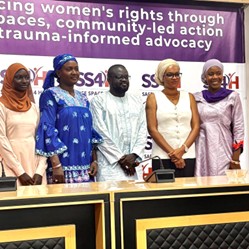
Established in 2021, SS4H was created in response to what its founder and Executive Director, Sophie Manneh, described as a gap in support for girls and young women experiencing violence, harmful traditional practices and psychological distress.
Over the past five years, the organisation said it has established safe spaces in four rural schools, trained 30 Sexual and Gender-Based Violence (SGBV) Ambassadors as peer counsellors, reached more than 500 girls and young women through safe space circles, referred 26 girls for professional clinical care and held four women’s retreats.
It has also provided free one-on-one counselling to 50 young women and girls.
Speaking at the ceremony, the Chairperson of the SS4H Board of Trustees, Mam Lisa Camara, said the five-year milestone marked both the organisation’s achievements and the beginning of a new chapter.
She said her role as board chair comes with a responsibility to provide strategic leadership, strengthen systems and ensure that decisions are made with integrity and accountability.
“Starting an organisation is really easy. Even one that has the trust of women and girls is even more demanding and challenging,” she said, stressing that the organisation’s beneficiaries must remain at the centre of its programmes and partnerships.
Camara said the organisation’s new five-year strategic plan would focus on survivor support and mental health, prevention and community engagement, policy and advocacy, organisational sustainability, youth leadership and girls’ rights.
She added that the board would ensure the strategy remained a working document capable of guiding the organisation’s growth and producing measurable improvements in the lives of women and girls.
For founder Sophie Manneh, SS4H grew from conversations with young women who were looking for someone willing to listen to their experiences.
She said the organisation was established after recognising that mental health and psychosocial support for victims and survivors of violence received limited attention.
“Women and girls cannot fully realise their potential unless they are safe, protected and empowered,” Manneh said.
She explained that SS4H began with a small group of 10 young women in September 2021, without funding or a strategic plan, but with trust as its foundation.
According to Manneh, the organisation has since expanded its work from safe spaces and psychosocial support to schools and communities, while strengthening collaboration with stakeholders in health, protection and social welfare.
She also highlighted the importance of collective action in protecting existing legal safeguards for women and girls, particularly during debates around Female Genital Mutilation (FGM) in 2024.
Meanwhile, SGBV Ambassador Mariama Anta Secka said her training changed her understanding of gender-based violence.
She said she learned that violence can be physical, emotional or sexual and gained skills to recognise, respond to and refer cases appropriately.
“I am no longer afraid to stand in front of people and talk about sensitive topics because now I have the right information,” she said.
Giving the goodwill speech, Women in Liberation and Leadership Executive Director Fatou Baldeh said SS4H’s five-year journey demonstrated the importance of creating spaces where women and girls can be heard and supported.
She stressed that psychosocial support, peer leadership, advocacy and community engagement must work together to strengthen efforts to empower women and girls.
Baldeh said young women and survivors should be involved in shaping programmes because they understand the challenges they face and can contribute to solutions.
The anniversary event also featured testimonies from young women who have participated in SS4H safe spaces and reflected on the changes they experienced through the programme.



![Rykardo Agbor survives ghastly car accident weeks after father’s burial [VIDEO]](https://dailypost.ng/wp-content/uploads/2026/09/Rykardo-Agbor-.jpg)