Sixty-Six Years On, the Promise of Somali Independence Remains Unfulfilled.
A Night of Hope. Aweys Addow, who was 19 years old when the flag was hoisted, was present to witness the event at Ficho Goberno, the former site of Mogadishu’s mayoral residence. At 12:00 hours (midnight) on 1 July 1960, Addow was among hundreds of jubilant Somalis who came out to celebrate the birth of the new nation, believing, with the rest of his generation, that Somalia had finally entered a new era based on unity, freedom and national pride. A unified, ethnically homogeneous Somalia composed of all the Somali people and the unification of the other Somali-inhabited areas of […] The post Sixty-Six Years On, the Promise of Somali Independence Remains Unfulfilled. appeared first on African Arguments.
 Black News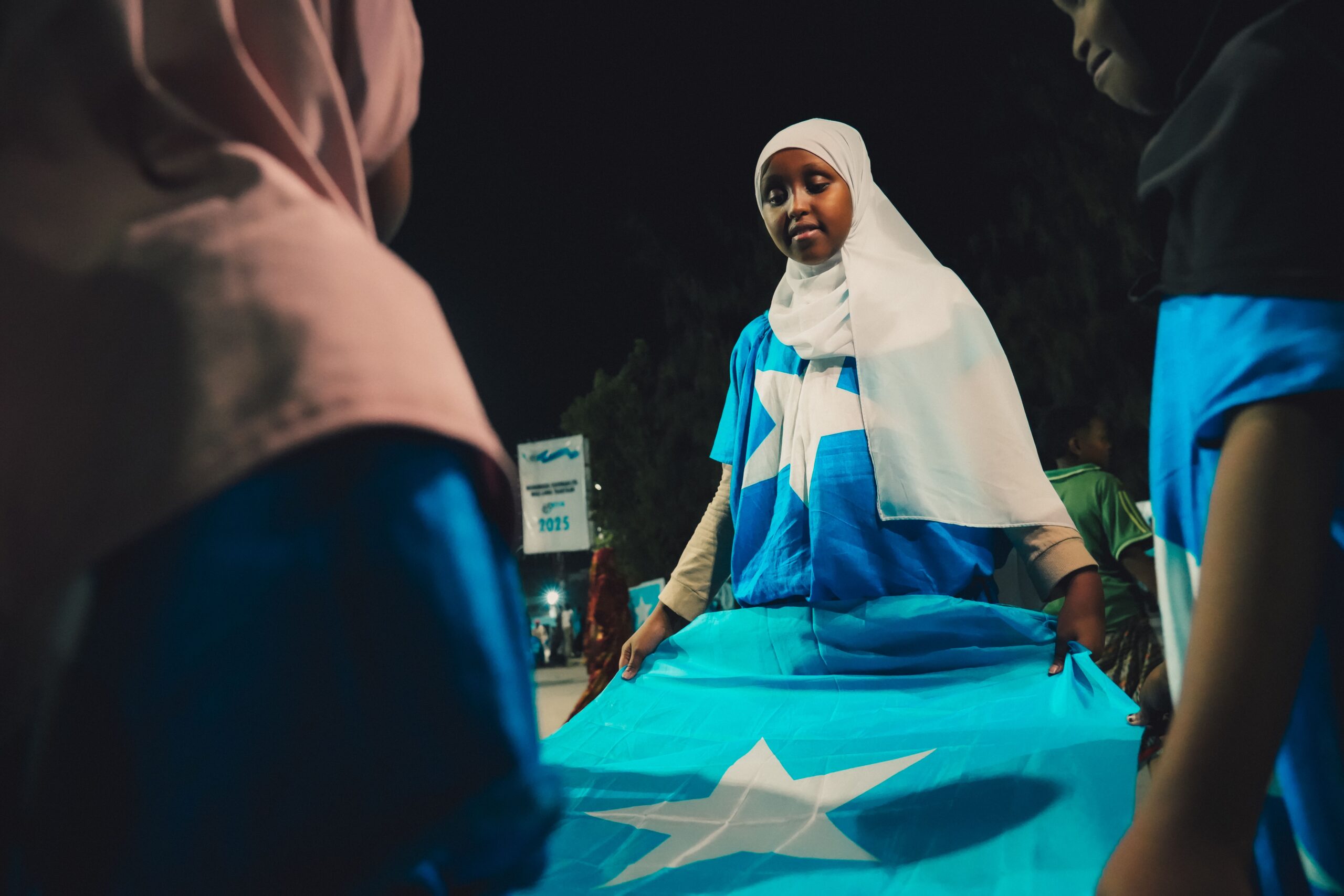
A Night of Hope.
Aweys Addow, who was 19 years old when the flag was hoisted, was present to witness the event at Ficho Goberno, the former site of Mogadishu’s mayoral residence.
At 12:00 hours (midnight) on 1 July 1960, Addow was among hundreds of jubilant Somalis who came out to celebrate the birth of the new nation, believing, with the rest of his generation, that Somalia had finally entered a new era based on unity, freedom and national pride.
A unified, ethnically homogeneous Somalia composed of all the Somali people and the unification of the other Somali-inhabited areas of the neighbouring countries of Ethiopia, Kenya and Djibouti (represented by the five-pointed white star in the centre of the national flag).
Addow says that more than six decades later, those hopes remain largely unrealized. Despite the optimism surrounding independence, Somalia was plunged into prolonged political instability after the Somali central government collapsed in 1991 and clan militias plunged the country into civil war. It would be over ten years before the transitional government of Somalia was established following the 2000 Arta peace conference. That government was finally replaced by another round of reconciliation talks, held in neighbouring Kenya, that birthed the current federal government.
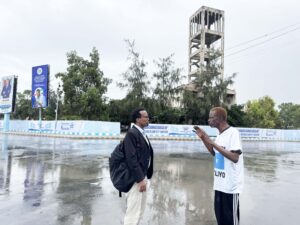
Mohamed Sheikh stands with Aweys Addow.
From Euphoria to Disillusionment.
Addow states the sacrifices made to secure independence for Somalia did not yield the country he had hoped for. Somalia has become a highly polarised domain, with political infighting and clan warfare replacing the unity of the independence generation.
Last week, Somalia celebrated the 66th anniversary of its independence, a celebration much different from when the country was united under one flag.
“That night, when the Somali flag was raised and the national anthem was played by the national band of Waberi, tears of euphoria and happiness filled my eyes, as I hoped for a new era for Somalis.”
He vividly recalls the morning that followed independence, when thousands of Somalis filled the streets to witness the swearing-in of the country’s first lawmakers. Citizens gathered at the first parliament building to watch members elect the nation’s first Speaker of Parliament.
That building today stands in ruins as one of the physical reminders of the civil war that devastated the country.
The Unfulfilled Promise of Independence.
Sixty-six years since independence, Addow believes Somalia has not enjoyed the full benefits of the freedom for which its people fought. Instead of uniting the country and bringing all of the Somali territories into one national state, he says the country has been further divided.
“Sixty-six years after our independence, none of those fruits have been reaped,” Addow lamented. “The country has been in ruins for over 30 years. Instead of becoming more united and bringing together the remaining three regions, the unity that was achieved has disintegrated.”
He is also concerned about rising political uncertainty regarding Somalia’s territorial integrity.
“It’s ironic that the northern regions now, known as Somaliland has been claiming that it has separated from Somalia and now I can see Israel giving recognition, although I doubt that would function for them because its end result is not real recognition but I see it very ironical and never thought that I will see one day this happening”, said Addow.
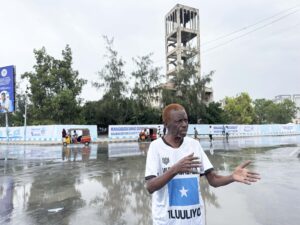
Aweys Addow, an elderly witness to Somalia’s independence flag-raising night, speaks in front of Somalia’s first parliament building from 1960. The building now stands in ruins, a stark reality still bearing the signs of the country’s civil war.
Growing concerns over Somalia’s territorial integrity.
Mr. Addow stated that the ambition of other states to carve out parts of Somalia or to take over the entire nation under the guise of recognition is not an isolated phenomenon, but rather something that has been developing for decades.
He contends that foreign states’ ambitions to recognise or separate parts of Somalia have evolved over a long period.
“I always believed that Somalia had many enemies who would one day intrude, and that has now happened”, Addow stated. “This has been proved by the fact that in less than two years, two governments, Ethiopia and Israel, have already shown ambitions to carve out or recognise parts of Somali territory”. That, he reiterated, is not an isolated event, but rather something that has been in the making for a while.
Political Divisions Deepen.
The Somali government has stated that it is committed to maintaining the country’s sovereignty and territorial integrity.
Critics and opposition political groups hostile to the Federal Government led by Hassan Sheikh Mohamud contend that Somalia’s unity is facing one of its most serious challenges since independence. Mohamud’s term in office has expired, but he maintains he is still president.
These issues were underscored in a statement by former prime minister and presidential candidate Hassan Ali Kheyre on Independence Day.
“It is deeply unfortunate that the greatest damage to Somalia’s unity has happened over the past four years under the administration of the President whose term has now expired”, Kheyre added.
“He never had a national vision, strategy, or agenda to keep the country together. Rather, he acted in a way that undermined the cohesion and solidarity of the Somali nation.”
Celebrations were also split along political lines this year.Incumbent president Hassan Sheikh Mohamud celebrated with the people of Mogadishu while opposition groups organised their own capital celebrations for the first time in this year’s Independence Day, further splitting the widening political divide.
Remembering a Different Somalia.
Mr. Addow, an octogenarian former Somali national football player, fondly remembers a time when Somalis were respected globally.
He says the decades-long conflict has damaged the country’s reputation and the lives of its people, and despite the country having been rebuilt, clan politics, corruption, nepotism and favouritism continue to weaken the country’s aims and progress.
“There are moments when I ponder and ask, ‘When will I see Somalia unified and free from clannish prejudices, corruption, and favouritism?'” Addow lamented.
Conversely, he recalls the early years after independence when the country was unified in its resolve to build a better life and take its place in the world, but is now deeply divided socially and politically.
“Now, I see more disintegrated Somalis at both community and political governance levels,” he observed. “If those who shed tears of happiness at the 1960 flag-raising event witnessed Somalia and its people today, they would have died of grief.”
Hope Beyond the Divisions.
Despite the bleak comparison between 66 years ago and the present, and considering all that Somalia has endured, Addow sees a light at the end of the tunnel. Many, like him, hope to one day see a more unified and powerful Somalia.
“Against all odds, my hope for a unified Somalia is not a distant dream; it will happen soon,” Addow concluded. “If we merge the resources and intellectual capital we possess, we will once again become a strong Somalia.”
The post Sixty-Six Years On, the Promise of Somali Independence Remains Unfulfilled. appeared first on African Arguments.