The Long War Against Michelle Obama’s Womanhood
Michelle Obama has been out of the White House for almost 10 years, yet she remains a target of conspiracy theories and personal attacks. The latest controversy offers a window into how race, gender, and political grievance continue to shape American culture. The post The Long War Against Michelle Obama’s Womanhood appeared first on Word In Black.
 Black News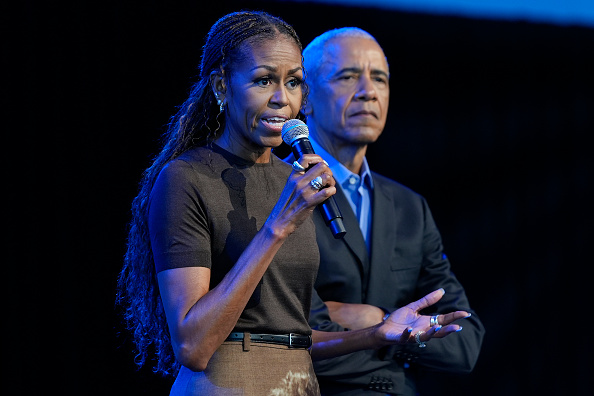


Most Americans have never heard of Josh Hokit, and probably couldn’t pick the failed pro football player-turned-UFC fighter out of a photo lineup.
But on Sunday night, after winning the biggest fight of his life on the White House lawn in front of President Donald Trump, Hokit decided that directing a line of tired, worn-out misogynoir at former First Lady Michelle Obama would extend his 15 minutes of MAGA fame.
So, flush from victory in the ring, Hokit blathered into a mic during a post-fight interview that Michelle Obama is “a man” — resurrecting a bizarre, far-right conspiracy theory that also echoes one of the oldest tropes in the racism handbook.
Welcome to the MAGAverse
What he said was nothing new; the bigoted lie about Michelle Obama dates to former President Barack Obama’s first run for the White House in 2008. Hokim’s outburst matters, though, because it happened on a prominent platform at the center of American power.
Put another way: the problem isn’t that some meat-headed journeyman fighter insulted Black America’s forever first lady. The problem is that he felt free to do it with his whole chest, in front of the nation’s chief executive, on live TV, before millions of viewers. And his audience barely flinched.
Outraged critics on the left have demanded that Trump condemn Hokit, though few of them are holding their breath. For nearly a decade, Trump has refused to apologize for offensive, racist rhetoric — particularly if it demeans his political opponents or revs up the MAGA base.
Still, the incident begs a larger question: why, more than a decade after her family left the White House and she became a private citizen, has Michelle Obama remained a target of far-right attacks that question her womanhood, appearance, and humanity?
Red-Pilled Blues
The answer lies at the intersection of political grievance, sexism, and good, old-fashioned racism.
Analysts say men like Hokit see changing demographics, shifting gender roles, and the rise of powerful women like Michelle Obama as evidence that America is leaving them behind. Trump’s willingness to indulge them, by saying the quiet, racist part out loud, is the fuel that powers his political engine.
Hokit’s attack on the former first lady felt less like a random, isolated outburst than a continuation of Trump’s long-running campaign of “othering” the nation’s first Black first family.
It also helps explain why a tasteless insult from a second-rate MMA fighter — something that might otherwise have disappeared into the noise of social media — found an audience online. For red-pilled denizens of the manosphere, Hokit’s idiotic barb was a declaration of cultural allegiance at a time when white male resentment has become its own identity.
For the former first lady, however, the attack likely wasn’t anything new. Since entering the public arena, activists on the right have described or depicted Michelle Obama as nearly every ugly stereotype — from an angry Black woman to a gorilla. But those attacks aren’t original, either; rather, they are merely updates to a very long history of white America diminishing and denigrating Black American women.
‘A Disgrace’
Malcolm X once said, “The most disrespected person in America is the Black woman.” That statement played out in real time after Trump returned to power, when some 600,000 Black women — branded unqualified DEI hires, non-essential employees or both — lost their jobs, many of them during the White House’s Department of Government Efficiency purge last year.
Moreover, the Hokit controversy erupted at perhaps the most symbolic venue imaginable: a UFC fight card staged to celebrate Trump’s 80th birthday and the upcoming 250th anniversary of American independence. The setting, and the occasion, symbolized how thoroughly Trump has blurred the lines between politics, white grievance, and entertainment spectacle.

On social media, critics slammed Hokit, including former NFL star Robert Griffin III. He called the fighter’s statement “a disgrace. It takes a really small man to use his biggest moment to attack a woman by calling her a man.”
Jamele Hill, a prominent Black sportswriter and author, used sarcasm to make her point: “Nothing says let’s celebrate America quite like that. Truly special.” Even UFC president Dana White — a staunch Trump ally and, to a degree, Hokit’s boss — said the fighter’s “nasty” remarks had no place in the sport.
No Apologies
But Trump himself has repeatedly, unapologetically pushed ideas and rhetoric that had lived on the fringes of American political life. He launched his career attacking President Obama, pushing the racist “birther” conspiracy theory; over a decade, Trump has normalized insults and personal attacks that presidents of either party would have considered beneath the office. His boorishness, experts say, helped create a permission structure in which racist or sexist attacks that should be disqualifying are anything but.
Against that backdrop, Hokit’s attack on the former first lady felt less like a random, isolated outburst than a continuation of Trump’s long-running campaign of “othering” the nation’s first Black first family. Still, the fighter’s insult goes beyond a crude political attack.
Historians, Black feminist scholars, and media researchers have long documented how prominent Black women are subjected to remarks that question their femininity, portray them as angry or physically threatening, and cast them as somehow outside traditional (read: white) womanhood. It fits into the American tradition of policing Black women’s bodies, gender, and public visibility, dating back to slavery. But there’s a hidden, present-day danger.
When slandering Black women become routine, Black women stop being recognized as human. They become jokes, memes, talking points, and crowd-pleasing applause lines. Yet the persistence of those attacks says less about Michelle Obama than it does about a culture still struggling to accept powerful Black women on their own terms.
Clearly, the nation’s first Black first lady — glamorous, accomplished and unapologetic — still lives rent-free in the minds of Trump and his MAGA supporters. And as long as that’s the case, misogynoir will never go out of style.
The post The Long War Against Michelle Obama’s Womanhood appeared first on Word In Black.