Windhoek’s crash hotspots
Top-3 accident zones since 2023:* John Meinert Street and Hosea Kutako Drive: 68 crashes* B1 Road and Independence Avenue intersection in Northern Industrial: 59 crashes* Hans Dietrich Genscher Street and Independence Avenue: 50 crashes THE intersection at John Meinert Street and Hosea Kutako Drive in Windhoek West has been identified as the city’s most accident-prone […] The post Windhoek’s crash hotspots appeared first on The Namibian.
 Black News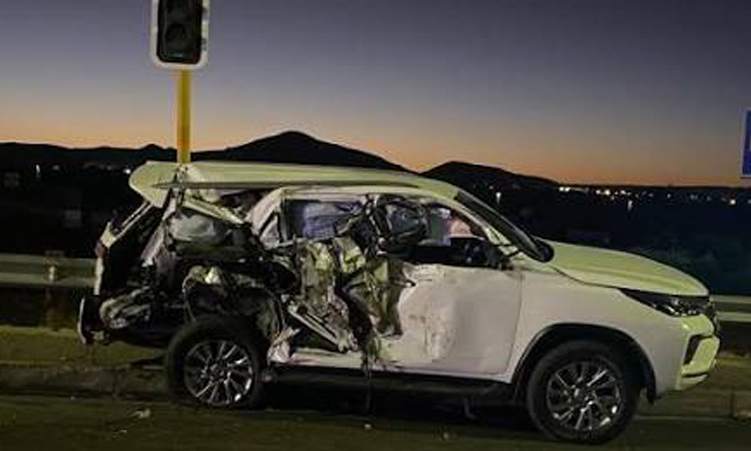
Top-3 accident zones since 2023:
* John Meinert Street and Hosea Kutako Drive: 68 crashes
* B1 Road and Independence Avenue intersection in Northern Industrial: 59 crashes
* Hans Dietrich Genscher Street and Independence Avenue: 50 crashes
THE intersection at John Meinert Street and Hosea Kutako Drive in Windhoek West has been identified as the city’s most accident-prone intersection, with 68 crashes recorded between 2023 and 2026.
The junction, near the former Chez Ntemba VIP Lounge nightclub and downhill from the Namibia Public Workers Union’s offices in Windhoek West, tops a list of three accident-prone intersections which collectively recorded 177 crashes during the period under review.
The intersection is followed by the B1 Road and Independence Avenue intersection at Northern Industrial with 59 crashes, while Hans Dietrich Genscher Street and Independence Avenue at Katutura recorded 50 crashes, according to statistics issued by City of Windhoek spokesperson Marcelline Murapo.
Spokesperson Katrina Namboga says the high volume of traffic passing through the intersections contributes to the crashes.
“The greater the number of vehicles using an intersection, particularly during peak periods, the greater the number of potential conflicts between road users,” she said on Friday.
Namboga says driver behaviour and non-compliance with traffic rules are also contributing factors.
These include motorists attempting to “beat” or rush through traffic signals, failing to stop when required, entering an intersection when it is not safe to do so, and making unsafe or unexpected lane changes, she said.
“A further pattern observed at these intersections is the high occurrence of head-rear collision,” Namboga says.
A rear-end collision involves that the front of one vehicle crashes into the back of another vehicle, often causing head and neck injuries.
“In particular, distracted driving, including the use of cellphones while driving, reduces a driver’s ability to notice that vehicles ahead have slowed down or have already stopped,” Namboga says.
‘AUTOMATIC CCTV SYSTEMS’
Namboga says observations from traffic monitoring and crash incidents “point largely to driver behaviour and non-compliance with traffic signals as recurring contributing factors”.
“These intersections are controlled by traffic signals and road markings designed to regulate the movement of vehicles, however, motorists continue to disregard these measures and make manoeuvres that are contrary to the prescribed traffic movements,” she says.
Namboga says the city currently conducts daily, visible traffic law-enforcement patrols and issues fines for traffic violations.
The city is pursuing advanced automated closed-circuit television (CCTV) systems capable of detecting and recording traffic violations, she says.
The issue of CCTV-based enforcement has also attracted public attention.
In a video shared by COPPS 94.1, motorists were warned that one wrong move at an intersection could be captured by cameras and used to enforce traffic laws.
‘BUYING LICENCES’
Minister of works and transport Veiko Nekundi last month told The Namibian that road safety remains a high priority on the ministry’s agenda and that measures to curb road accidents remain dependent on collective efforts.
“The main issue in Namibia is drivers’ attitude – being inconsiderate and impatient. Buying driving licences is another factor,” he says.
Nekundi called for respect and adherence from all road users, saying safety regulations must be observed by every driver.
The ministry has also pointed to specific measures that could strengthen enforcement against reckless motorists, particularly those who ignore traffic lights.
Executive director of works and transport Jonas Sheelongo on Friday said the ministry has observed some drivers entering intersections in anticipation of a traffic light turning green, even while vehicles from the opposing direction are still clearing the intersection.
“These illegal manoeuvres contribute to the increasing number of crashes at intersections,” he says.
Sheelongo advises the Windhoek City Police to strengthen the enforcement of red-light violations by using modern technology, such as red-light cameras.
He recommends deploying traffic officers at accident-prone intersections during peak traffic hours.
The post Windhoek’s crash hotspots appeared first on The Namibian.