Africa needs more electricity. The world burned $54billion worth of the fuel that could help
Africa is spending billions of dollars to tackle one of its biggest barriers to economic growth, access to reliable electricity.
 Black News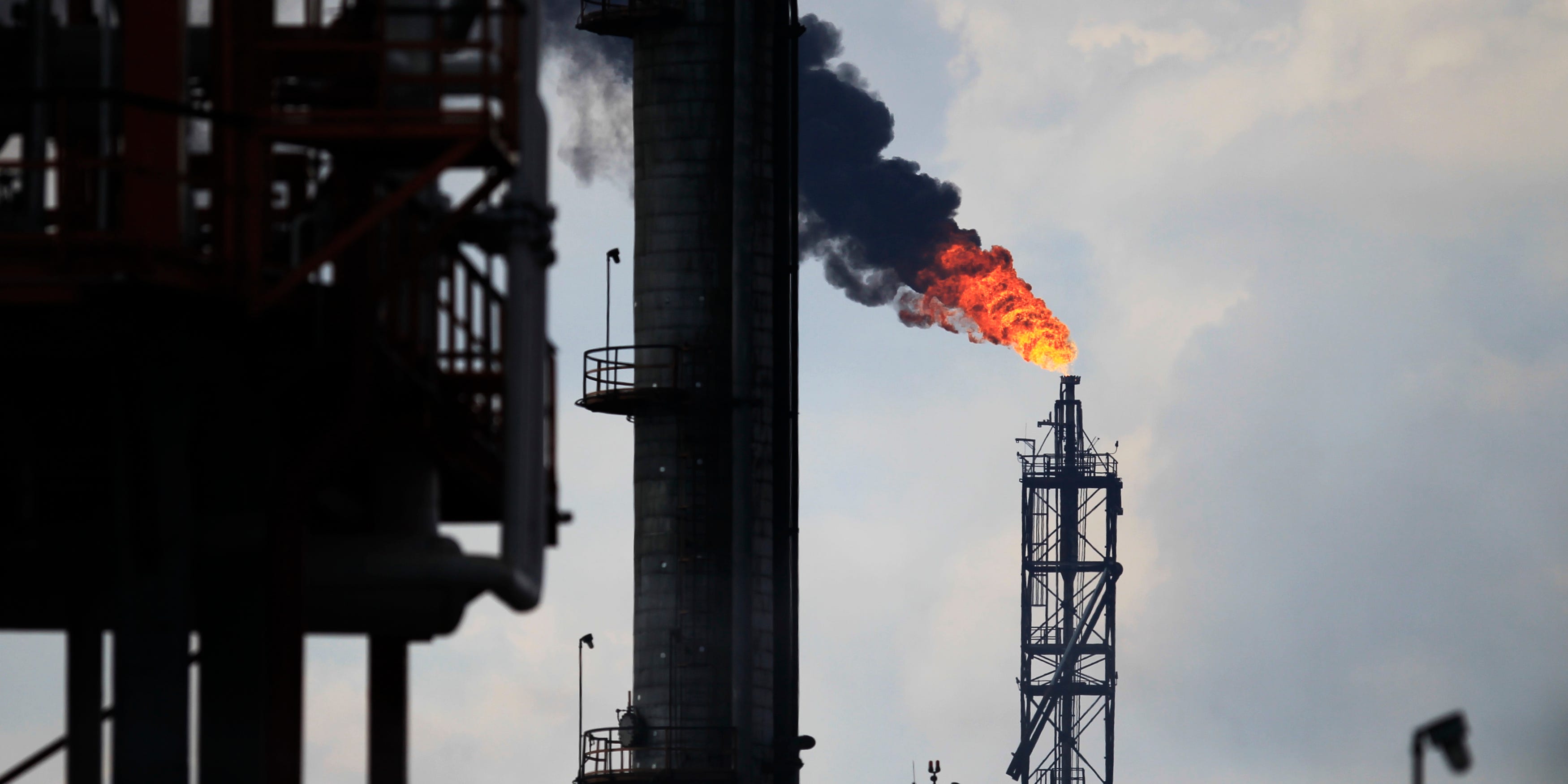
Africa is spending billions of dollars to tackle one of its biggest barriers to economic growth, access to reliable electricity.
- As African countries invest billions to expand electricity access, oil producers worldwide burned an estimated $54 billion worth of natural gas in 2025, according to the World Bank.
- The report says the wasted gas could have been used to generate electricity, produce clean cooking fuel and support industrial growth.
- It warns that weak regulation, inadequate infrastructure and limited financing. not technology, remain the biggest barriers to ending routine gas flaring.
- The findings come as Africa pushes to connect hundreds of millions of people to electricity through initiatives such as Mission 300.
Governments across the continent are investing in power generation, transmission infrastructure and cleaner cooking fuels, while the World Bank and the African Development Bank are leading Mission 300, an initiative designed to connect 300 million Africans to electricity by 2030.
Yet, even as the continent races to close its energy gap, oil producers around the world burned an estimated $54 billion worth of natural gas last year instead of putting it to productive use.
That is the central finding of the World Bank’s June 2026 Global Gas Flaring Tracker Report, which estimates that global gas flaring rose to 167 billion cubic metres (bcm) in 2025, the highest level since 2019 and the third consecutive annual increase.
The volume of gas flared was roughly equivalent to Africa’s annual gas consumption, underscoring the scale of the opportunity being lost.
“The gas flared in 2025 was worth an estimated US$54 billion,” the World Bank said in the report, describing the scale of resource waste and economic loss as “staggering.”
These figures are more than an environmental statistic. They highlight the contradiction between a continent working to expand electricity access and a global energy industry that continues to burn a resource capable of generating power, supporting industry and producing cleaner cooking fuel.
The World Bank noted that the amount of gas flared globally in 2025 exceeded the volume of liquefied natural gas exported through the Strait of Hormuz and was comparable to Africa’s total annual gas consumption.
The report argues that associated gas, if captured instead of flared, can strengthen energy security by improving electricity supply, expanding access to liquefied petroleum gas (LPG) for cooking and supporting industrial activity.
“Associated gas can help with the availability, affordability, and reliability of electricity,” the report said, adding that LPG produced from associated gas can also support clean cooking and small industries.
The findings come as many African economies continue to struggle with unreliable electricity, forcing businesses to depend on expensive diesel generators and raising operating costs for manufacturers, miners, technology firms and small enterprises.
According to the World Bank, more than half a billion people in developing countries still lack reliable electricity.
It also cited previous research showing that electricity shortages are associated with a 13.5% reduction in employment across Africa, while firms lose about 8% of annual sales because of power outages.
Despite decades of international efforts to reduce gas flaring, the report says the industry’s biggest challenge is no longer a lack of technology.
“The technologies, policy and regulatory strategies, and financing mechanisms needed to capture and utilize associated gas are readily available,” the World Bank said.
“What is missing, in far too many places, is the leadership commitment, prioritization, and governance needed to put them into practice.”
Instead, the report points to weak regulation, insufficient investment, limited gas infrastructure and underdeveloped domestic gas markets as the main reasons routine flaring continues in many oil-producing countries.
Nigeria, Libya and Algeria are among the world’s nine largest gas-flaring countries, while Angola and the Republic of Congo were highlighted as major African producers with significant opportunities to capture more associated gas.
Together, these countries hold substantial potential to convert gas currently being burned into electricity, industrial feedstock and export revenue.
The World Bank also noted that the estimated value of gas flared in 2025 represents a large share of the $70 billion to $100 billion in upfront investment it believes is needed globally to end routine flaring, illustrating that the resource being wasted already has significant economic value.
Examples from other producers suggest progress is possible. The United States recorded the world’s largest reduction in flare volumes in 2025 after new pipeline infrastructure eased bottlenecks in the Permian Basin, while Kazakhstan continued to cut flaring through stricter regulation and sustained infrastructure investment.
With just four years remaining before the global target to end routine gas flaring by 2030, the World Bank warned that current trends are moving in the wrong direction.
Reliable electricity remains critical for industrialisation, digital infrastructure, manufacturing and job creation across Africa.
The report suggests that improving energy access will require not only new investment, but also making better use of resources that are already being produced and too often burned off through flaring.