
Three African countries rank among world’s top gas-flaring nations
Nigeria, Libya and Algeria have been listed among the world’s biggest gas-flaring countries, raising fresh concerns over Africa’s ability to turn its oil and gas resources into power, revenue and industrial growth.
 Black News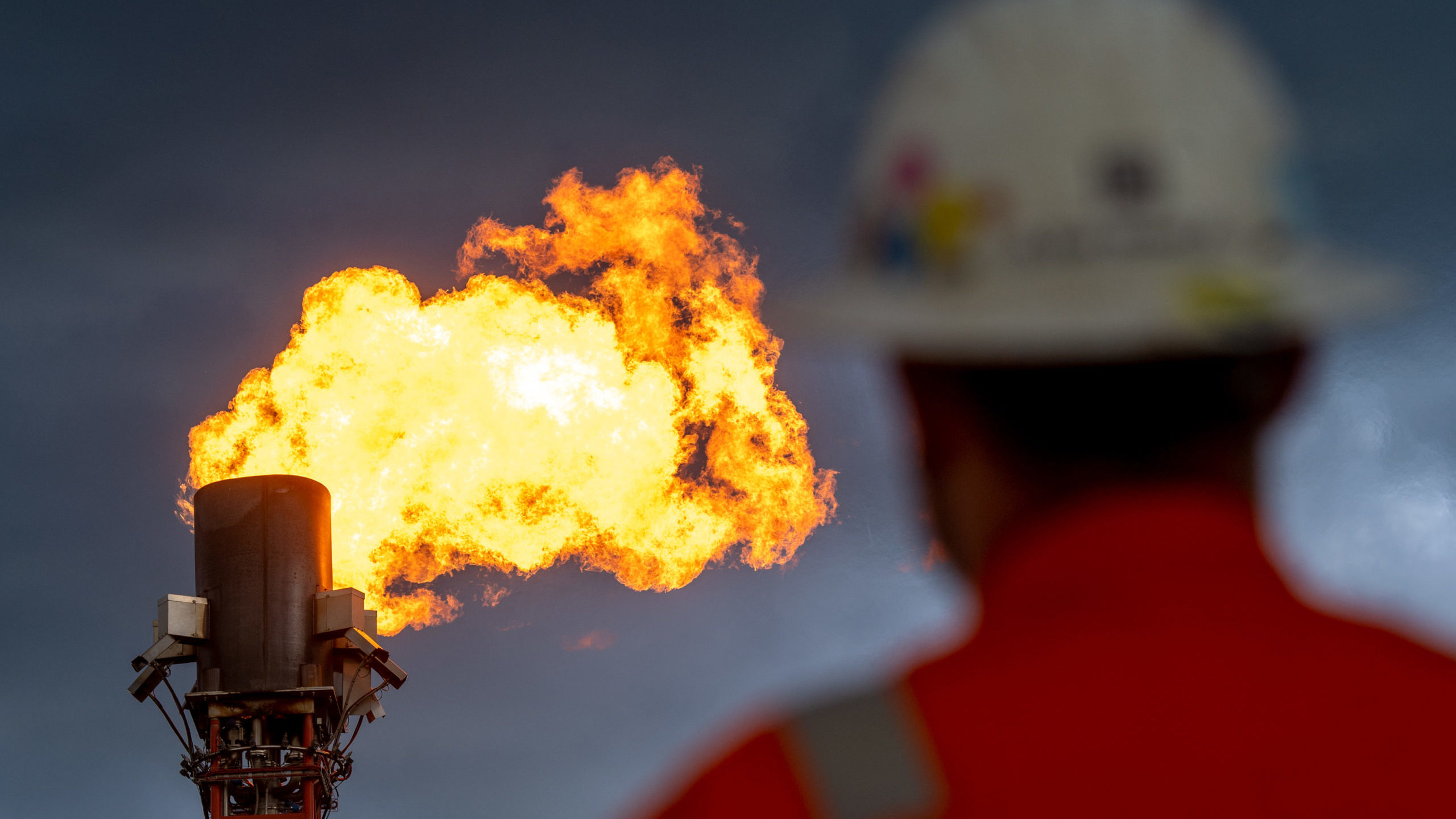

Nigeria, Libya and Algeria have been listed among the world’s biggest gas-flaring countries, raising fresh concerns over Africa’s ability to turn its oil and gas resources into power, revenue and industrial growth.
- Nigeria, Libya and Algeria are among the nine countries responsible for most global gas flaring.
- The World Bank said the top nine countries accounted for 83% of global flare volumes in 2025.
- The list also includes Russia, Iran, Iraq, Venezuela, Mexico and the United States.
- The report raises fresh concerns over Africa’s ability to convert oil and gas resources into power, jobs and revenue.
The three African countries appeared in the World Bank’s June 2026 Global Gas Flaring Tracker Report among nine countries that dominate global gas flaring.
The report said Russia, Iran, Iraq, Venezuela, Mexico, Libya, Algeria, Nigeria and the United States accounted for 83% of global flare volumes in 2025, while producing only 46% of the world’s oil.
That means a small group of countries is responsible for most of the world’s gas flaring.
The World Bank said the concentration also means targeted action by a few governments and operators could produce major results.
All three are major oil and gas producers, yet they continue to face challenges converting associated gas into domestic energy, export revenue and industrial input.
Nigeria has long promised to reduce gas flaring and has built policy around its “Decade of Gas” agenda. But it remains among the world’s largest flaring countries, despite chronic power shortages and growing demand for domestic gas.
Libya and Algeria also remain important African producers, with large hydrocarbon reserves and strategic energy links to Europe.
Their continued presence on the global flaring list highlights a wider challenge across African oil economies: crude production often receives more attention than gas capture, processing, transport and domestic use.
The World Bank said the top nine flaring countries have dominated global flaring for the past 15 years.
It also said the remaining 90-plus countries with recorded flaring accounted for only 17% of global flare volumes, despite producing 54% of the world’s oil.
That shows oil can be produced with far lower levels of flaring when infrastructure, regulation and commercial incentives are in place.
The report said flaring intensity remained largely unchanged in Nigeria and Libya in 2025, while Algeria recorded a 3% increase.
Flaring intensity measures the amount of gas flared per barrel of oil produced. The World Bank said it is an indication of how well a country is recovering and using associated gas.
If flaring intensity is rising, the report said, it suggests that a country has more opportunities to recover and use its gas.
The report also noted that Angola and the Republic of Congo remain important African flaring countries, even though they are outside the top nine.
This places Africa at the centre of the global debate over gas waste, energy access and oil sector governance.
The World Bank said gas flared globally in 2025 was worth an estimated $54 billion and could support electricity, clean cooking and industrial activity if captured and used.
It described continued flaring as a “warning signal.”
For Nigeria, the finding comes despite repeated regulatory efforts to cut flaring, impose penalties and encourage gas commercialisation.
Recent industry data from Nigeria have shown some improvement in gas production and flare intensity, but the World Bank ranking suggests the country still has a long way to go.
The issue is not only environmental. It is also economic.
Gas that is flared cannot support power plants, fertiliser production, petrochemicals, clean cooking or export earnings.
For African governments trying to attract energy investment and expand electricity access, continued flaring weakens the case that existing resources are being used efficiently.
The World Bank said countries that have committed to the Zero Routine Flaring by 2030 initiative have generally performed better than those that have not.
But with only four years left to meet the target, the report warned that the gap between current trends and ending routine flaring is widening.