A 40-year-old excavation just uncovered rare Egyptian artifacts, including golden tongues
Archaeologists in Egypt discovered a rare collection of golden tongue artefacts within ancient tombs at Marina Alamein, revealing new information on burial rituals that combined Egyptian religious beliefs with Greco-Roman culture over 2,000 years ago.
 Black News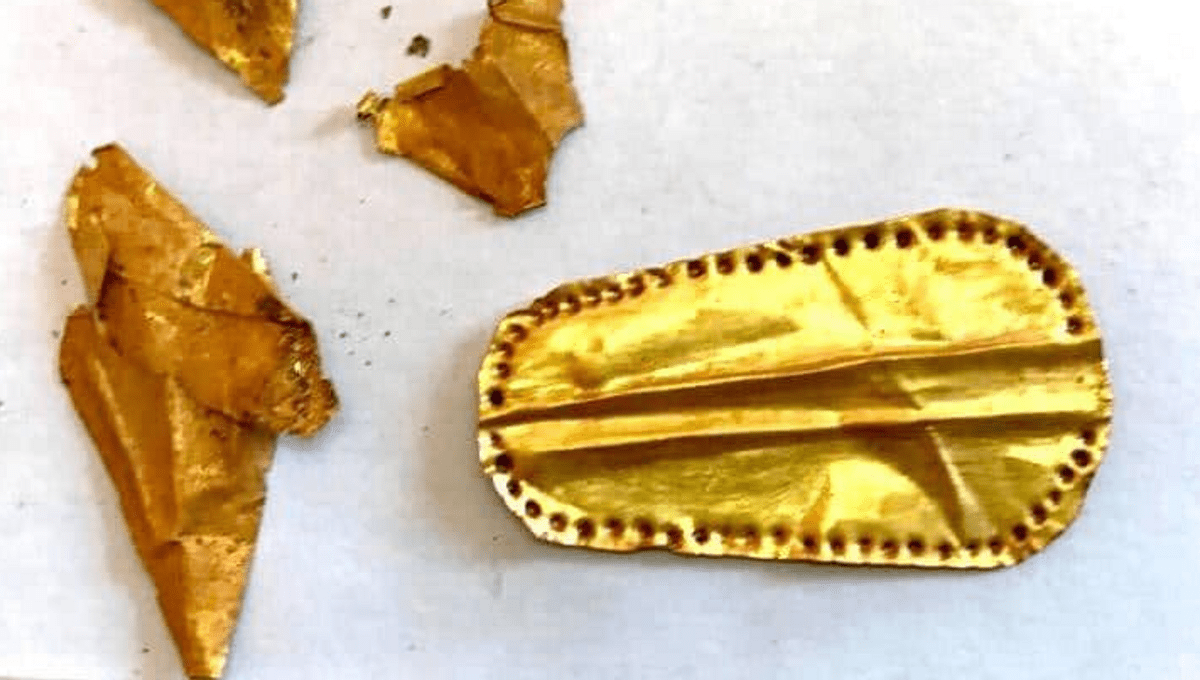
![A number of mummies have been found with golden tongues. [Image credit: Egyptian Ministry of Tourism and Antiquities]](https://ocdn.eu/pulscms/MDA_/3798d56afb0073b03f6fea19e48ba51e.png)
Archaeologists in Egypt discovered a rare collection of golden tongue artefacts within ancient tombs at Marina Alamein, revealing new information on burial rituals that combined Egyptian religious beliefs with Greco-Roman culture over 2,000 years ago.
- Archaeologists discovered rare golden tongue amulets and 18 previously unknown tombs at Marina Alamein in Egypt.
- The golden tongue pieces were placed in the mouths of the dead, believed to help them speak with gods in the afterlife.
- Findings include a 2.5-meter granite casket, skeletal remains, and gold Eye of Horus amulets that reflect blended Egyptian and Greco-Roman beliefs.
- These discoveries enhance knowledge of burial customs and support plans to develop Marina Alamein into a major archaeological and tourism destination.
The find was uncovered by an Egyptian archaeological team excavating the ancient city of Marina Alamein on Egypt's northwestern Mediterranean coast.
DON'T MISS THIS: Africa’s early affiliation with Christianity highlighted by a mural of Jesus Christ
Along with the amulets, researchers discovered 18 previously unknown tombs, bringing the total number found at the site to 44 since excavations began in 1986.
The most remarkable discoveries were 24 gold burial amulets inserted into the lips of some of the dead.
Known as "golden tongues," these fragile pieces were thought to enable the deceased to talk in the afterlife, allowing them to interact with the gods during their journey beyond death, as reported by Egypt’s Ministry of Tourism and Antiquities.
Additionally, Dr Eman Abdel Khaleq, the mission's commander and area director, stated that a 2.5-metre-long granite casket with its original lid had been discovered.
Inside, there were skeletal remains that are now being investigated.
She went on to reveal that one of the most significant findings was the discovery of 24 gold pieces hidden within the jaws of some of the deceased.
These signify the "golden tongue," which was associated with funeral beliefs of the time.
The excavation also turned up a gold Eye of Horus amulet, one of ancient Egypt's most well-known emblems of protection and healing, demonstrating the long-lasting impact of Egyptian spiritual beliefs even as the region absorbed Hellenistic and Roman traditions.
The team also discovered the remnants of a plaster figure of Harpocrates, the Egyptian deity of childhood and stillness, as well as pottery, limestone altars, glass jars, funeral sculptures, and an incomplete marble monument said to depict the Greek goddess Aphrodite.
Together, the discoveries show the cultural interchange that characterized Marina Alamein during the Hellenistic and Roman periods.
Marina Alamein, located around 100 miles west of Alexandria, was once a major Mediterranean port that connected Egypt to the rest of ancient civilization.
According to officials, the recent finds not only expand our grasp of the city's cosmopolitan history, but they also support ambitions to convert the site into one of Egypt's premier archaeological and cultural tourism attractions.