A Subversive Swot Analysis
I don’t know if you have ever done a SWOT analysis for any project, it’s bloody boring and rubbish. I spent one afternoon coming up with alternative phrasings for SWOT. I came up with Subverting With Our Truth, and this idea grew from there. I refuse the dichotomy of strengths and weaknesses in a capitalist ... A Subversive Swot Analysis
 Black News
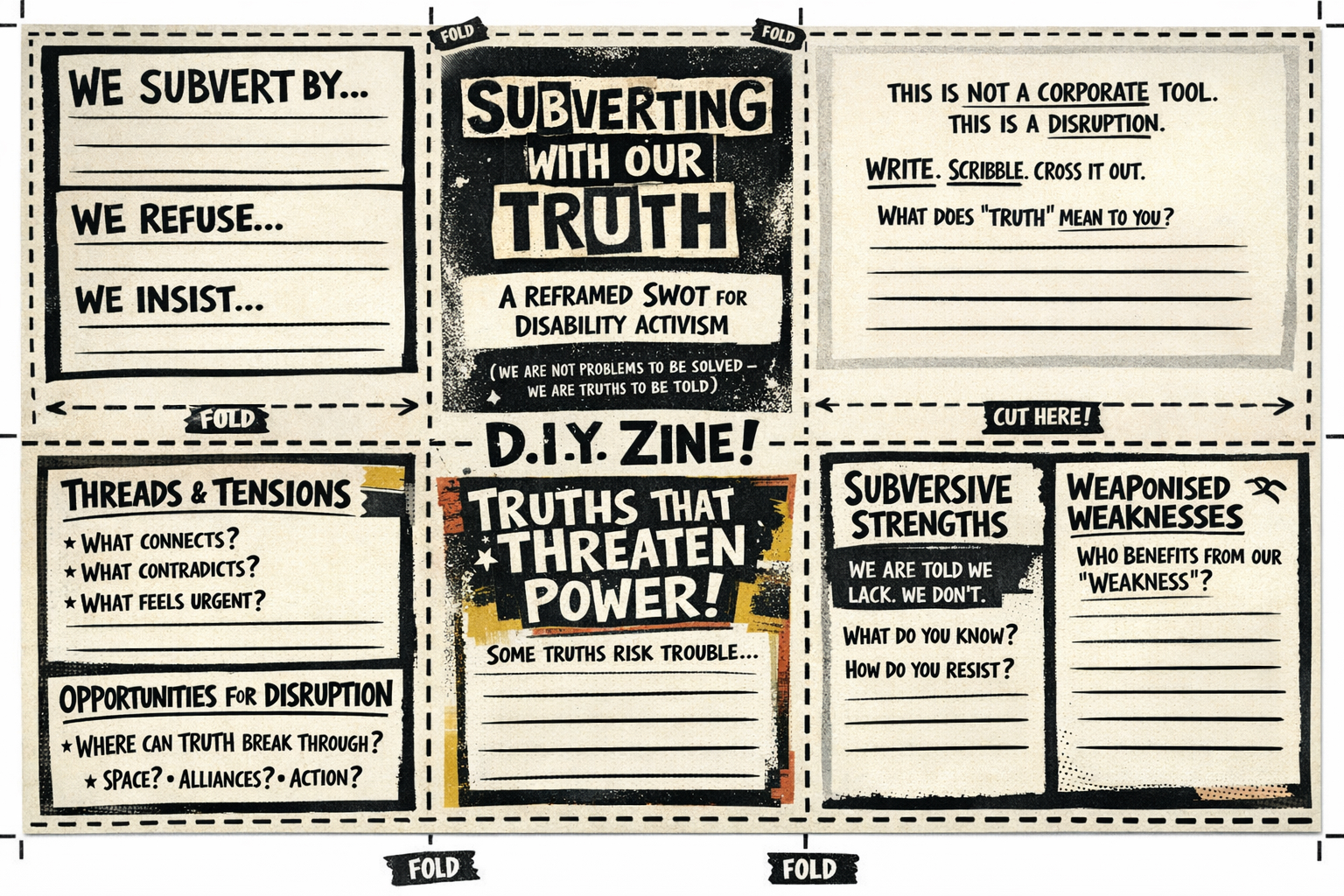

I don’t know if you have ever done a SWOT analysis for any project, it’s bloody boring and rubbish. I spent one afternoon coming up with alternative phrasings for SWOT. I came up with Subverting With Our Truth, and this idea grew from there. I refuse the dichotomy of strengths and weaknesses in a capitalist framework. I thought about how to create one that would be useful for disabled art activists, through the Disability Justice lens. On the pic of my subversive SWOT, there are the questions I think you need to ask to make sense of why you are doing what you are doing and to build a strategy moving forwards.
Other questions to think about:
S- SUBVERSIVE STRENGTHS
- What truths do disabled people hold that disrupt dominant narratives? For example, I wrote a piece for Hearing Justice London about how disabled people can show the rest of the world how to live deeply.
- In what ways do we resist, reframe, or expose ableist systems?
- What forms of solidarity, creativity, or refusal are already powerful?
W — WEAPONISED WEAKNESSES
- Which “weaknesses” are actually imposed by societal structures (e.g., inaccessibility, stigma)?
- How are labels like “vulnerable” or “dependent” used against us?
- What internalised narratives need to be unlearned?
O — Opportunities for Disruption
Less about opportunity as gain, more as rupture:
- Where can dominant systems be interrupted or exposed?
- What spaces allow truth-telling to shift perception?
- How can storytelling reclaim agency from medical or institutional voices?
- What alliances (queer, racial justice, anti-capitalist movements) deepen impact?
T — Truths That Threaten Power
Instead of “threats to us,” flip the perspective:
- What truths about disability make institutions uncomfortable?
- How does honesty about care, dependence, or suffering challenge neoliberal ideals?
- What happens when disabled people speak without sanitising?
- What risks come with being visible, vocal, and unapologetic?
Give it a go and let me know if you find it a useful tool.