A New Chapter in Black Medical Education
DEK: Xavier Ochsner College of Medicine, the only HBCU college of medicine in the Gulf South, will soon start recruiting its inaugural class. As of this week, the nation has only its fifth medical school at an historically Black college and university—and notably it’s in the largely Black city of New Orleans. The Xavier Ochsner […] The post A New Chapter in Black Medical Education appeared first on Word In Black.
 Black News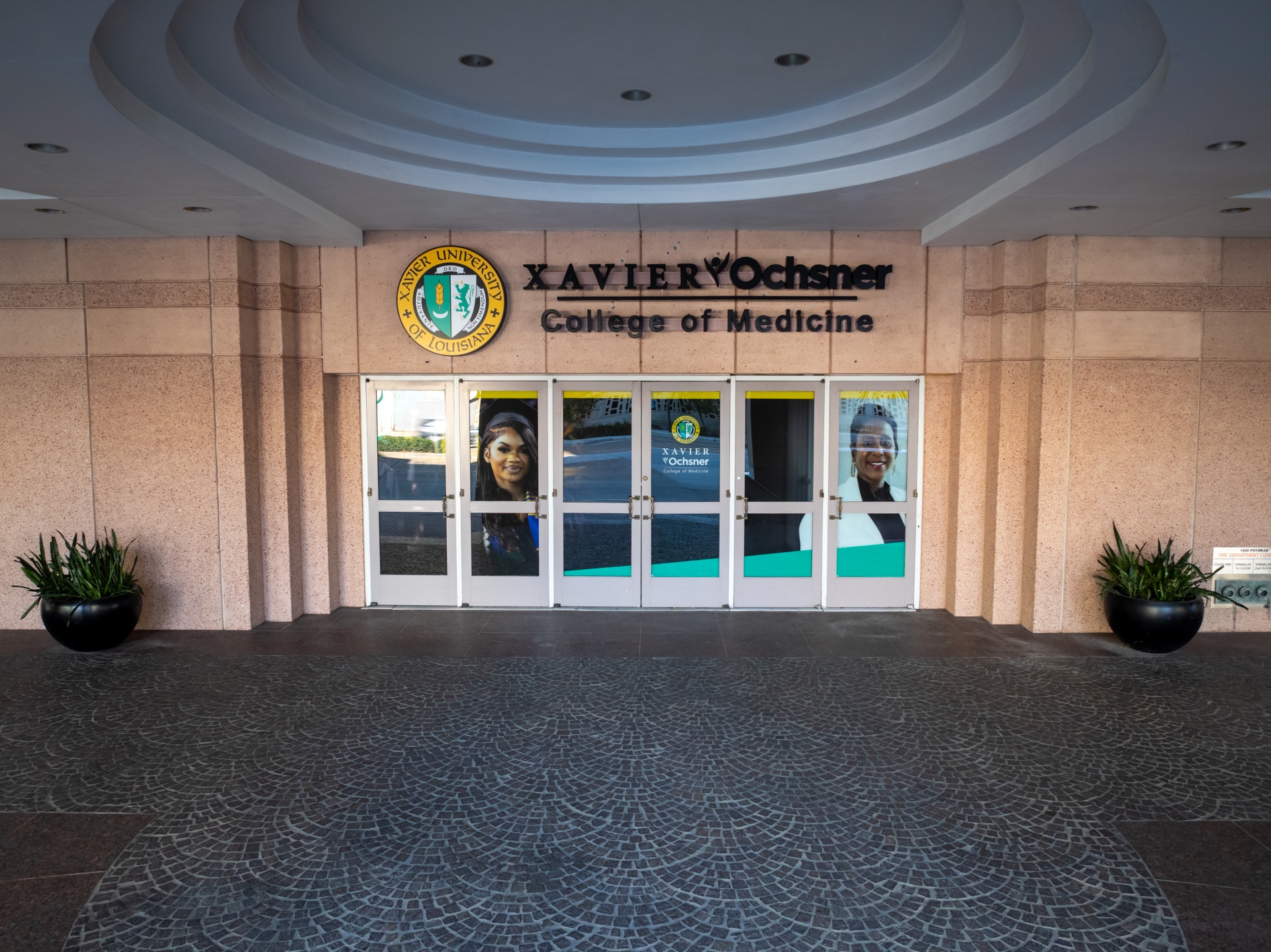

DEK: Xavier Ochsner College of Medicine, the only HBCU college of medicine in the Gulf South, will soon start recruiting its inaugural class.
As of this week, the nation has only its fifth medical school at an historically Black college and university—and notably it’s in the largely Black city of New Orleans.
The Xavier Ochsner College of Medicine has received preliminary approval from the Liaison Committee on Medical Education, the accrediting body for U.S. programs that grant the Doctor of Medicine degree.
The milestone clears the way for the college to begin recruiting its inaugural class of 50 students, which will enter in summer 2027. It also advances the vision for the nation’s next historically Black college of medicine—the only one in the Gulf South.
“This is a historic moment for Xavier University of Louisiana, for New Orleans and for the future of medicine in this nation,” said Dr. Reynold Verret, president of Xavier University of Louisiana. “For a century, Xavier has demonstrated what is possible when academic excellence is joined with a profound commitment to human dignity and service. The Xavier Ochsner College of Medicine is a bold extension of that legacy.”
Years in the Making
Verret believes the school’s mission extends beyond “simply opening the doors of a new medical school.” The mission, he says, is to expand “who will have the opportunity to become a physician, strengthening the communities those physicians will serve and helping to shape the future of healthcare for generations to come.”
That legacy runs deep. Katharine Drexel — a Catholic nun and educator who created the Sisters of the Blessed Sacrament, an order that served Black and Indigenous Americans — founded Xavier in 1925. Canonized in 2000, she was the first U.S.-born saint.
Xavier is the only HBCU that is also a Catholic university.
Over the past century, Xavier has built a reputation for excellence in STEM education. Forbes has named it a top HBCU, and it leads in sending Black students to medical school. Its alumni include Dr. Regina Benjamin, who served as the nation’s 18th Surgeon General under President Barack Obama.
Verret says conversations with Ochsner about opening a medical school began almost a decade ago. The college was formally established in 2024, earned candidate status in October 2025 and hosted an LCME survey visit in June 2026. Applications will open through the American Medical College Application Service in the coming weeks.
The new medical school builds on that foundation as well as decades of collaboration between Xavier and Ochsner Health on education, research and health care. Xavier’s health professions track has long included pharmacy and premedical training, along with the Ochsner-Xavier Institute for Health Equity and Research, Xavier’s physician assistant Program, and its genetic counseling program.
Pete November, president and CEO of Ochsner Health, said in a statement that his company’s partnership with Xavier University “is grounded in a shared belief that education, opportunity, and service can transform lives and provide our communities stellar healthcare for generations to come.”
Addressing a national physician shortage
Dr. Leonardo Seoane, Ochsner’s chief academic officer, was named the college’s president and founding dean. He says federal data shows the U.S. could be short 141,000 physicians by 2038, more than double the current gap of about 60,000 vacancies.
“There’s a physician workforce crisis in the United States” that’s been overshadowed by other national crises, Seoane says. “We’re not heading in the right direction and that shortage is not felt evenly,” he says.
Rural areas, some urban communities and the South feel it more, Seoane says. In Louisiana, 60 of the state’s 64 parishes are federally designated Health Professional Shortage Areas.
“The number of physicians you have per population of a community directly correlates to the health and wellness of that community,” he says.
That gap is compounded by the underrepresentation of physicians of color. Although Black Americans make up 13.6% of the U.S. population, only 5.7% of physicians identify as Black. Experts say HBCUs play an outsized role in closing that gap.
“HBCUs trained 50% of the Black physicians in this country,” Soane says. ”We also know the data is clear that Black and Hispanic physicians go back and serve in Black and Hispanic communities.”
Training physicians for the community
The college’s approach grows out of the health programs Xavier has built in recent years, such as the school of public health and specialized programs. Seoane says the programs Xavier started focused on “areas where we find there’s a lack of Black and Brown providers like genetic counseling and physician assistants.”
The college plans to enroll 50 students in its first class, then grow to 75 and, eventually, 100 students a year.
Community impact and service will be central to their training, Seoane says.
“One of our strategic pillars is to be community-informed,” he says. “A critical element of our curriculum is for students to understand that you’re not just treating a patient, you’re treating a family, and you’re treating a family within a community, and you need all of that context to provide the best care for your patients.”
Ochsner, for its part, brings more than 80 years of caring for its communities, more than 60 years of training residents and fellows and 17 years of medical student education, creating a model that connects rigorous academic preparation with real-world training.
Pete November, president and CEO of Ochsner Health, said in a statement that his company’s partnership with Xavier University “is grounded in a shared belief that education, opportunity, and service can transform lives and provide our communities stellar healthcare for generations to come.”
RELATED: Anti-DEI Laws Could Make the Black Doctor Shortage Even Worse
The post A New Chapter in Black Medical Education appeared first on Word In Black.