Anguilla, By Another Reckoning: Exploring financial literacy through cultural memory
Economist and statistician Rhina Meade is exploring Anguilla’s financial literacy through cultural memory in a new online video series. Launched… The post Anguilla, By Another Reckoning: Exploring financial literacy through cultural memory appeared first on Anguilla Focus | News.
 Black News

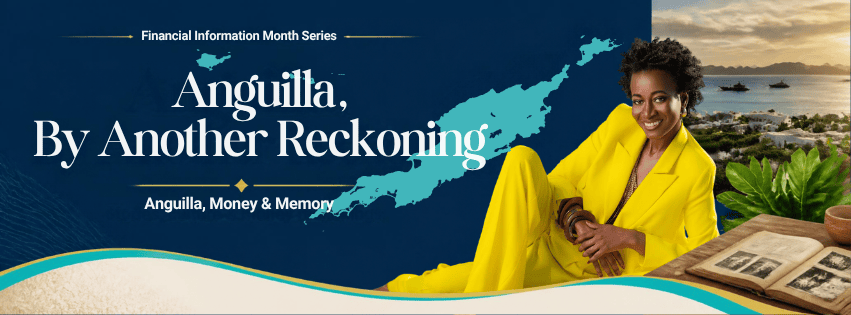
Economist and statistician Rhina Meade is exploring Anguilla’s financial literacy through cultural memory in a new online video series.
Launched in early October, ‘Anguilla, By Another Reckoning’ examines how generations of Anguillians navigated hardship, managed resources and built financial resilience.
Meade researches, writes and presents each episode herself, using carefully chosen locations and engaging storytelling to bring the island’s financial history to life.
Having just published her 11th episode, she spoke to Anguilla Focus about how the project began and why understanding the past can help inform the future.
Could you tell us how you became interested in Anguilla’s history and its relationship with money?
I’m an economist and statistician by training and profession [currently working as director of the Economic Planning Unit], but I’ve always loved stories.
In July, I attended a storytelling workshop organised by the Department of Youth and Culture. I had long wanted to write a collection of stories about my grandmother’s childhood in Anguilla, and I thought the workshop might help me do that.
It was there that I was introduced to ‘pourquoi stories’ – tales that explain why things are the way they are. That experience pushed me to start asking some of my own ‘whys’ about Anguilla.
I started researching and writing, and the more I learned, the more I wanted to share.
At Anguilla Focus we keep our core content free for everyone – but our members get access to even more! Click here to join from just $4/month.
I would tell the stories to family and friends or post snippets on my WhatsApp status about our archaeology, folklore, geography, historical injustice and local customs.
Many were stories I had heard in fragments over the years, but researching them gave me a different perspective. Several friends were intrigued and encouraged me to share more widely.
As Financial Information Month approached, an idea began to form. Following the passing of Mr Colville Petty OBE, it took on additional meaning.
I had been drawing extensively on his books in researching Anguilla’s history and I thought the series could be a way of honouring his contribution to documenting our past while also promoting financial literacy.
What began as curiosity about our stories became an opportunity to explore the economic decisions, challenges, and ingenuity that have shaped Anguilla.
How did the idea for Anguilla, By Another Reckoning come about, and why did you choose to tell these stories?
After the workshop, I kept writing. One story led to another and before long I had a small collection. The encouraging feedback from family and friends certainly helped.
Financial Information Month is observed throughout the Eastern Caribbean Currency Union, and through my professional work I have participated in previous activities.
I initially considered developing the series as an official project, but ultimately decided to keep it personal.
As a civil servant, I am mindful of maintaining professional neutrality; focusing on our economic history allows me to explore important ideas without turning the series into commentary on the current policy environment.
I wanted the freedom to tell these stories in my own voice.
“Come closer, nuh… yuh listening?” That’s the feeling I wanted: a conversation in a familiar Anguillian voice, rather than a formal or institutional one.
The core idea is that modern financial principles like saving, budgeting and managing risk are not new to us; our ancestors were making smart economic decisions long before formal literacy campaigns existed.
That’s why the tagline for the project is ‘Financial literacy through cultural memory’.
Some of our ancestors’ approaches offer lessons worth preserving. Others reveal vulnerabilities that we still need to address.
For this series, I wanted to explore those experiences and encourage people to think about our economic history in a different way.
How do you choose the subjects for each episode, and what does your research process involve?
Usually, something catches my curiosity while reading foundational texts like Mr Petty’s ‘A Handbook History of Anguilla’ or ‘Bless Our Forebears’.
It might be a familiar place, an old industry, a historical event, or it triggers a question I’ve never really stopped to consider.
I am particularly interested in moments when Anguilla’s economic realities were brought sharply into focus.
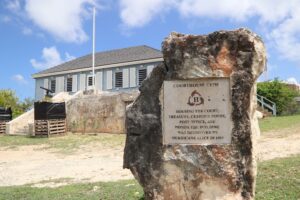
Our salt ponds, the boat building and merchant trade, hurricanes, the arrival of banking services, the development of tourism, and the Anguilla Revolution all tell us something about how people responded to the circumstances they faced.
I look for the decisions behind those events. What resources did people have? What choices were available to them? What risks did they take? Who benefited, and who bore the consequences?
My research generally begins with historical records and the work of local historians. I also draw on oral accounts and the ways these events have been remembered and passed down.
I try to distinguish between documented history, local tradition, and interpretation. Sometimes the records don’t give us a complete answer, and I think it’s important to acknowledge that rather than pretend otherwise.
Then comes the storytelling. I look for a way to make the information accessible without losing its historical significance.
I want people to understand the circumstances, not simply remember a date or an event. I’m not trying to produce academic history. I’m trying to make our history engaging, relatable and useful.
Have you uncovered anything about Anguilla’s financial past that changed your own understanding of the island?
I wouldn’t say I’ve uncovered anything radically new, as much of this has been documented or is remembered by older generations.
The real challenge is that this history isn’t always widely known or passed down. Instead, the research reinforced just how vulnerable Anguilla has always been, and the brilliant ingenuity our people used to survive.
We have repeatedly found ways to sustain ourselves despite limited natural resources, geographic isolation, economic shocks and significant hardship. Those achievements deserve recognition.
But I am also conscious of the distinction between buzz words like ‘resilience’, that get used every time we describe Anguilla, and ‘long-term security’.
Many of the systems Anguillians developed were remarkably effective at helping people survive immediate difficulties. Yet some were essentially plasters.
They addressed the pressure of the moment without necessarily removing the underlying vulnerability. And that is something I think we still grapple with today.
We rightly celebrate our resilience, but resilience alone cannot be our development strategy. We must also ask whether we are building the structures that will make future generations less vulnerable.
For me, that is what it means to look at Anguilla by Another Reckoning: to appreciate what our people accomplished while being willing to examine what their experiences reveal about the choices we face today.
What has the response to the series been like so far, and have any reactions or conversations with viewers surprised you?
The response has been warmer and more immediate than I anticipated. People can sometimes be hesitant to comment publicly, but I’ve received quite a bit of direct feedback.
Many have expressed appreciation for the historical information, particularly when a story introduces something about Anguilla they hadn’t previously known.
What has been incredibly encouraging is the sheer curiosity the stories generate. People aren’t just looking at the past; they want to understand how those historical events connect directly to the Anguilla we live in today.
For me, the personal conversations are just as valuable as the views.
I generally don’t post much on social media and my circle is tight, so the volume of views and the engagement have been a wonderful surprise. There is a real appetite for our history when it is presented in an accessible, familiar voice.
If a story prompts someone to ask a question, share a recollection, or look at a familiar road or building differently, then the project has already accomplished something worthwhile.
What are your plans for the series and beyond?
Right now, my main focus is simply completing this October series, which was originally conceived as a one-off contribution to Financial Information Month.
Because viewers are already asking for it to continue, I am definitely going to give that some serious thought.
More than anything, I want to keep developing my newfound hobby as a storyteller. Whether that develops into another historical video series, a collection of written stories, or something else remains to be seen.
For now, I am just enjoying the research process and seeing exactly where the stories take me.
Watch the full series on Meade’s Rhina MM Facebook page here.
Check out episode one, ‘What the Ponds Were Worth’ below:
The post Anguilla, By Another Reckoning: Exploring financial literacy through cultural memory appeared first on Anguilla Focus | News.