ASALH issues statement on evisceration of the Voting Rights Act of 1965
Dr. Karsonya “Kaye” Wise Whitehead, leader of the Association for the Study of African American Life and History (ASALH) strongly condemns the recent Supreme Court of the United States (SCOTUS) decision in the Louisiana v. Callais case. As the premier Black heritage and learned society, ASALH and its leadership knows this is yet another marker in the ongoing fight to secure and protect our vote—a struggle against disenfranchisement that we have been engaged in since the early 1800s. The post ASALH issues statement on evisceration of the Voting Rights Act of 1965 appeared first on AFRO American Newspapers.
 Black News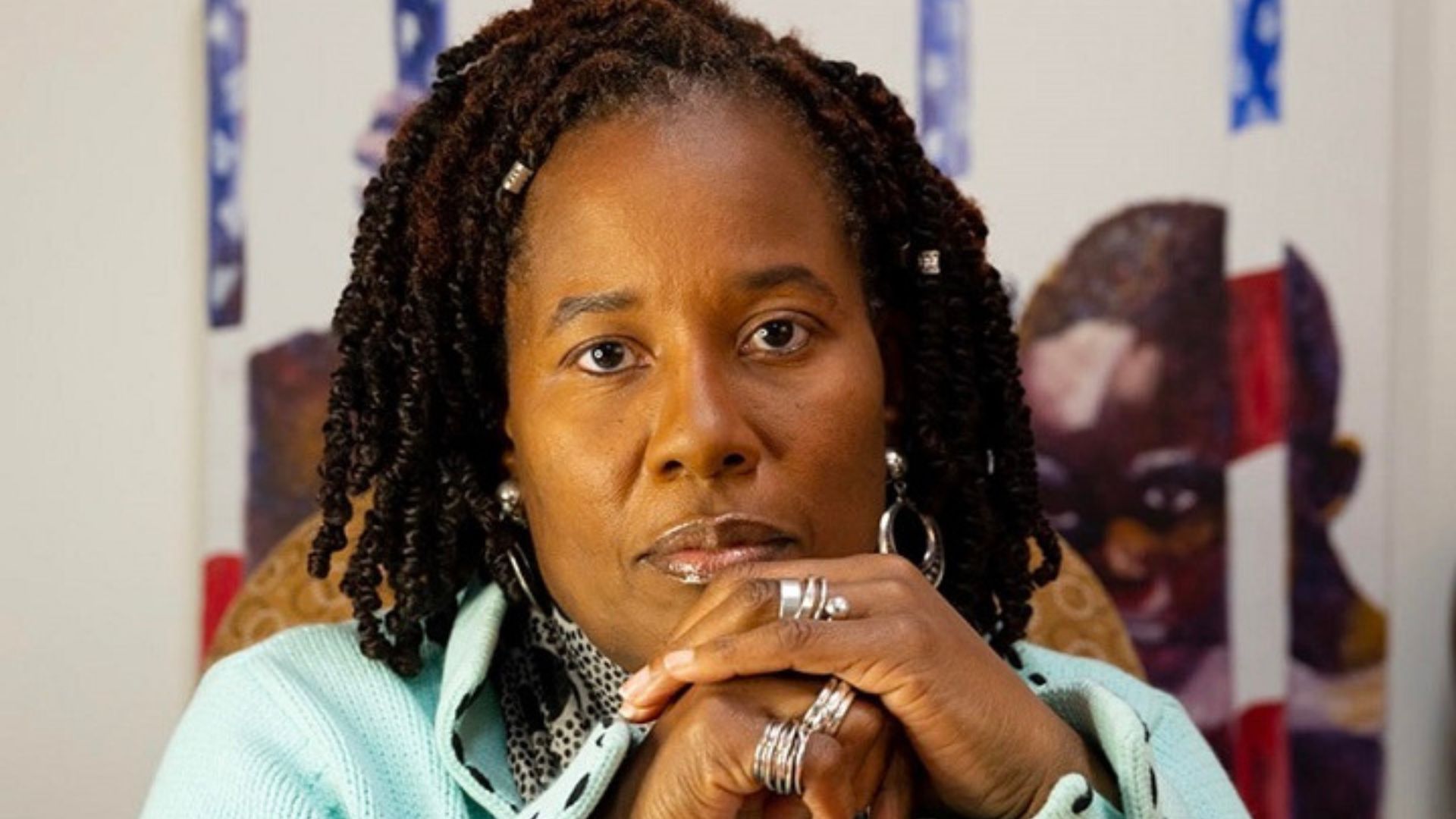

By Dr. Karsonya Whitehead
todaywithdrkaye@gmail.com
The Association for the Study of African American Life and History (ASALH) strongly condemns the recent Supreme Court of the United States (SCOTUS) decision in the Louisiana v. Callais case. As the premier Black heritage and learned society, ASALH knows this is yet another marker in the ongoing fight to secure and protect our vote—a struggle against disenfranchisement that we have been engaged in since the early 1800s.

The Voting Rights Act, which has long been situated as “one of the most consequential, efficacious, and amply justified exercises of federal legislative power in our Nation’s history,” outlawed literacy tests and provided for the appointment of federal examiners (with the power to register qualified citizens to vote) in those jurisdictions that were “covered” according to a formula provided in the statute. Section 5 required designated areas to get federal approval before changing voting practices, and Section 2 mirrored the 15th Amendment (1870), banning the denial of voting rights based on race or color. Although the 24th Amendment (1964) ended poll taxes in national elections, the Voting Rights Act gave the Attorney General the authority to challenge their use in state and local elections, with the goal of ending Jim Crow’s discriminatory hold on Southern politics.
In the 6-3 conservative-majority decision on April 29, the Court voted to eviscerate Section 2 of the Voting Rights Act of 1965, effectively rendering the act obsolete, with Justice Alito writing the majority opinion. As expected, Justices Elena Kagan, Ketanji Brown Jackson, and Sonia Sotomayor dissented, with Justice Kagan writing for the minority. In a scathing 48-page opinion that will be studied and discussed for years to come, she wrote that the ruling “demolishes the foundational right Congress granted of racial equality in electoral opportunity.” She went on to note that the Voting Rights Act “ushered in awe-inspiring change, bringing this Nation closer to fulfilling the ideals of democracy and racial equality. And it has been repeatedly, and overwhelmingly, reauthorized by the people’s representatives in Congress. Only they have the right to say it is no longer needed—not the Members of this Court.”
The work to dismantle the Voting Rights Act started in 1966 with South Carolina v. Katzenbach.
In an 8-1 decision, SCOTUS upheld the constitutionality of the VRA. They were more successful in 2013, when the Supreme Court in Shelby County v. Holder ruled that the Section 4(b) coverage formula was unconstitutional, effectively rendering Section 5 inoperable. In 2021, in Brnovich v. Democratic National Committee, they weakened Section 2 of the VRA, which prohibited nationwide voting practices that discriminate on the basis of race. And two years ago, in 2024, in Alexander v. South Carolina State Conference of the NAACP, SCOTUS reversed a finding of racial gerrymandering in SC, establishing a high burden of proof for challengers. They then turned their attention to taking away the final pillar holding up the Voting Rights Act, the section that dealt with redistricting. This was a 60-year fight to dismantle, disintegrate, and decimate the Act that was put in place to protect our voting rights.
ASALH recognizes that this is yet another pivotal moment in our struggle, and without organization and action, our rights will continue to erode. This is not a time for silence, not a moment for resting or for being still; this is a moment to act. As Dr. Martin Luther King, Jr. said, “Change does not roll in on the wheels of inevitability but comes through continuous struggle.”
ASALH will continue to organize. We will continue to resist. We will continue to stand. And we will continue to push back so that we can eventually push forward.
This is a long arc, but we will continue to bend it toward justice.
The opinions expressed in this commentary are those of the writer and not necessarily those of the AFRO.
The post ASALH issues statement on evisceration of the Voting Rights Act of 1965 appeared first on AFRO American Newspapers.