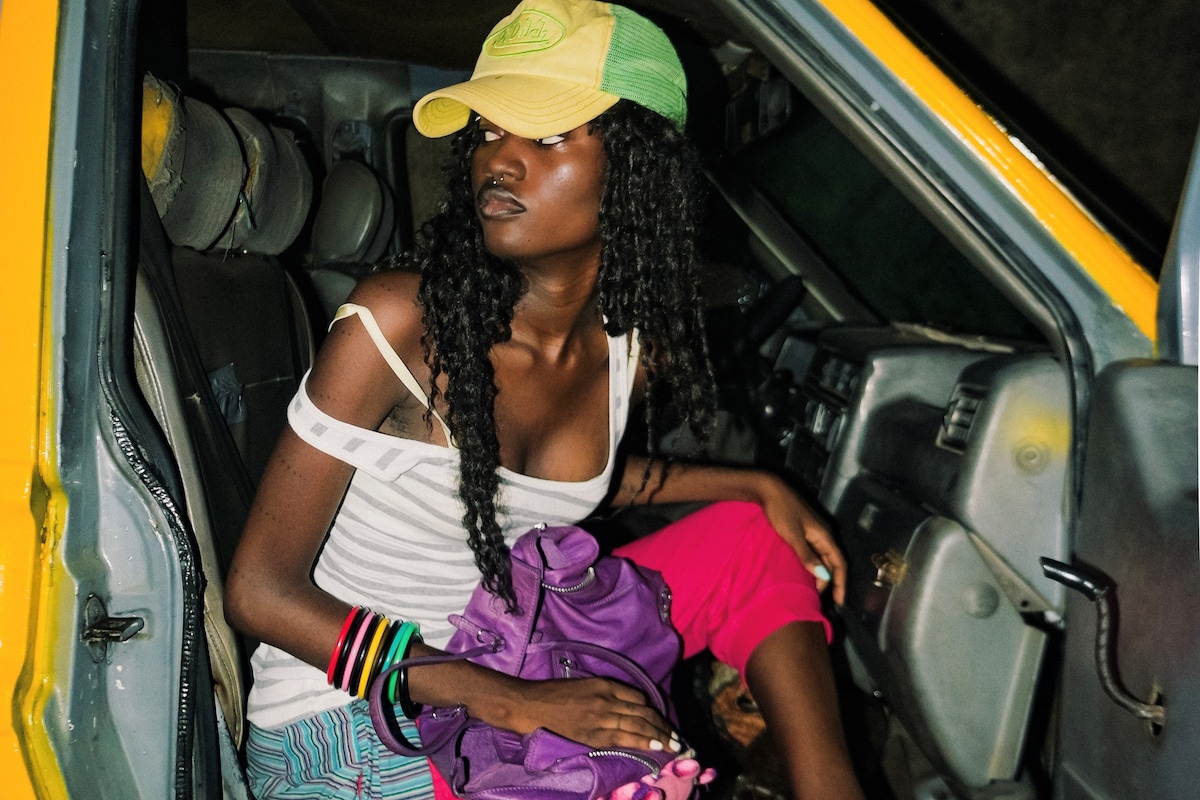
Cape Independence group asks Trump to pressure government into referendum
Cape Independence Advocacy Group Phil Craig this week wrote an open letter to US President Donald Trump asking for assistance.
 Black News
The Cape Independence Advocacy Group (CIAG) has called on the United States (US) to support its ambitions of a referendum.
A year after visiting the US, independence advocate Phil Craig on Thursday released an open letter to President Donald Trump in which he made the case for greater support on South African soil.
While the US has increased its intake threshold for South African immigrants, Craig argued that leaving would be akin to “surrender” and that Cape independence was a mutually beneficial solution.
Newly appointed ambassador to the US, Roelf Meyer, was in the US this week and said he received a cordial welcome from his hosts.
The Presidency had previously rebuked any talk of Cape independence, while the department of International Relations and Cooperation (Dirco) stated that South Africa was not a “foreign protectorate”.
‘We love the one we have’
Craig opened his letter by thanking Trump for his stance regarding South Africa’s problems and the US’ current asylum programme.
The CIAG leader suggested the “romantic notion of the Rainbow Nation” was fading, asking the US President to put his weight behind an alternative solution.
Craig claimed that the “fundamental and profound differences between the various peoples” of South Africa were overcome when “they cooperate on equal terms” through autonomy.
“Afrikaners and other minority groups do not need a new home. We love the one we have, we just need to be able to make our own decisions and to decide for ourselves how we want to be governed as opposed to having that dictated to us,” Craig wrote.
This independence, said Craig, extended to economic and social development policy made in the interest of Western-aligned groups.
Craig asked Trump to engage with South Africa’s national and provincial governments to encourage the holding of a Cape Independence referendum.
“Our own homeland – a revived Cape of Good Hope, Cape Independence – will do more for Afrikaners and other minorities than refugee status ever can,” he stated.
SA doesn’t need ‘foreign crutch’
When Craig and the CIAG began courting Trump and the US, the Presidency was quick to affirm South Africa’s sovereignty.
“There is no part of our beautiful land that can be allowed to secede. As people exercise their constitutionally given rights, they must not do so in a manner that undermines and subverts constitutional democracy in South Africa.
“We should all be actively engaged in building a better South Africa in the face of unpredictable geopolitical dynamics,” Presidency spokesperson Vincent Magwenya stated last year.
Other organisations have attempted to sway the US’ approach to South Africa, with Dirco dismissing those attempts too.
“South Africa is a sovereign Republic, not a foreign protectorate. The Afrikaner identity is diverse and multi-ethnic, not a narrow racial group requiring foreign referees.
“Our Constitution and independent institutions serve all South Africans, regardless of race, religion, gender or ethnicity. We can solve South African challenges with South African hands, without a foreign crutch,” Dirco spokesperson Crispin Phiri previously told The Citizen.
‘We stood with you’
Craig believed his group’s polling figures supported a push for a referendum, and he elaborated on how his envisioned new nation would be an ally of the US.
Craig drew parallels between the pioneer spirit of early North American settlers and those on the southern tip of Africa, reiterating that leaving was not an option for some.
“To flee is to surrender. When Americans were transforming an untamed frontier into the most advanced and powerful nation on earth, we were transforming Africa’s south into the most advanced and powerful nation in Africa.
“When Americans fought world tyranny, fascism, and communism, we stood with you. We stood with the best when it came to technology, medicine, art, and literature,” wrote Craig.
Noting South Africa’s geographical position along international shipping lanes, Craig said an independent Cape would be beneficial to the US.
“No outcome would better serve the long-term strategic interests of the United States and its allies than the peaceful emergence of a democratic, Western-aligned partner at the southern tip of Africa.
“If you want to help Afrikaners and other minorities in South Africa in the way that offers us a multi-generational future on the African continent, we ask that the US publicly support the democratic right of the people of the Western Cape to determine their own constitutional future,” he wrote.
Craig explained that anything else would result in the eventual dissolving of minority South African identity and the erasure of its footprint in Africa.
“We have earned our place in the history books; our fight now is to secure our place in the future. Help us to do that,” Craig concluded.