Defiant photos of New York’s ’80s & ’90s queer activists
Arresting Images — Dona Ann McAdams’ photographs document the AIDS crisis, lesbian organising and civil disobedience from one of the most fraught eras in American LGBTQ+ history. A sale of her archive takes place later this month.
 Black News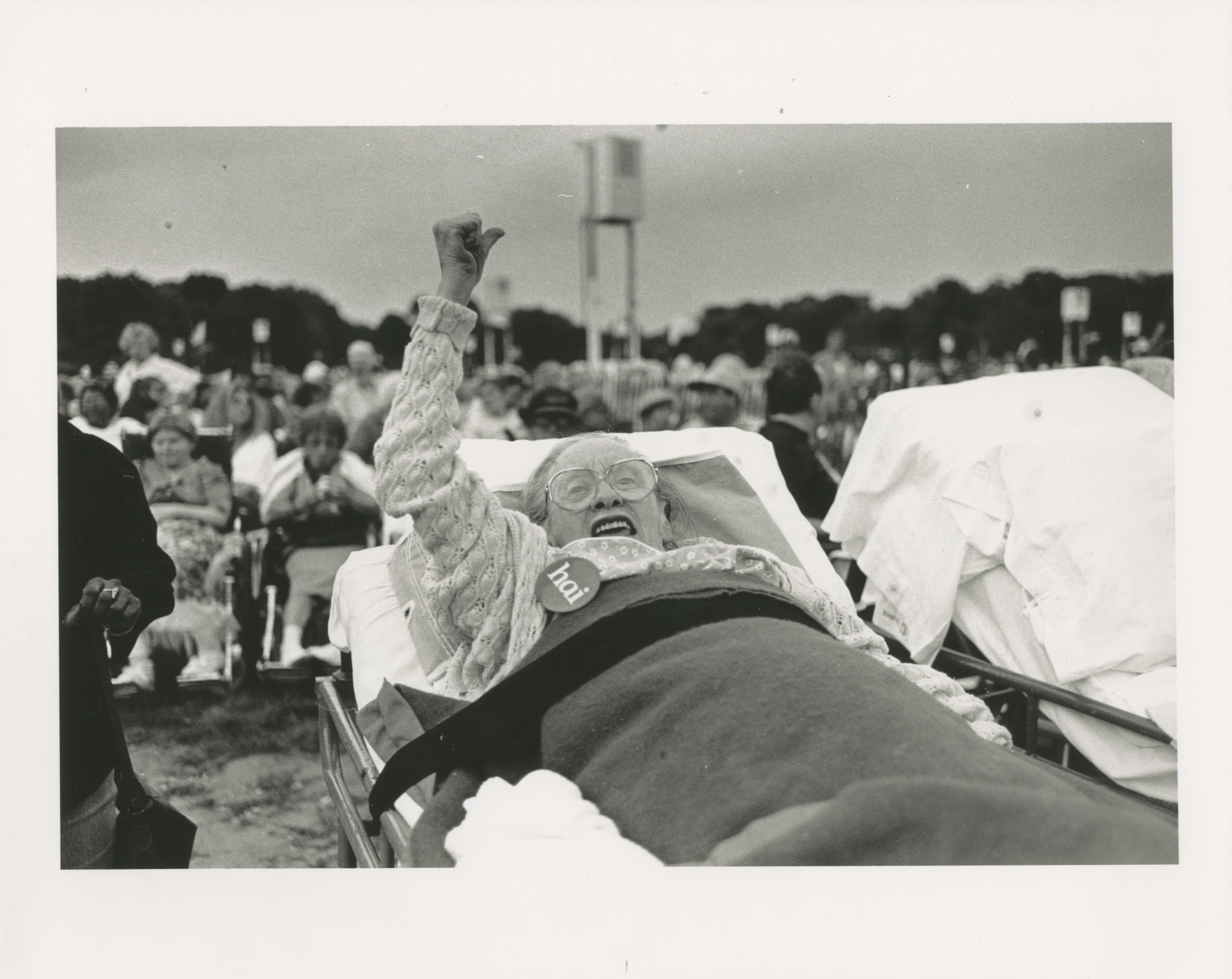
Arresting Images — Dona Ann McAdams’ photographs document the AIDS crisis, lesbian organising and civil disobedience from one of the most fraught eras in American LGBTQ+ history. A sale of her archive takes place later this month.
Arresting Images, a series of over 150 original prints by photographer Dona Ann McAdams, documents the AIDS crisis of ’80s and ’90s New York from within. The archive is set to be displayed and put up for sale at New York’s International Antiquarian Book Fair, which takes place 30 April to 3 May.
McAdams was a key figure in social documentary and street activism in New York throughout the late 20th century, and captured queer life and activism in the city – which were, at the time, often synonymous. The result is an intimate, prescient historical archive of a community organising at the beating heart of a nationwide crisis.
The series of black and white original vintage prints includes photos from the ACT UP (AIDS Coalition to Unleash Power) protests, which organised civil disobedience and ‘die-ins’ to fight AIDS discrimination and advocate for the authorisation of drugs that treated AIDS symptoms. Also lensed are pro-choice activism, lesbian protest coordination, and meetings at the LGBT Community Center.
Read next: When David Wojnarowicz became Arthur Rimbaud
Portraits feature prominent figures in New York’s queer art scene at the time, including sex work legalisation advocate Annie Sprinkle and Veronica Vera, founder of NY cross-dressing school Miss Vera's Finishing School For Boys Who Want to be Girls. Also pictured are the infamous Lower East Side needle exchange, where volunteers provided drug users with sterile needles to stop the spread of AIDS, and protests which followed the preventable death of American painter David Wojnarowicz, who passed away in 1992 to AIDS-related complications.
The book fair will take place at Park Avenue Armory in New York. Presenting the image collection is Fugitive Materials, a Brooklyn-based archival organisation specialising in preserving “the detritus of radical social movements”.
In the ’80s and ’90s, New York City was the epicentre of the country’s AIDS crisis. By 1995, the city reported about 20 AIDS-related deaths per day, accounting for 16% of all cases in the nation. 1995 was also the year that AIDS became the leading cause of death for young American adults. The following year, the introduction of antiretroviral therapy, which is still used to treat AIDS, meant a steep drop-off in cases.
Daylon Orr, founder of Fugitive Materials, says the series foreshadowed the struggles we face today: attacks on free speech and bodily autonomy, and an American government “actively trying to erase these histories” of the AIDS pandemic.
“As we face this same repression, this same scapegoating, the art and activism of the AIDS crisis allows people today to see potential paths forward, strategies for struggle, and ways to find joy in the face of enormous pain,” he continues.
Arresting Images by Dona Ann McAdams will be on view at the New York International Antiquarian Book Fair, which takes place between April 30 and May 3 at Park Avenue Armory.
On May 2, Daylon Orr will be in conversation with writer and activist Adam Eli. The pair will explore the importance of preserving the historical archives of queer activism.
Sydney Lobe is a freelance journalist. Follow her on Instagram.
Buy your copy of Huck 83 here.
Enjoyed this article? Follow Huck on Instagram for more from the cutting edge of sport, music and counterculture.
Support stories like this by becoming a member of Club Huck.