Dolly Parton Didn’t Just Say Black Lives Mattered. She Showed It.
Long before corporate statements about racial justice became commonplace, Dolly Parton demonstrated her values through her money, music and philanthropy — from investing Whitney Houston royalties in Black Nashville to putting free books into millions of children’s hands. The post Dolly Parton Didn’t Just Say Black Lives Mattered. She Showed It. appeared first on Word In Black.
 Black News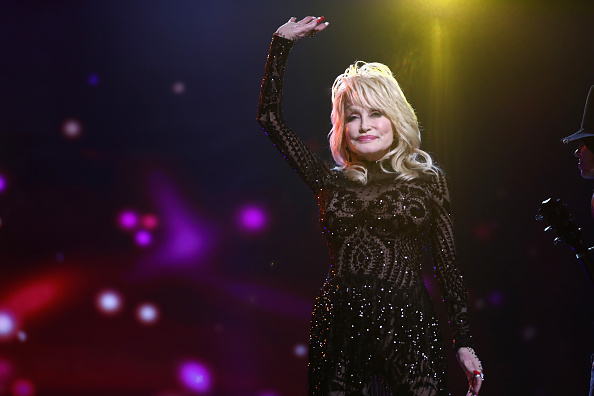


She grew up poor, one of a dozen children living in a one-room shack in the foothills of Tennessee’s Great Smoky Mountains. She became a country music legend, an A-list Hollywood actor, millionaire businesswoman and pop-culture icon, a star who soared so high and burned so brightly that she was known worldwide simply by her given first name: Dolly.
Yet despite achieving global superstardom, accumulating a vast fortune and reaching larger-than-life status in an industry that struggles with diversity, Dolly Parton was embraced by the Black community. When her family announced her death at age 80 on Tuesday, a wide range of Black icons — including the nation’s first Black president — noted her passing.
RELATED: Finding Fellowship: How a Black Maryland Community Bridged Racial Divides
Parton died after a brief battle with cancer.
While many Black admirers praised Parton’s artistry and hailed her improbable rise to stardom, others noted she was a white person who “got it”— someone who not only saw and understood Black America but also empathized with the people and tried to help. They described her as a quiet but consistent social-justice advocate whose consciousness likely was shaped by her humble beginnings.
Relationship With Black America
During her six-decade career, Parton embraced Black artists, spoke plainly against racism, distributed millions of books that helped countless Black children read, invested royalties into a Black Nashville neighborhood from arguably her biggest hit — which a Black woman transformed into a timeless, Grammy-winning pop anthem. And she treated Black people and culture not as something outside her world, but as part of it.
“I understand people having to make themselves known and felt and seen,” Parton told Billboard during the protests and racial reckoning following the murder of George Floyd in 2020. “And of course Black lives matter. Do we think our little white asses are the only ones that matter? No!”
I understand people having to make themselves known and felt and seen.
Dolly Parton
Perhaps most significantly, in her art and her interviews, Parton never pretended that her impoverished childhood — ostracized, made fun of, seeing her parents sweat, toil and swallow pride just to put food on the table — was charming. She seemed to understand that inequality and poverty are systemic, that a helping hand can make a big difference, and that children can’t dream beyond the world they know unless someone places possibility within reach.
“It’s hard to imagine many people having a bigger impact,” former President Barack Obama wrote on social media. “Born in a one-room cabin, she earned 11 Grammys and an Emmy, built a business empire, helped millions of kids learn to read…What a life.”
‘One of One’
Former Vice President Kamala Harris, the first Black woman to serve in the office and receive a major party’s presidential nomination, called Parton “a true American icon,” noting that her favorite of Parton’s many achievements was the millions of books given to children.
“All at once she was kind, modest and funny,” Harris wrote on social media. “With her music, her philanthropy, and her style, Dolly was one of one.”
Harris was referring to the Imagination Library, one of Parton’s signature philanthropic achievements. In 1995, inspired by her hard-working father’s illiteracy, Parton began mailing free books monthly to children from newborns through age 5, regardless of family income.
The program put more than 300 million books into the hands of children worldwide, including Black households, that might have lacked the resources to buy children’s books or even visit a public library. By 2024, one in seven American children under age 5 had received a book through Parton’s program.
Though she was raised in struggle, Parton never treated her roots as an embarrassment. Instead, she carried them into recording studios, boardrooms and movie sets, using them as creative inspiration for her art and her philanthropy.
Rags to Riches
As she became more successful, Parton left behind plain clothes and simple makeup and draped herself in the glamour she dreamed of as a child: glittering rhinestones, towering wigs and high heels. But Parton always saw poor people clearly, even the ones who didn’t look like her.
When Whitney Houston’s iconic recording of Parton’s “I Will Always Love You” — a song Parton wrote and recorded in 1973 — became a smash hit, Parton invested her royalties from the song in a predominantly Black neighborhood in Nashville. She bought a commercial complex there and later jokingly called it “the house that Whitney built.”
“It was mostly just Black families and people that lived around there,” Parton said during a 2021 appearance on “Watch What Happens Live.” “I thought, ‘This is the perfect place for me to be, considering it was Whitney.’”
That was not charity performed for applause. It acknowledged that a Black woman’s extraordinary voice had created enormous wealth from Parton’s song, and that some of that wealth should return to a Black community.
While Parton’s giving was not exclusively directed toward Black people, many of her efforts reached poor Black families and other communities of color. Her gifts addressed the inequities that follow people from the cradle into the classroom and beyond.
But the extent of Parton’s philanthropy is only now becoming widely known. She reportedly paid for band uniforms and other needs at Tennessee high schools. Her foundation awarded college scholarships, and an early initiative promised seventh- and eighth-graders $500 if they completed high school. According to the Dollywood Foundation, the dropout rate among those students fell from 35% to 6%.
Bridging the Divide
Parton also knew when to use plain language. During the racial reckoning of 2020, she offered one of the clearest statements about Black Lives Matter made by any white entertainer — and one of the few coming from the country music industry.
Parton’s generosity stretched into medicine. She donated $1 million to Vanderbilt University Medical Center for research that helped lead to Moderna’s COVID-19 vaccine. She later gave another $1 million for pediatric infectious-disease research. COVID-19 disproportionately killed Black Americans, making her contribution part of a scientific effort that saved lives.
“Dolly could have been a totally different person,” journalist and instructor Nicki Mayo, who is Black, posted on social media. “She made a choice to be a humanitarian and true Christian… [She] lived a life that NEVER made you question her heart and ideology on the humanity of Black people. This is why so many of us appreciate her and celebrate her life.”
Perhaps the most significant tribute to Parton came from Beyoncé, one of Black America’s most influential recording artists. On social media, Queen Bey called Parton “the barometer” and “the North Star,” describing her as an artist whose generosity and individuality made her “truly one of one.”
RELATED: Most Christians Want To Give Consistently. Few Actually Do
Notably, she and Parton collaborated on “Cowboy Carter,” Beyoncé’s exploration of country music’s Black roots. Parton appeared on “Dolly P” and “Tyrant,” while Beyoncé boldly reworked Parton’s classic “Jolene” into a warning from a woman fiercely defending her relationship.
Parton embraced the reinvention, saying, “I thought she did a great job in country music,” and adding that while she would have liked to hear Beyoncé tackle the original arrangement, “of course, you know, it’s Beyoncé. Yeah, her life is different than mine.”
The post Dolly Parton Didn’t Just Say Black Lives Mattered. She Showed It. appeared first on Word In Black.