Ex-Nigerian president says that the country’s refineries can't be saved despite billions spent
Drawing upon his substantial expertise within the Nigerian petroleum industry, former President Olusegun Obasanjo asserted in a recent interview on Saturday that the nation's refineries are unlikely to regain operational functionality.
 Black News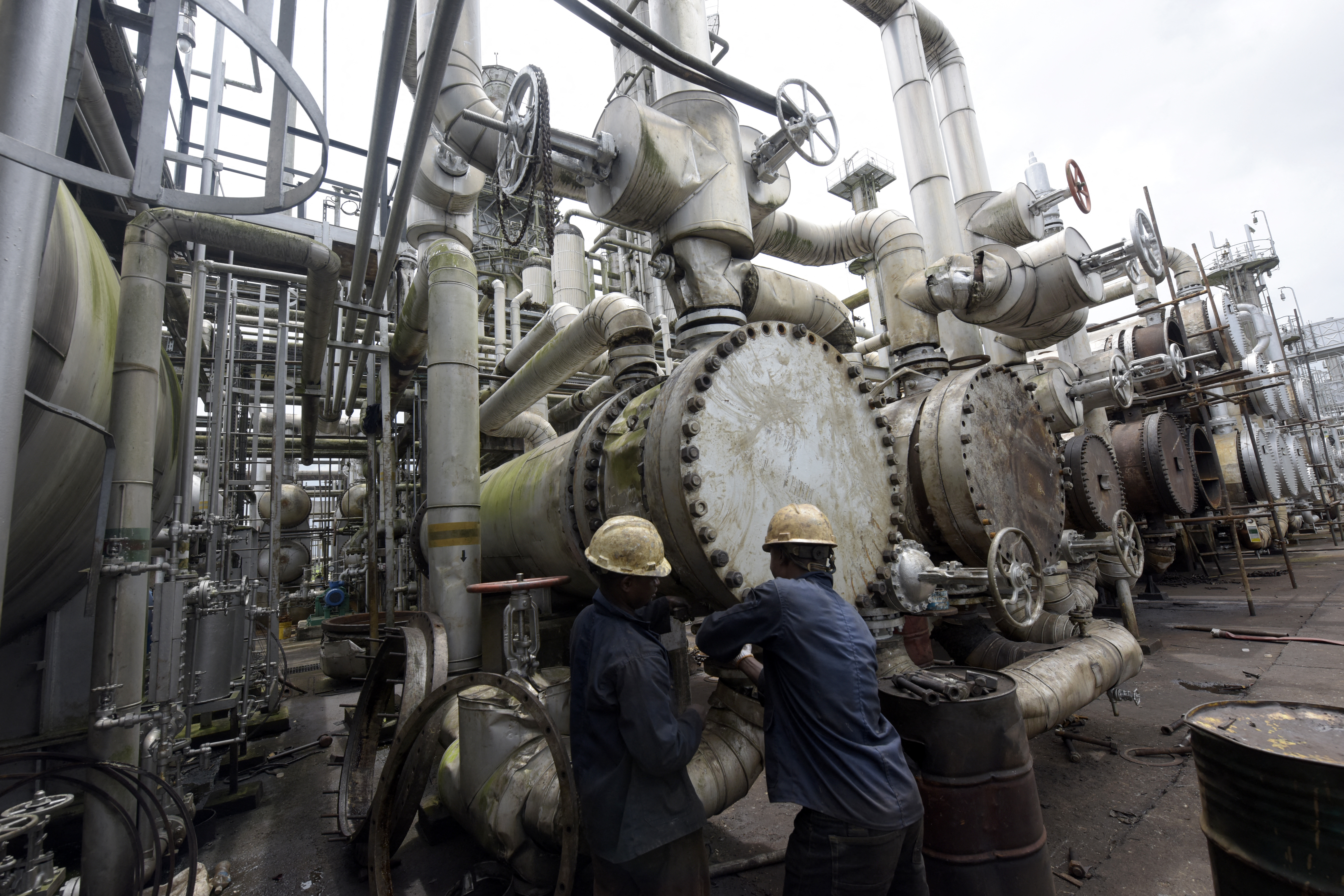

![A picture taken on September 16, 2015 shows workers trying to tie a pipe of the first refinery in Nigeria, which was built in 1965 in oil rich Port Harcourt, Rivers State. [PIUS UTOMI EKPEI/AFP via Getty Images]](https://ocdn.eu/pulscms/MDA_/0f835d61e3f7243bd094095562a77d54.jpg)
Drawing upon his substantial expertise within the Nigerian petroleum industry, former President Olusegun Obasanjo asserted in a recent interview on Saturday that the nation's refineries are unlikely to regain operational functionality.
- Former President Olusegun Obasanjo claimed that Nigeria's state refineries are unlikely to become operational again.
- Obasanjo criticized ongoing government efforts to rehabilitate the refineries, highlighting persistent corruption and mismanagement.
- Attempts by the Nigerian government to attract private and international investors for refinery partnerships, including talks with a Chinese company, have been ongoing.
- Obasanjo recounted that major oil companies like Shell refused to manage Nigerian refineries due to their small size, poor maintenance, and entrenched corruption.
The ex-president’s remarks come as the country’s state-owned oil company, the Nigerian National Petroleum Company Limited (NNPC), ramps up efforts to find technical partners to operate the Port Harcourt, Warri, and Kaduna refineries.
Reports in the last few months highlight the NNPC’s drive to attract investors, local or international, into its plans to resuscitate the country’s run-down oil refinery.
During the month of October, the Nigerian National Petroleum Company (NNPC) indicated that it had commenced the process of identifying new technical equity partners to facilitate the restoration of its inactive refineries.
In this regard, the group noted in February that its plans to partner with a Chinese company to rehabilitate its dilapidated oil refineries.
However, former Nigerian president Obasanjo has affirmed that this initiative is basically a waste of time.
What the former Nigerian president said
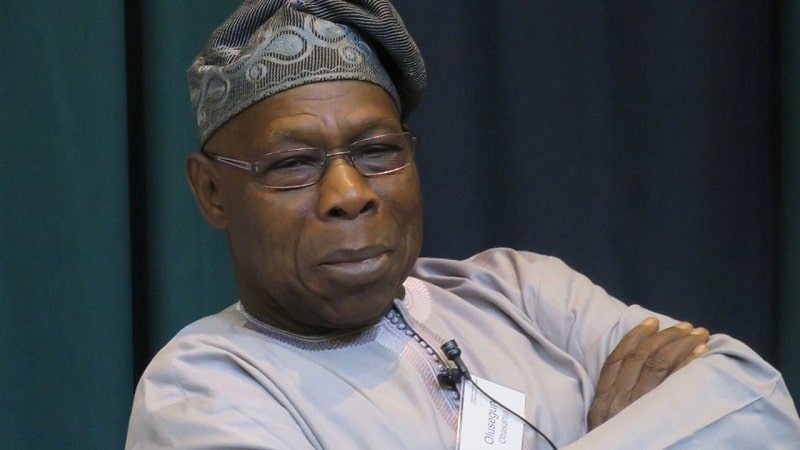
“One of the lessons that I learnt is that PPP (public-private partnership) works. Look, one project that has not been destroyed by the government in Nigeria is the NLNG (Nigeria Liquefied Natural Gas), where the private sector has 51 per cent, and the Nigerian government has 49 per cent,” he said, as seen on the Punch Newspaper.
“See what we did with Nigerian railways. See what we did with the national shipping company. See what we are doing now, even with the NNPC. The NNPC has refineries, and I said to people that it will never work. And a man had the audacity to say, ‘Am I a chemical engineer?”
The former president also underscored his challenges concerning the refinery during his time as president.
“Look, when I was there, I called Shell. I said, ‘Look, please, I beg you, come and take 10 per cent equity and run the refinery for us.’ They said no. I said, ‘Okay, if you don’t want to take equity, don’t take equity. Come and run the refineries. They said no,” he stated.
DON’T MISS THIS: Nigeria’s State oil giant eyes New York, London IPO as $20 billion project signals investor revival
Speaking further during the interview, Obasanjo noted that although Shell operate their business without losing money, they don't profit much from it. It is more of a service than a significant source of revenue. That's the top priority.
“Number two: he (the Shell president at the time) said our refineries are too small. This was when I was an elected President. He said our refineries are too small. One is 60,000 barrels, and another is 100,000 barrels.
He said refineries at that time were in the range of 250,000 barrels to 300,000 barrels. Number three: he said our refineries are not well-maintained.
We call quacks and amateurs to come and maintain our refineries. The refineries are not in good order. He said, ‘Number four, there’s too much corruption around our refineries, and they don’t want to be part of that,” Obansanjo explained.
“Only the present NNPC head has told the country the truth. But in the meantime, I was told that they have spent about $16bn, which is only $4bn short of what Aliko used to build Africa’s largest refinery,” he added.
Nigeria refinery scandal
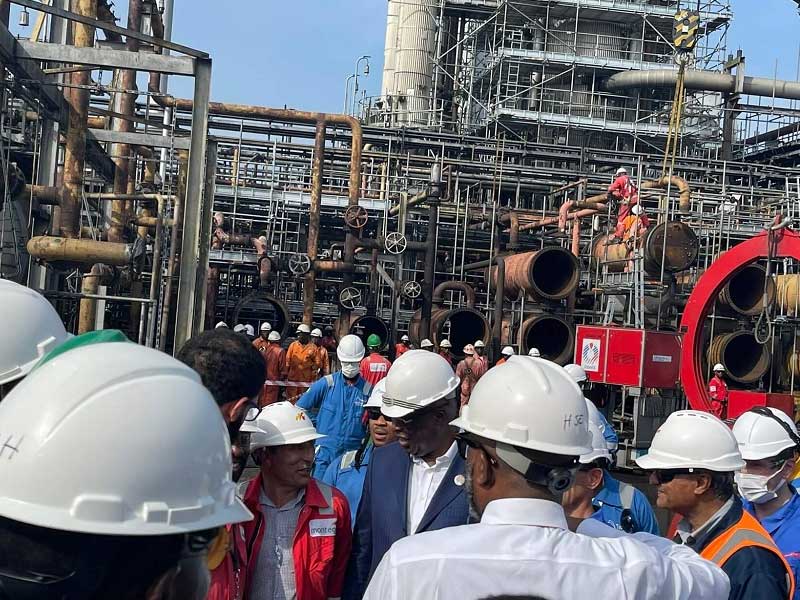
In July last year, the NNPC disclosed that it is weighing the option of divesting its state-owned refineries, following years of expensive rehabilitation efforts that have produced little progress.
Several billion dollars have been spent to revive Nigeria's state-owned refineries. In March 2021, the federal government approved $1.5 billion for the Port Harcourt refinery's renovation.
Later that year, the Federal Executive Council (FEC) approved $1.48 billion for the phased restoration of the Warri and Kaduna refineries, which have timeframes of 21, 23, and 33 months, respectively.
Despite the significant expenditure, the facilities still do not produce any refined products.
In May last year, the Economic and Financial Crimes Commission (EFCC), Nigeria's corruption watchdog, initiated a full-scale investigation into a $2.9 billion refinery rehabilitation fund scandal, uncovering over ₦80 billion in accounts linked with the recently sacked Managing Director of a major refinery.
The investigative body noted that $1.5 billion for the Port Harcourt refinery, $740 million for the Kaduna refinery, and $656 million for the Warri refinery were allegedly mismanaged.