“Food is Medicine” Is More Than a Catchphrase
The “Food Is Medicine” movement argues that poor nutrition is a leading cause of illness, health care spending and lost productivity. Its framers say lower-income and minority communities are disproportionately affected, and they call for integrating better nutrition into all aspects of health policy. Public health and medical advocates worldwide have since pursued implementing the […] The post “Food is Medicine” Is More Than a Catchphrase appeared first on Word In Black.
 Black News


The “Food Is Medicine” movement argues that poor nutrition is a leading cause of illness, health care spending and lost productivity. Its framers say lower-income and minority communities are disproportionately affected, and they call for integrating better nutrition into all aspects of health policy.
Public health and medical advocates worldwide have since pursued implementing the policy framework to find ways to infuse holistic care into traditional health care approaches. But rarely has the food in medicine movement centered Black women.
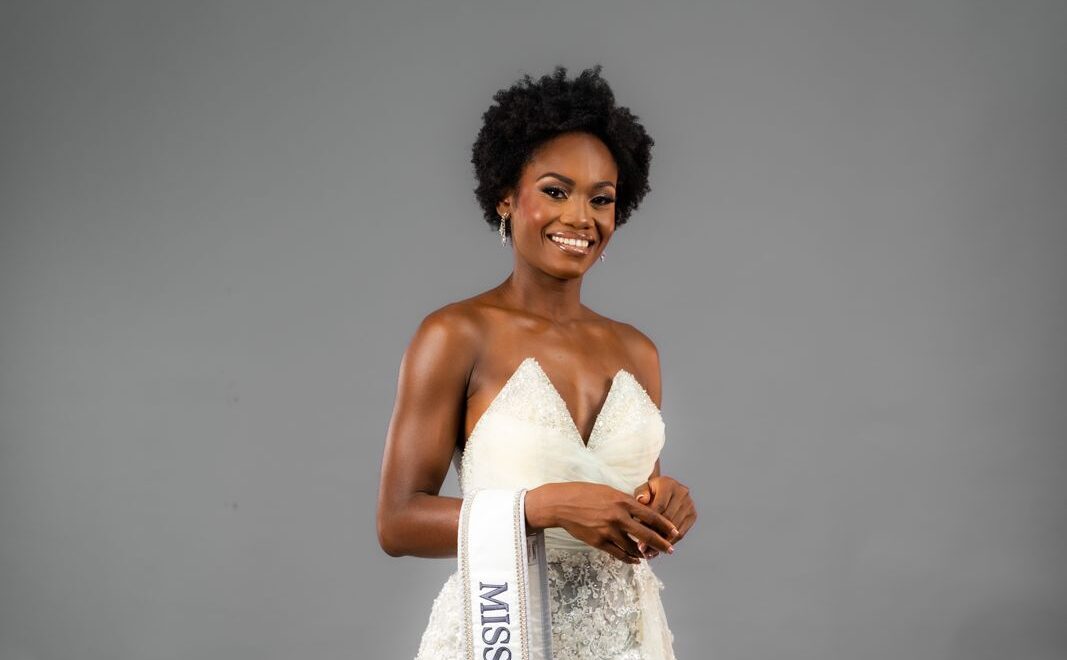
Into that breach walks Tambra Raye Stevenson, a Black woman. She’s the founder and CEO of the nonprofit organization WANDA, Women Advancing Nutrition, Dietetics and Agriculture, based in Washington, D.C.
WANDA’s mission is to achieve nutrition equity by amplifying the work of Black women and girls in agriculture, food access and restaurant ownership.
The organization focuses on training and programs to enable Black women to educate and advocate for food policy and food access that can mitigate harms, including food-related conditions such as heart disease and obesity. These diseases have been shown to be exacerbated by the Standard American Diet.
WANDA also is working to address the lack of Black representation in the agriculture and nutrition system, which has limited economic opportunity for farmers and food growers who are part of the Black Diaspora.
Stevenson started her career in the U.S. Department of Health and Human Services during the George W. Bush administration. She later worked at the Commerce Department’s Minority Business Development Agency before moving to the U.S. Department of Agriculture, where former Agriculture Secretary Thomas Vilsack chose her to serve on the National Agricultural Research, Extension, Education and Economics Advisory Board.
Stevenson discusses WANDA’s mission and work in this conversation, which has been edited for length and clarity.
Word In Black: You recently addressed the National Academies of Sciences, Engineering, and Medicine. What was the main message you wanted to deliver?
Stevenson: The nutrition industry needs to move beyond asking “How do we get people to follow the science?” to examine the question of how to build nutrition science within communities in ways that people can trust and that they can recognize themselves.
Today’s nutrition challenges need to be seen in a historical context. For example, the National Academies’ landmark Lost Crops of Africa reports don’t answer the questions of what knowledge has been lost, marginalized or overlooked because institutions did not recognize the people carrying it as experts.
As Food Is Medicine grows, we must ask not only whether food is medicine, but whose food becomes medicine, whose knowledge counts as evidence and who has the power to write the prescription.
WIB: How are the Food Is Medicine movement and Black agriculture connected?
Stevenson: In many ways our ancestors helped build this food system. We created medicines based on this food system and later were denied the credit and the credentials for it. The book, “The Conjuring of America,” an excellent piece, talks about the making of Vicks VapoRub, which was made by a Black woman but later stolen by the white son who was raised on that land and nursed by her.
WIB: Our new survey, “What’s On Your Plate?” found that a clear majority of respondents want lower prices on healthy food, yet are concerned about the nation’s food safety. How do you interpret that?
Stevenson: The statistics you shared are in alignment with our Black Food Census. Healthy food being affordable was a real concern, along with how to gain access to it in their communities, whether through gardens, access to professionals like nutritionists in the retail space, or educational materials — it runs the gamut.
There’s a real deficit, a real need, and a need to build infrastructure. When you have weakened infrastructure, you have issues like food safety becoming a real concern. The gutting of government agencies didn’t help matters.
WIB: You mentioned wanting to mark the 120th anniversary of Upton Sinclair’s landmark novel, “The Jungle,” which exposed the dangers to consumers and workers in the meatpacking industry. Why does that book matter now?
Stevenson: With “World Food Day” coming up on Oct. 16, I’m looking to convene a forum in commemoration of “The Jungle.” As the granddaughter of a meatpacker out of Oklahoma, I see a lot of [similar] concerns. One of the points raised back then was that the packers should not be in the business of both managing the animals and producing the actual product; those should be separate. Now this administration is trying to bring the top four players together in that same line of work. We’re in Jungle 2.0.
WIB: What can people actually do in their own communities to make food safer?
Stevenson: What I see happening is that people already have organized themselves based on what the pandemic revealed — the importance of building our own digital communities when anchoring institutions were shutting down. I see people asking,“Who are the farmers in the DMV that I can buy local meat from? Where are the local farmers markets I can support over the weekend?” … Local and regional food systems matter when corporate systems fail us.
WIB: You’ve used the phrase “social murdering” as a public health threat. What do you mean by that?
Stevenson: It’s literally life or death. That may sound harsh, but it’s real. Just as a million people died during the pandemic because of [government] policies and the lack of funded social protection programs, I predict we’ll see an equivalent number [perish] if something isn’t done.
There are different ways to kill people, and choking the lifeline of critical resources — like SNAP, like WIC, like LIHEAP to keep your gas and electricity on, like housing vouchers to keep a roof over your head — the basic needs of life. If the government and those we entrust to represent us are not there for the most vulnerable, we are in a moral, existential and ethical crisis.
Q: You’re in the middle of a fundraising effort. Do you have an update?
Stevenson: We did not reach our desired goal during last month’s Give828 campaign What it means for us, knowing that we have real needs in helping to fund our WANDA Scholars … is to look toward other opportunities such as September being Childhood Obesity Awareness Month, and our upcoming Sisterhood Supper, where we’ll do an ask at the dinner for those interested in supporting the scholars. In addition, I’ll be using my own birthday, which is Sept. 20, to help raise visibility and encourage people to donate to the WANDA Scholars Program in lieu of gifts.
WIB: When is the Sisterhood Supper?
Stevenson: It’s on Sept. 11 in Atlanta, in alignment with the Black Maternal Health Conference. That afternoon, I’ll be speaking about our Nourish Maternal Food as Medicine pilot.Then that evening, we’ll be hosting, in partnership with the National Black Child Development Institute, our special guest, Kendall Rae Johnson, who began her career at age 8 with aGROWKulture, the organization she created to inspire more young people to get into agriculture.
WIB: So what’s the fix? What should people be pushing for?
Stevenson: My challenge is for people to see themselves as a food citizen, because when you take on that identity, it has you thinking not only about the food you purchase, but the meaning of that food and who should be governing the food system. … That’s why food policy councils have been growing across the country. They’re a mechanism for everyday people in their local jurisdictions to give voice to policies that impact their communities.
The three key pillars I’m really trying to urge are: One, Black women and girls have historically been growers, cooks, caregivers, healers, entrepreneurs and nutrition knowledge keepers, but have not consistently received the credit, the credentials or the decision-making power associated with their labor. And last, it’s about power — who will own the future?
Food as medicine, along with AI, digital health and personalized nutrition, are rapidly developing and our communities need to be the researchers, creators, entrepreneurs, storytellers and co-owners of this infrastructure.
RELATED: Black Americans Have Doubts About the U.S. Food System, New Word In Black Survey Finds
The post “Food is Medicine” Is More Than a Catchphrase appeared first on Word In Black.