Groundsman accepts responsibility after dangerous Sir Viv pitch forces abandonment
What should have been another chapter in the regional first-class season instead descended into alarm, controversy, and soul-searching at Sir Vivian Richards Stadium. By Tuesday afternoon, the conversation had shifted far beyond cricketing tactics or scoreboard pressure. Attention centered on a treacherous playing surface that turned a West Indies Championship clash between Trinidad and Tobago […] The post Groundsman accepts responsibility after dangerous Sir Viv pitch forces abandonment appeared first on CNW Network.
 Black News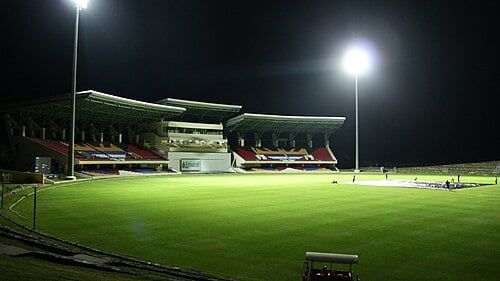
What should have been another chapter in the regional first-class season instead descended into alarm, controversy, and soul-searching at Sir Vivian Richards Stadium.
By Tuesday afternoon, the conversation had shifted far beyond cricketing tactics or scoreboard pressure. Attention centered on a treacherous playing surface that turned a West Indies Championship clash between Trinidad and Tobago Red Force and the Leeward Islands Hurricanes into a dangerous spectacle that ultimately could not continue.
In the aftermath of the abandoned contest, chief groundsman Norville Simon stepped forward publicly, accepting full responsibility for the pitch that triggered growing fears for player safety.

A match overtaken by fear
The decisive moment came on the third day when a vicious delivery from West Indies Test fast bowler Jayden Seales exploded from a good length and crashed into the helmet of Leeward Islands pacer Jeremiah Louis.
The frightening incident immediately halted momentum on the field.
Louis was rushed to the hospital for medical evaluation before later being discharged after being cleared by doctors.
But by then, concern had already escalated around a surface that had become increasingly unpredictable and dangerous.
Across 147 overs, more than 25 wickets had fallen as batters struggled against alarming and uneven bounce. When officials eventually called off the match, the Hurricanes held a 96-run advantage, but the state of the pitch had become the overwhelming issue.
Simon’s emotional admission
For Simon, the fallout carried deep personal pain.
Speaking candidly after the abandonment, the veteran groundsman described the ordeal as one of the lowest moments of his professional life.
“To be honest, that was one of the most heartbreaking feelings that I’ve had in years,” Simon said. “I’ve never felt like this, but again, these things happen, and I’m making no excuses.”
Rather than deflect criticism, Simon openly acknowledged that a flaw in the pitch preparation contributed to the dangerous conditions.
He identified a crack near the Sir Andy Roberts End as the central problem, a defect he said escaped his attention before play began.
“There was a part on the Sir Andy Roberts end, on the left-hand side of the pitch, there was a crack on the offside of it that I did not see,” Simon explained.
“Had I seen it, I would have dealt with it, and that was the only issue. For me, everything else was fine.”
Simon added that while some players had mentioned the crack, he initially believed it posed little threat because of its position outside the conventional batting line.
“Nobody really came to me directly, but I’ve heard one or two players speak about the crack. That was of no major concern to me because that was really out of the playing area.”
Seales exploits deadly conditions
Even before Louis was struck, the surface had already shown alarming behavior.
Seales, extracting vicious movement and steep bounce, became nearly impossible to handle. The fast bowler tore through the Hurricanes batting lineup, collecting seven wickets in the second innings after taking three in the first.
Earlier on the same morning, danger signs had intensified when a sharply rising delivery forced a glove from Jahmar Hamilton, resulting in a catch at second slip, just moments after towering all-rounder Rakheem Cornwall was struck on the shoulder by another hostile delivery that climbed alarmingly from the surface.
Those incidents only heightened anxiety before the frightening blow suffered by Louis ultimately forced officials to intervene.
Promise of change after embarrassing ordeal
Though shaken by the controversy, Simon insisted the incident would become a turning point rather than a permanent stain.
Praising the efforts of the stadium staff, he vowed that stronger safeguards would be implemented to ensure such dangerous conditions are never repeated at the venue.
“From now on, I’m making this promise to the nation of Antigua and Barbuda and to the management and staff of Sir Viv [Stadium] that once I’m here, we will definitely try to put things in place so that this never happens again,” he said.
For a stadium named after Sir Vivian Richards, one of the Caribbean’s greatest cricket icons, Tuesday’s abandonment cast an uncomfortable shadow.
Now, attention turns to whether lessons from a deeply troubling episode will lead to meaningful change before first-class cricket returns to the venue.
The post Groundsman accepts responsibility after dangerous Sir Viv pitch forces abandonment appeared first on CNW Network.