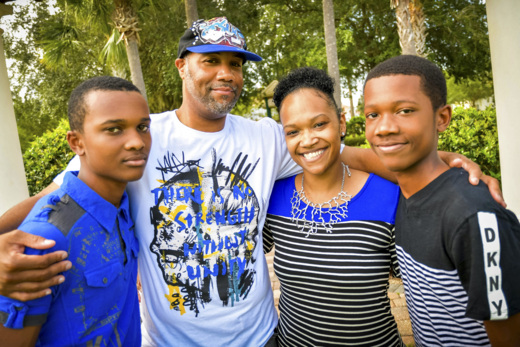
HBCU Homecoming: A never-miss annual tradition
HBCU alumni share the friendships, traditions, and pride that make Homecoming an annual family reunion.
 Black News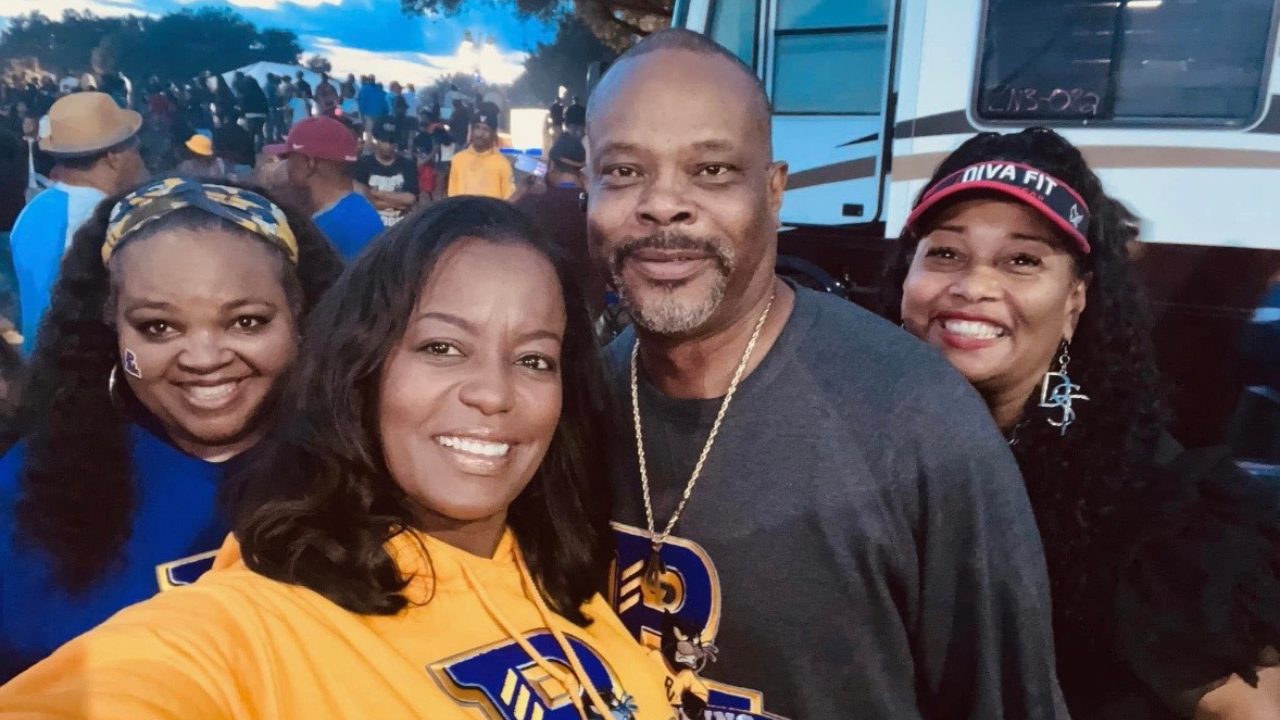

For many college graduates, homecoming means revisiting their alma mater, catching a football game, and reminiscing about college days.
But for graduates of historically Black colleges and universities (HBCUs), Homecoming is something altogether different.
It’s a family reunion. A cultural celebration. A showcase of Black excellence. It’s the sound of marching bands, the aroma of tailgate cooking, and the sight of classmates reconnecting after decades apart.
At HBCUs, Homecoming is more than a date on the football schedule. It’s a tradition that draws alumni back year after year, even into their 60s, 70s, and beyond.
What makes these annual pilgrimages so special? Prairie View A&M University (PVAMU) and Texas Southern University (TSU) alumni say it’s the lifelong connections, unforgettable experiences, and enduring sense of belonging that make their HBCUs feel like home.
More than football
Ask HBCU alumni what separates their homecomings from those at predominantly white institutions (PWIs), and one answer consistently rises to the top: Family.
“HBCU Homecomings are more than football games—they’re family reunions filled with rich traditions, culture, pride, and legacy!” said Kelly Collins, a PVAMU ’84. “It’s more than Homecoming—it’s a feeling, a legacy, and an experience like no other!”
That feeling comes alive in weeklong festivities, from campus gatherings and concerts to alumni parties, tailgating, and performances by beloved marching bands.
For Collins, the electrifying sound of PVAMU’s Marching Storm and generations of Panthers returning to the Hill are essential parts of the experience.
Johnetta “Kittie” Long-Alfred, a 1989 TSU graduate, said spending an entire week on the yard makes HBCU Homecoming especially meaningful.
“You get to see people you haven’t seen in years, reconnect with old friends and classmates, and sometimes even run into professors who remember you from their classes 20 years later!” she said.
And the festivities don’t necessarily end when the football game begins.
“At an HBCU, the celebration doesn’t stop just because the football game has started,” Long-Alfred said. “You can continue to fellowship, enjoy the music, food, and people, and truly experience the culture and energy of Homecoming.”


Memories that last
Sometimes, one Homecoming experience can influence an entire life. For William Wallace, a PVAMU graduate who earned his bachelor’s degree in finance in 1992 and his MBA in 1997, that experience came before he enrolled.
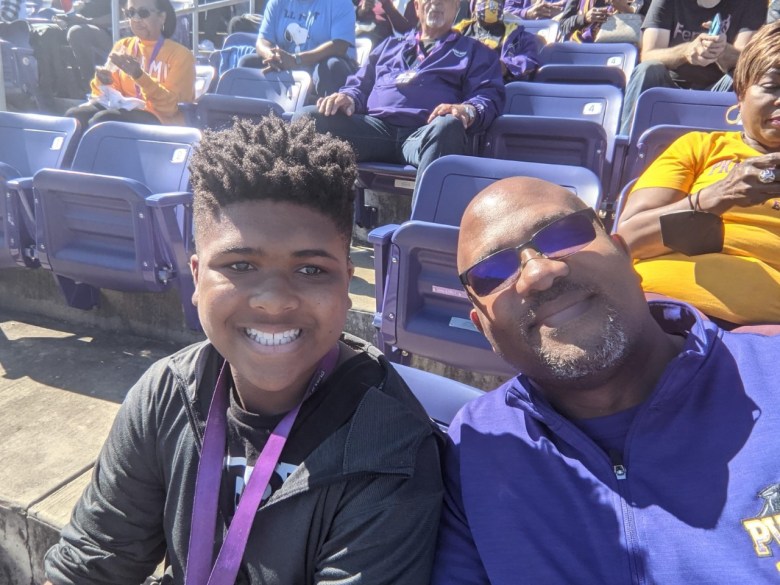
Wallace attended PVAMU’s 1985 Homecoming as a high school senior after taking the SAT. Frankie Beverly and Maze were the featured performers, and Wallace stayed with his best friend, Troy Hogan, who later became his college roommate. The concert and campus atmosphere helped make PVAMU his college destination.
The next day, Wallace returned to his job at Miller’s Outpost, where an unexpected encounter added another chapter to the memory.
“Lo and behold, none other than Frankie Beverly himself came into the store,” Wallace recalled. “I mentioned to him that I had just seen him the night before and enjoyed his concert.”
Beverly was pleasant, Wallace said, making an already memorable weekend even more special.
For Long-Alfred, homecoming memories reach even further back. As Miss AKA in 1988, she participated in the TSU Homecoming parade, enjoying the marching bands, beautiful floats, and neighborhood children reaching for candy.
The experience became especially meaningful because her mother had taken her to watch TSU’s parade when she was growing up in La Marque.
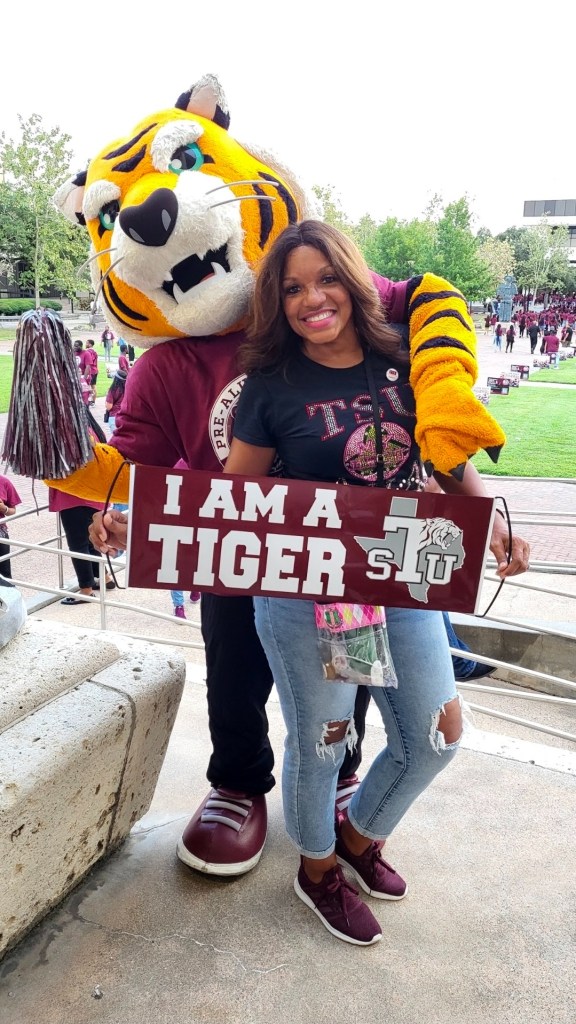
“To later become a part of that same parade was truly a full-circle moment for me,” she said.
For Long-Alfred, the parade remains special because it brings the university and the surrounding community together. Families can gather outside their homes, enjoy performances, and celebrate with neighbors and visitors.
Showing up through life
The bonds created at HBCUs can become so strong that Homecoming remains a priority through life’s happiest and most difficult moments.
Wallace attended 40 PVAMU homecomings from 1985 through 2025, missing only 2020 because of the COVID-19 pandemic. He plans to return again this month, with an additional reason to celebrate: His son’s senior-year marching band performances.
For Wallace, Homecoming means reconnecting with friends he may not have seen in five, 10, 20, or even 30 years.
“We don’t know how much time we have on this earth, so being able to spend quality time with family and friends whenever possible is an awesome feeling,” he said.
One particularly emotional Homecoming came in 2018, when Wallace’s mother died from pancreatic cancer on a Wednesday. After making funeral arrangements with his wife on Thursday, he returned to PVAMU that Friday.
His decision reflected the comfort of being surrounded by people who knew him and understood what the university meant to him.
“PV is my extended family,” Wallace said, explaining that being around his friends helped him cope with his loss.
That is the power of a tradition that extends beyond entertainment. Sometimes, returning to campus means finding a community ready to help carry life’s burdens.
Collins describes PVAMU similarly: “Prairie View is more than my alma mater—it’s home!”
Keeping the welcome open
For Long-Alfred and her husband, Reginald, TSU’s Homecoming also provides an opportunity to build community. The couple met at TSU 40 years ago. For the past 18 years, they’ve helped create a welcoming gathering through the ’80s Tailgaters, opening their tailgate to alumni, students, families, friends, and even strangers.
The gathering offers food, music, personal restrooms, and, just as importantly, a place for people to connect.
“We started this because we knew that many alumni would return to Homecoming and sometimes not have anywhere to gather,” Long-Alfred said. “We wanted to create a space where everyone could feel welcome.”
Her community involvement extends beyond celebration. As director of media and marketing for The Potters Smile, a nonprofit focused on sickle cell awareness and dental health, Long-Alfred said the organization would partner with the NFL Alumni Association during TSU Homecoming week to promote awareness of sickle cell disease and oral health.
“At an HBCU, the celebration doesn’t stop just because the football game has started. You can continue to fellowship, enjoy the music, food, and people, and truly experience the culture and energy of Homecoming.”
Johnetta “Kittie” Long-Alfred, TSU alumna
It’s another example of how HBCU Homecoming can connect cultural pride with community service.
The tradition continues
Homecoming requires a little planning. Kia Neal, a former PVAMU student who transferred to the University of Houston, recommends bringing water, portable fans, and a fully charged phone. She also advises visitors to keep track of their friends, especially when crowds affect cellphone service. But those practical considerations are part of the experience, not reasons to stay away.
For alumni, returning to campus means revisiting the people, places, and experiences that helped shape their lives. For current students and younger generations, it shows that the HBCU experience doesn’t end at graduation.
Wallace sees that legacy in the children of classmates who now attend Homecoming and in the generations of Panthers who continue university traditions. Long-Alfred sees it in the students, families, and alumni who find a place at her TSU tailgate.
Collins sums up the enduring connection with a phrase every Panther understands: “Once a Panther, always a Panther!”
But regardless of the HBCU, some facts are consistent across the board. Like the fact that the football game may last a few hours, but the memories last a lifetime.