How Dangote plans to transform Nigeria from an oil exporter into a global fuel powerhouse
For decades, Nigeria exported crude oil, imported fuel and watched global refining hubs capture much of the value in between. Now, Africa’s richest industrialist wants to change that.
 Black News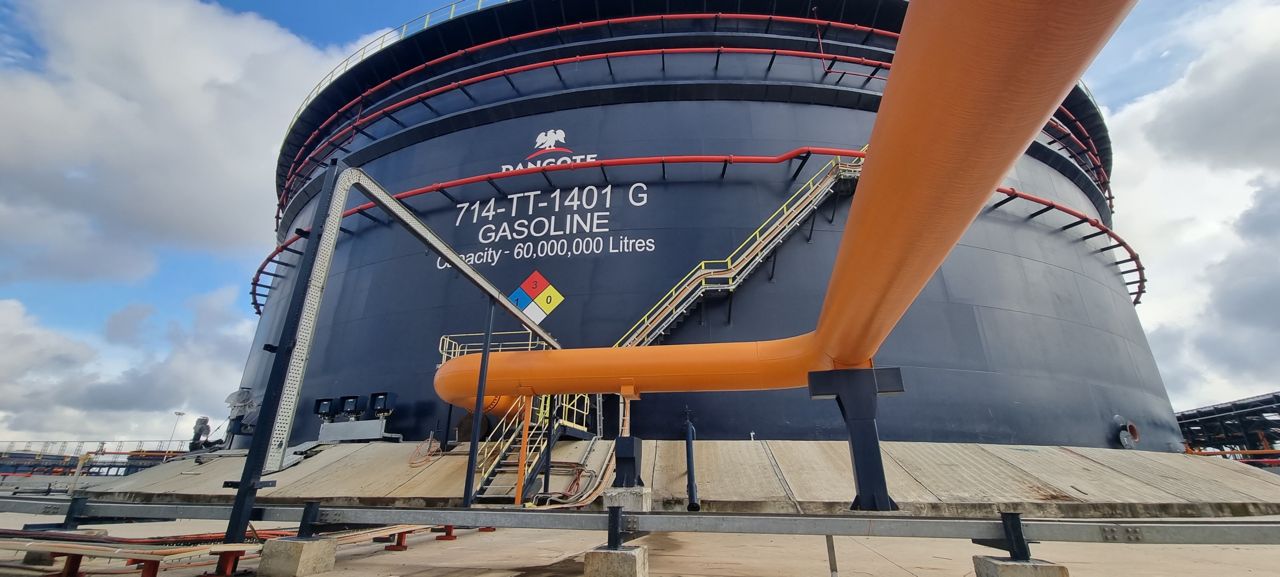

For decades, Nigeria exported crude oil, imported fuel and watched global refining hubs capture much of the value in between. Now, Africa’s richest industrialist wants to change that.
- Dangote Refinery plans to expand its crude processing flexibility from about 40 grades to as many as 130.
- The move forms part of a broader strategy to transform the Lagos facility into a global refining, trading and export hub.
- The refinery is preparing to more than double capacity to 1.4 million barrels per day while increasing imports of crude from international markets.
- If successful, the project could position Nigeria as one of the world’s most important centres for refined fuel exports.
The Dangote Petroleum Refinery is pursuing an ambitious strategy that goes far beyond supplying petrol to Nigerian motorists.
Its goal is to transform Lagos into a major global energy hub capable of competing with established refining and trading centres in Singapore, the Middle East and parts of Europe.
The clearest sign of that ambition emerged this week when refinery chief executive David Bird revealed that the facility plans to expand its crude-processing flexibility from around 40 crude grades today to as many as 130 in the future.
At first glance, that may sound like a technical refinery upgrade. In reality, it points to something much bigger.
It is the blueprint for turning Africa’s largest refinery into a global crude trading, blending and fuel-export powerhouse.
“This is not a traditional refinery in an oil-producing country that just sits at the end of a crude pipeline and processes one crude,” Bird told S&P Global Commodity Insights. “This is a fully merchant refining model that you could see in Europe or Asia.”
![CEO of Dangote Refinery, David Bird revealed that the facility plans to expand its crude-processing flexibility from around 40 crude grades today to as many as 130 in the future. [Source AriseNews YouTube]](https://ocdn.eu/pulscms/MDA_/b944c9df5f927f58d08eec354ff9f354.png)
The Singapore model
The world’s most influential refining hubs do not depend on a single crude source.
Singapore, one of the world’s leading oil trading centres, imports crude from multiple regions, blends different grades, stores products and exports fuel globally.
That flexibility allows traders and refiners to switch quickly between crude types depending on market conditions, supply disruptions and profitability.
Dangote appears to be pursuing a similar model.
The refinery already processes crude from multiple countries, including Nigeria and the United States, and plans to significantly widen its sourcing options as operations expand.
Bird said the facility is positioning itself to process heavier crude grades as well as supplies from the Middle East and other major producing regions.
The ability to process as many as 130 crude grades would place the refinery among the world’s most sophisticated refining operations.
More importantly, it would allow Dangote to buy whichever crude offers the best economics at a particular moment, a major advantage in an increasingly volatile energy market.
Building a global fuel giant
The strategy is closely linked to the refinery’s expansion plans. Dangote recently reached its nameplate capacity of 650,000 barrels per day, making it Africa’s largest refinery.
The next phase could take capacity to about 1.4 million barrels per day.
That would put the facility among the largest refining complexes anywhere in the world and make it comparable in scale to some of the biggest energy hubs in Asia.
At that level, the refinery would require enormous volumes of crude from multiple sources and become an even bigger player in international oil markets.
The company is also investing heavily beyond refining. Storage facilities, petrochemical production, logistics networks, export infrastructure and crude blending capabilities are all being integrated into the wider complex.
Together, they form the foundations of an energy ecosystem rather than a standalone refinery.
A growing influence on global markets
The refinery’s influence is already extending beyond Nigeria.
Following disruptions in global energy markets triggered by tensions in the Middle East, Dangote shifted production towards aviation fuel.
According to S&P Global Commodities at Sea data, the refinery became the world’s largest exporter of jet fuel in April.
The achievement highlighted how quickly the facility can respond to global demand shifts and underscored its growing role in international fuel markets.
The refinery is also producing substantial volumes of petrol using imported blending components such as GTL naphtha and condensates, allowing it to maximise output and improve operational flexibility.
Why Africa is watching
The implications stretch far beyond Nigeria. Many African countries remain dependent on imported refined fuel from Europe, Asia and the Middle East.
That dependence leaves economies vulnerable to shipping disruptions, currency weakness and global price shocks.
A larger and more sophisticated Dangote operation could gradually alter those trade flows.
Countries across West, Central and even parts of Southern Africa could increasingly source fuel from Nigeria rather than distant suppliers.
That would strengthen Nigeria’s position in regional energy trade while helping the continent retain more value from its natural resources.
It would also support one of the long-standing goals of African policymakers: reducing dependence on imported refined products despite the continent’s vast crude oil reserves.
Beyond refining
The bigger picture is becoming clearer. Dangote is not simply trying to run a successful refinery.
He is attempting to build a globally competitive energy hub where crude oil is sourced from around the world, transformed into higher-value products and shipped to regional and international markets.
If successful, the project could help reposition Nigeria within the global energy system, not merely as a producer of crude oil, but as a major exporter of refined fuels, petrochemicals and energy-related products.
For a country that has spent decades exporting raw resources and importing finished products, that would represent one of the most significant industrial shifts in its modern history.
And for Africa, it could mark the emergence of a new energy centre capable of competing on a global stage.