How Eswatini became part of Trump’s global migrant deportation strategy
A tiny African kingdom ruled by one of the world’s last absolute monarchs has quietly become part of President Donald Trump’s expanding global deportation strategy, a move now sparking legal outrage, public protests and fears that poorer nations are being drawn into Western migration battles for money and political favour.
 Black News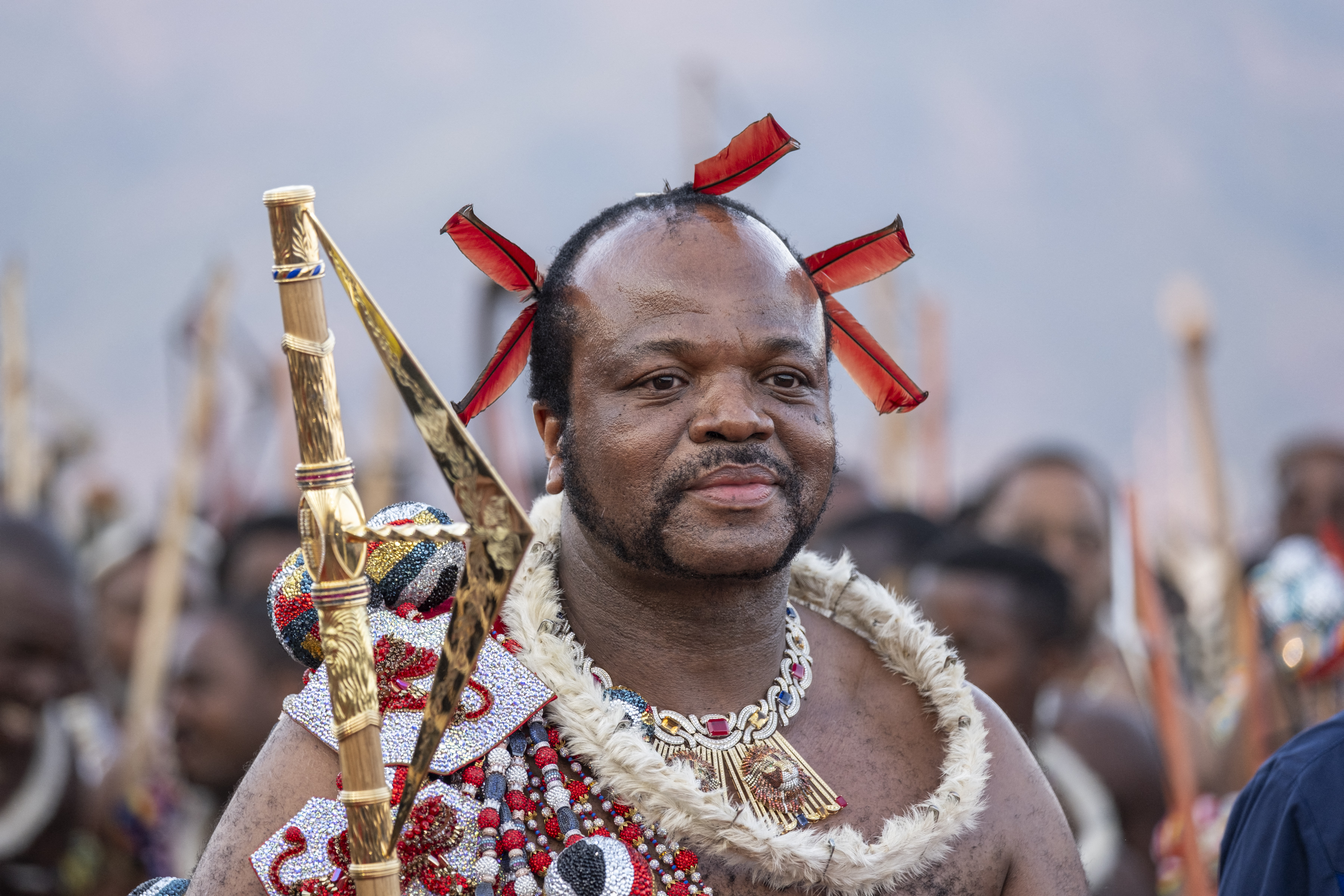
![King Mswati III’s government is under pressure over a secret migrant detention deal linked to Washington. [Photo by EMMANUEL CROSET/AFP via Getty Images]](https://ocdn.eu/pulscms/MDA_/0516e6837036c7ee0af9faae14b5bb8b.jpg)
A tiny African kingdom ruled by one of the world’s last absolute monarchs has quietly become part of President Donald Trump’s expanding global deportation strategy, a move now sparking legal outrage, public protests and fears that poorer nations are being drawn into Western migration battles for money and political favour.
- Eswatini quietly became one of the first African countries to accept deported migrants under a controversial U.S. arrangement linked to Donald Trump’s immigration crackdown.
- The deal reportedly brought millions of dollars into the small kingdom while strengthening ties with Washington.
- But lawyers, activists and families of detainees say the migrants are being held in harsh and unconstitutional conditions.
- The fallout is now exposing how Africa is becoming part of a growing global system of outsourced migration control.
According to government and diplomatic sources cited by Reuters, Eswatini was among the first countries to volunteer after the U.S. began searching for African partners willing to host deported third-country migrants.
The arrangement reportedly allowed the southern African kingdom to receive deportees from countries including Cuba, Jamaica, Cambodia and Laos, people who had no ties to Eswatini itself.
So far, 19 migrants have reportedly been detained in a prison near the capital, Mbabane.
Behind the deal lies a mix of geopolitics, aid dependence and strategic diplomacy.
Eswatini, a landlocked country of about 1.2 million people where roughly a third of citizens live below the World Bank’s extreme poverty line, has long relied heavily on foreign support.
The United States was its largest single donor in 2024, with major funding directed toward HIV/AIDS programmes in one of the world’s hardest-hit countries.
For Washington, the arrangement appears to fit a broader push to externalise migration enforcement beyond U.S. borders, a strategy increasingly mirrored across the West.
From Europe’s migration agreements with North African states to Britain’s controversial Rwanda deportation plan, wealthy governments are increasingly seeking third countries willing to absorb migrants and asylum seekers in exchange for financial or political incentives.
Now, Africa is becoming a more visible part of that system.
King Mswati reportedly approved the deal immediately
Sources told Reuters that Prime Minister Russell Dlamini privately discussed the proposal with then-acting U.S. Charge d’Affaires Caitlin Piper before taking it directly to Mswati III.
The king, who marked 40 years on the throne this year, reportedly approved the arrangement almost immediately.
King Mswati’s spokesperson, Percy Simelane, later described the deal as Eswatini’s “contribution to world order.”
The speed of the agreement highlights how strategically important relations with Washington have become for the monarchy.
Unlike neighbouring South Africa, whose ties with the U.S. have become increasingly strained over foreign policy disagreements and trade tensions, Eswatini has remained firmly aligned with Washington.
That alignment appears to have delivered benefits.
According to the report, Eswatini later secured one of the most generous healthcare agreements signed by the U.S. after the dismantling of USAID structures.
The kingdom reportedly received a package worth $205 million, the highest per capita allocation among 14 African countries included in the programme.
It also received a relatively low U.S. tariff rate of 10%, far below the 30% imposed on South Africa.
Officials deny those benefits were linked to the deportation arrangement.
Still, critics argue the timing has intensified suspicions that migration cooperation is becoming intertwined with diplomacy, trade and aid.
Secret payments, legal battles and growing backlash
The arrangement was reportedly kept highly secret.
Only King Mswati, the Queen Mother and Prime Minister Dlamini initially knew about the agreement before the first deportees arrived in July last year.
Even senior officials allegedly did not know why about $5.1 million had entered government accounts when the money first arrived.
That secrecy is now fuelling legal and political tensions inside the kingdom.
Two lawyers are challenging the legality of the arrangement in court, arguing that the detainees are being held without charge, denied proper legal access and detained in violation of Eswatini’s constitution.
One lawyer representing detainees, Sibusiso Nhlabatsi, accused the government of sacrificing constitutional safeguards in exchange for international approval.
The controversy has also triggered something unusual inside Eswatini’s tightly controlled political environment: public protest.
Small demonstrations reportedly broke out outside the prison where the migrants are being held, a rare display of dissent in a monarchy where political freedoms have long faced criticism from activists and rights groups.
Detainees describe fear and harsh prison conditions
For the deportees themselves, the experience has been traumatic.
One Cambodian migrant, Pheap Rom, said he panicked when he realised he was being sent to an African prison instead of another U.S. immigration detention facility.
“I was scared, my knees were shaking,” he told Reuters after later being released and repatriated.
He described overcrowded prison conditions, saying multiple detainees were forced into small cells.
Relatives of detainees still inside the prison say conditions are worsening.
The partner of 64-year-old detainee Felix Perez said she fears he could die in custody because of poor health conditions and limited medical care.
The growing controversy now places Eswatini at the centre of a much larger global debate over migration, sovereignty and the increasing use of poorer countries as extensions of Western border enforcement systems.
For Africa, the case may also signal a new phase in relations with powerful Western governments, one where aid, trade access and diplomatic favour increasingly intersect with migration control.