‘I Love Boosters’ Turns Fashion Capitalism Into a Playground for Class Critique
In Boots Riley’s world, capitalism is never just background noise. It’s the engine driving the chaos, humor, and rebellion at the center of his stories. With I Love Boosters, Riley shifts his attention to fashion capitalism, using the world of shoplifting crews, style culture, and luxury branding to examine how marginalized communities shape trends only… The post ‘I Love Boosters’ Turns Fashion Capitalism Into a Playground for Class Critique appeared first on Black Girl Nerds.
 Black News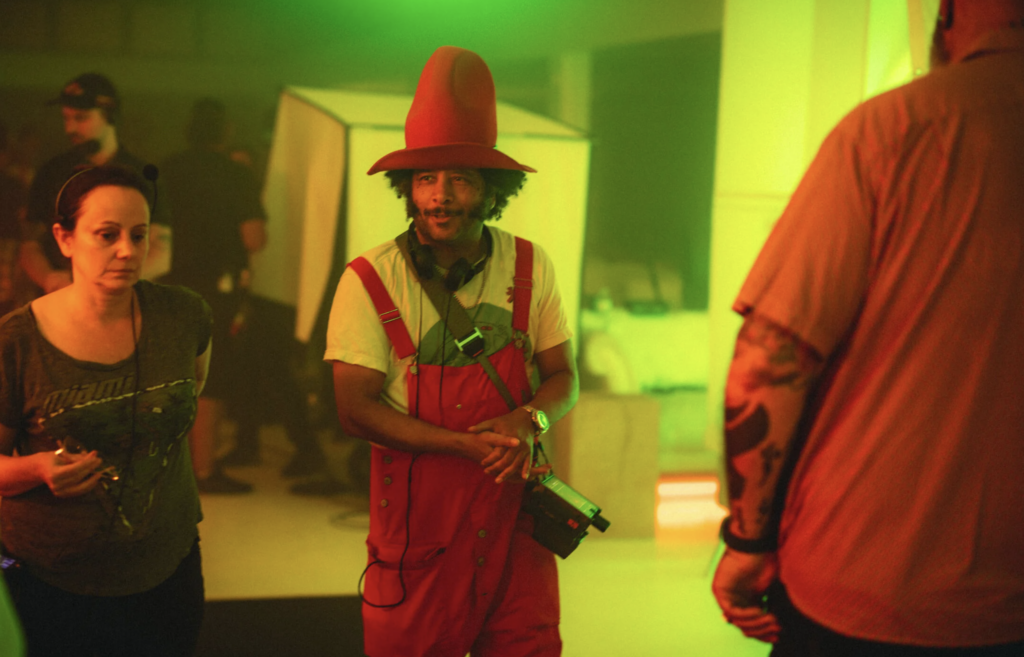

In Boots Riley’s world, capitalism is never just background noise. It’s the engine driving the chaos, humor, and rebellion at the center of his stories. With I Love Boosters, Riley shifts his attention to fashion capitalism, using the world of shoplifting crews, style culture, and luxury branding to examine how marginalized communities shape trends only to have them commodified and sold back to them at a premium.
Speaking with Black Girl Nerds, Riley explained why fashion became the perfect lens for exploring larger systems of exploitation and survival.
BGN: Boots, I want to talk to you about your work with this because your work consistently critiques capitalism in these wildly entertaining ways. What made fashion capitalism the right battlefield for this story?
Boots Riley: “So I try to answer these questions and the real answer to any question you’ve ever heard me answer is I don’t know.
“But, you know, I am thinking about stuff that would be interesting. I’m often thinking about how things that I’m into are connected to the rest of the world.”
Riley said the roots of the story came from personal experience, especially from his years trying to maintain style and identity while struggling financially as a musician.
“I’ve also had a life of being a broke rapper trying to stay fly and needing the rescue of boosters, right?” he said with a laugh. “So these are definitely characters in my orbit.”
Rather than basing the film’s characters on one specific person, Riley described the cast as composites of people he has known throughout his life and creative journey.
“I was asked, ‘Did you have Keke [Palmer] in mind when you wrote it?’ But no, I’m having an amalgamation of people that I know in there,” he explained. “You can kind of take anything and connect it to the larger world around it, and the question is, how does it fit in?”
For Riley, fashion offered a unique entry point because discussions around the industry often center only on luxury, glamour, or elite designers while ignoring the labor, theft, and cultural borrowing that sustain it.
“I thought that fashion is something where they often are talking about it with the people at the top,” he said. “Or sometimes you’re talking about it like it’s a good thing in the background of a movie that’s about something else.”
Instead, I Love Boosters aims to examine every layer of the ecosystem, from production and distribution to the underground economies operating alongside it.
“So I thought, to talk about all parts of the fashion industry, to talk about it from production to distribution, which includes boosters,” Riley said. “And to talk about it from their standpoint would cover a lot and also just be interesting.”
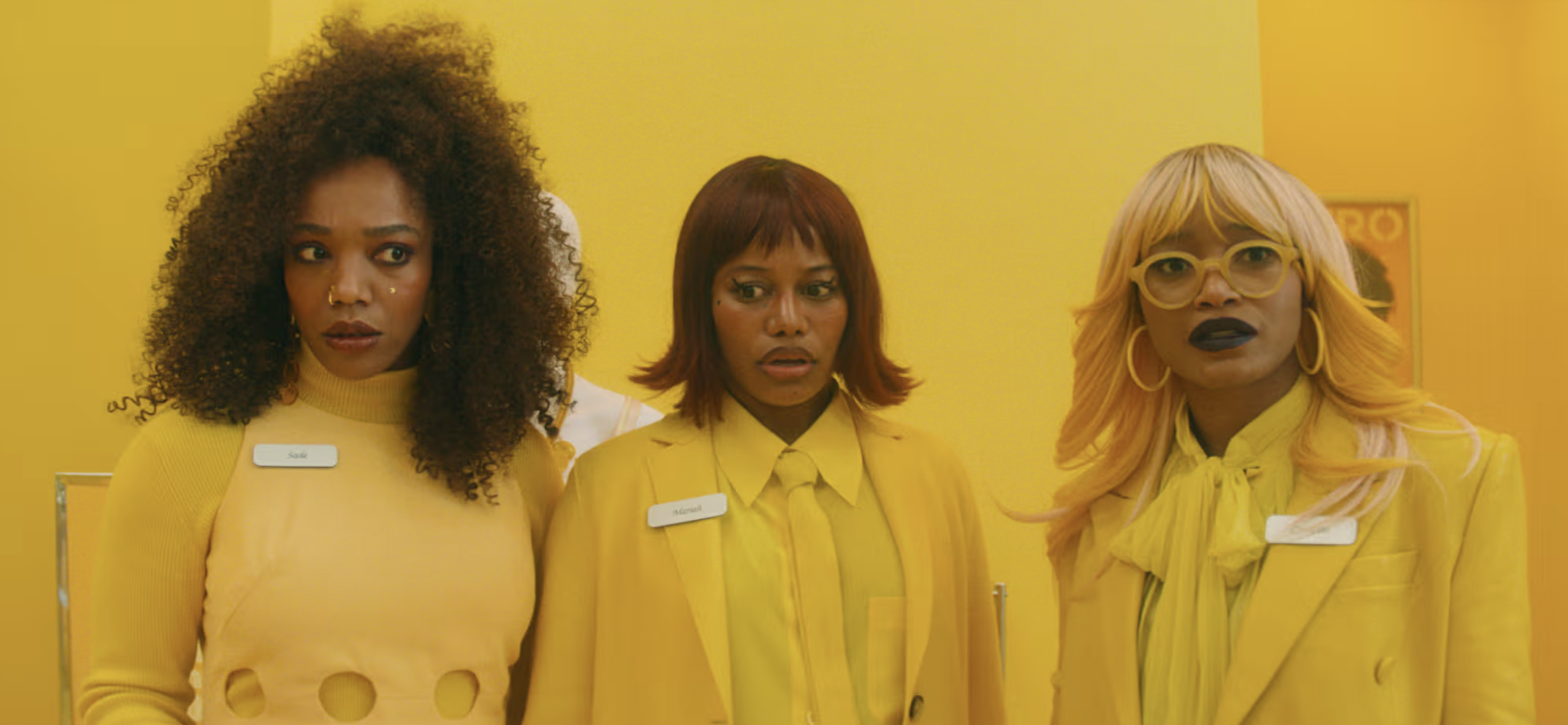
What especially interested Riley was the relationship between fashion and working-class communities, particularly Black communities, whose creativity fuels global trends despite often being excluded from the profits.
“This is a group of women who hold things together for some communities,” he said. “Fashion in general is often inspired by the ways that people with very little money, communities of color, Black folks, are putting together their fashion.”
But as Riley points out, the cycle rarely benefits the people who originate the culture.
“And then it’s sold back to us,” he said. “So they kind of cut some of that down.”
That tension between cultural innovation and corporate exploitation sits at the center of I Love Boosters. Like much of Riley’s work, the film uses absurdity and humor not to soften its political critique, but to make it impossible to ignore.
I Love Boosters premieres in theaters May 22nd.
The post ‘I Love Boosters’ Turns Fashion Capitalism Into a Playground for Class Critique appeared first on Black Girl Nerds.