Juwara says Africa must stop exporting raw minerals
The Minister of Petroleum, Energy and Mines, Hon. Nani Juwara, has challenged African countries to end their dependence on exporting raw minerals and importing finished products, saying the continent must capture greater economic value from its natural resources to accelerate industrialisation and create jobs. Speaking on Monday at the opening of the 18th General Assembly of the Organisation of African Geological Surveys (OAGS) in The Gambia, Minister Juwara said Africa’s vast mineral wealth presented an opportunity to transform national economies, but only if countries developed the capacity to process their resources and manufacture higher-value products locally. The three-day assembly, being held at the Sir Dawda Kairaba Jawara International Conference Centre from October 26 to 28, has brought together geological experts and representatives from Africa and Europe. Minister Juwara said Africa possessed significant deposits of minerals, including copper, manganese, lithium, bauxite and rare earth elements, yet many countries continued to export raw materials without capturing enough of the value generated from their exploitation. He argued that this approach must change if African countries are to use their natural resources to achieve meaningful economic transformation. According to the minister, Africa must move beyond extracting minerals for export and prioritise local processing, manufacturing, technology transfer, skills development and stronger regional value chains. He said these measures would help create employment, diversify national economies and ensure that mineral wealth contributed more directly to the livelihoods of African citizens. The minister noted that the global transition towards cleaner energy had increased demand for critical minerals, creating new opportunities for resource-rich African countries. However, he cautioned that the continent must ensure that the energy transition did not simply replace one form of raw material export with another while leaving the most valuable stages of production elsewhere. “The energy transition must not simply change what Africa exports, but increase the value that we create,” he said. Minister Juwara maintained that Africa needed to strengthen its ability to participate across the mineral value chain rather than remain primarily a supplier of raw materials to international markets. He also stressed that the development of a modern mineral economy depended on strong geological institutions capable of providing accurate scientific information to guide national planning and investment. “We cannot manage what we do not understand. And we cannot develop what we have not properly assessed,” he said. He described geological surveys as strategic national institutions whose work informs decisions on mineral resources, groundwater, environmental protection and geological processes. The minister called for increased investment in modern geological mapping, geochemical services, digital geological databases and accessible scientific information to improve the continent’s understanding of its natural resources. He further emphasised the need to develop skilled African professionals, including geologists, geophysicists, chemists, hydrologists, mining specialists and environmental scientists. According to him, strengthening local expertise would enable African countries to assess their resources more effectively, make informed policy decisions and take greater responsibility for their development. His remarks placed the need for stronger scientific institutions alongside the broader challenge of ensuring that Africa’s natural resources translate into tangible economic benefits. The 18th OAGS General Assembly, which The Gambia is hosting for the first time, provides a platform for geological institutions to share expertise and explore ways of strengthening the management and development of the continent’s mineral resources. Minister Juwara’s message was that Africa’s mineral wealth should not be measured solely by what lies beneath its soil, but also by the jobs, industries, skills and economic opportunities that countries can build around those resources.
 Black News
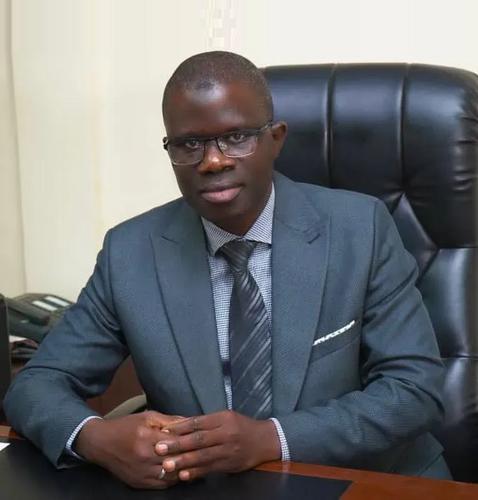
The Minister of Petroleum, Energy and Mines, Hon. Nani Juwara, has challenged African countries to end their dependence on exporting raw minerals and importing finished products, saying the continent must capture greater economic value from its natural resources to accelerate industrialisation and create jobs.
Speaking on Monday at the opening of the 18th General Assembly of the Organisation of African Geological Surveys (OAGS) in The Gambia, Minister Juwara said Africa’s vast mineral wealth presented an opportunity to transform national economies, but only if countries developed the capacity to process their resources and manufacture higher-value products locally.
The three-day assembly, being held at the Sir Dawda Kairaba Jawara International Conference Centre from October 26 to 28, has brought together geological experts and representatives from Africa and Europe.
Minister Juwara said Africa possessed significant deposits of minerals, including copper, manganese, lithium, bauxite and rare earth elements, yet many countries continued to export raw materials without capturing enough of the value generated from their exploitation.
He argued that this approach must change if African countries are to use their natural resources to achieve meaningful economic transformation.
According to the minister, Africa must move beyond extracting minerals for export and prioritise local processing, manufacturing, technology transfer, skills development and stronger regional value chains.
He said these measures would help create employment, diversify national economies and ensure that mineral wealth contributed more directly to the livelihoods of African citizens.
The minister noted that the global transition towards cleaner energy had increased demand for critical minerals, creating new opportunities for resource-rich African countries.
However, he cautioned that the continent must ensure that the energy transition did not simply replace one form of raw material export with another while leaving the most valuable stages of production elsewhere.
“The energy transition must not simply change what Africa exports, but increase the value that we create,” he said.
Minister Juwara maintained that Africa needed to strengthen its ability to participate across the mineral value chain rather than remain primarily a supplier of raw materials to international markets.
He also stressed that the development of a modern mineral economy depended on strong geological institutions capable of providing accurate scientific information to guide national planning and investment.
“We cannot manage what we do not understand. And we cannot develop what we have not properly assessed,” he said.
He described geological surveys as strategic national institutions whose work informs decisions on mineral resources, groundwater, environmental protection and geological processes.
The minister called for increased investment in modern geological mapping, geochemical services, digital geological databases and accessible scientific information to improve the continent’s understanding of its natural resources.
He further emphasised the need to develop skilled African professionals, including geologists, geophysicists, chemists, hydrologists, mining specialists and environmental scientists.
According to him, strengthening local expertise would enable African countries to assess their resources more effectively, make informed policy decisions and take greater responsibility for their development.
His remarks placed the need for stronger scientific institutions alongside the broader challenge of ensuring that Africa’s natural resources translate into tangible economic benefits.
The 18th OAGS General Assembly, which The Gambia is hosting for the first time, provides a platform for geological institutions to share expertise and explore ways of strengthening the management and development of the continent’s mineral resources.
Minister Juwara’s message was that Africa’s mineral wealth should not be measured solely by what lies beneath its soil, but also by the jobs, industries, skills and economic opportunities that countries can build around those resources.