Let’s not twist history, Mr. Paradza — Great Zimbabwe was never built by the Mutapa
The illegitimate never tire of reinventing the past.
 Black News
Tendai Ruben Mbofana
When politicians take to the stage to address the public, historical revisionism is often deployed as a tool to serve contemporary political ends.
To directly receive my articles please join my WhatsApp Channel on: https://whatsapp.com/channel/0029VaqprWCIyPtRnKpkHe08
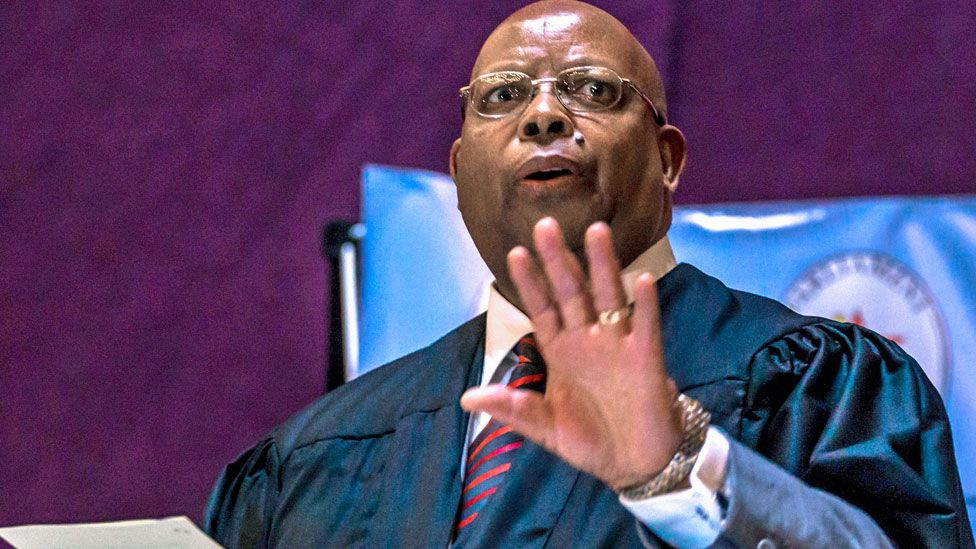
In his address regarding the newly established Munhumutapa Day, Zanu-PF Youth League leader John Paradza boldly proclaimed that the Mutapa Empire built Great Zimbabwe.
While the impulse to rally the nation around a proud pre-colonial past is understandable, weaponizing gross historical inaccuracies to construct a modern political narrative does a grave disservice to our nation’s true heritage.
Great Zimbabwe was never built by the Mutapa Empire, and asserting otherwise ignores basic historical timeline and archaeological reality.
To understand why this claim is fundamentally flawed, one must look at simple chronology.
Great Zimbabwe reached its architectural and geopolitical peak between the 11th and 14th centuries, flourishing as a monumental center of trade, stone masonry, and cattle pastoralism.
By the time the Mutapa state was established around 1430 CE, Great Zimbabwe was already entering a period of decline and gradual abandonment.
How could an empire founded in the 15th century possibly build a stone civilization that had been rising for centuries prior?
Asserting that Mutapa built Great Zimbabwe is akin to claiming that the ZANU-PF government built the ancient dry-stone walls of Khami.
It completely reverses the arrow of time.
This is not merely a harmless error in historical trivia; it reflects a troubling tendency to collapse complex, distinct pre-colonial civilizations into a single, flattened narrative.
Historical and archaeological evidence demonstrates that the founder of the Mutapa state, Nyatsimba Mutota, migrated north to the Dande and Zambezi Valley regions.
He was in search of vital resources like salt and new trade routes as Great Zimbabwe faced environmental strain and overpopulation.
Mutota and his followers did not simply transplant Great Zimbabwe to the north, nor did they move into an empty landscape.
The state that became the Mutapa Empire was forged through the integration, negotiation, and assimilation of indigenous northern communities, including the Tavara and local spirit mediums whose spiritual authority was essential to legitimizing the new rulers.
To reduce the Mutapa Empire to nothing more than Great Zimbabwe relocated, or to attribute the construction of Great Zimbabwe to the Mutapa dynasty, erases the rich diversity and distinct identities of the various societies that inhabited this land.
Furthermore, projecting modern political titles and centralizing ideologies backward into the 15th century creates a false sense of historical continuity designed to validate current state power.
Dynastic authority in pre-colonial Africa was built on localized alliances, tributary relations, and shared spiritual legitimacy, not on centralized partisan control or the retrofitting of modern leadership onto ancient icons.
Our history is vast, multi-layered, and deeply sophisticated.
It does not need to be rewritten or distorted by political youth leaders seeking to flatter current authorities or draw superficial parallels between ancient rulers and modern politicians.
Great Zimbabwe stands as a magnificent testament to the ingenuity of its original builders, just as the Mutapa state remains a fascinating chapter of northern state-building and diplomatic adaptation.
Both deserve to be remembered, studied, and honored for what they actually were—not morphed into convenient political fables.
If we are truly committed to remembering who we are, as Mr. Paradza suggested, then we must begin by respecting the facts of our past.
True national pride is built on historical truth, not political mythology.
- Tendai Ruben Mbofana is a social justice advocate and writer. Please feel free to contact him on +263715667700 or mbofana.tendairuben73@gmail.com