Mutapa Fund tables NRZ turnaround strategy after decades of inactivity
THE Mutapa Investment Fund (MIF) has set out strategic plans to rejuvenate the National Railways of Zimbabwe (NRZ) after years of largely being inactive in transforming decades old challenges into opportunities. This announcement was made during a ceremony celebrating the commissioning of three refurbished locomotives and 100 wagons, funded by a US$2.5 million investment from […] The post Mutapa Fund tables NRZ turnaround strategy after decades of inactivity appeared first on NewZimbabwe.com.
 Black News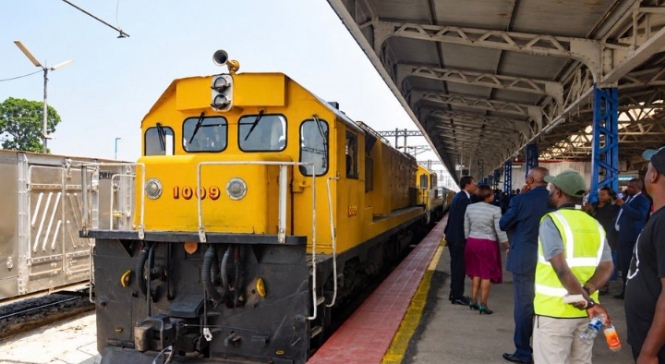
THE Mutapa Investment Fund (MIF) has set out strategic plans to rejuvenate the National Railways of Zimbabwe (NRZ) after years of largely being inactive in transforming decades old challenges into opportunities.
This announcement was made during a ceremony celebrating the commissioning of three refurbished locomotives and 100 wagons, funded by a US$2.5 million investment from mining company ZIMASCO through a public-private partnership (PPP).
The refurbishment, conducted at NRZ’s Bulawayo mechanical workshops, is part of a government effort to foster stronger collaboration with the private sector and improve Zimbabwe’s railway transport infrastructure. ZIMASCO contributed around US$2.46 million, covering crucial spares and consumables needed for the overhaul.
MIF Chief Executive Officer, John Mangudya, urged organisations under his management to seek alternative funding sources to complement government efforts.
“The fiscal budget alone cannot shoulder the massive weight of infrastructure renewal and rolling stock overhaul. We, therefore, invited the private sector to partner with us in revitalising Zimbabwe’s rail sector.
“This framework allows high capacity freight clients to invest directly in refurbishing out of service rolling stock in return for dedicated usage and incentivised freight rates. It is a win–win model: private partners secure supply chain reliability, while NRZ injects immediate operational capacity into its asset base,” he said.
Since NRZ oversight was transferred to MIF, the focus has shifted toward performance, commercial viability, and wealth creation. Mangudya highlighted that each refurbished locomotive and wagon supports Zimbabwe’s National Development Strategy (NDS1/NDS2) and Vision 2030, emphasizing rail as a cost-effective and environmentally friendly means of bulk haulage.
By shifting minerals and commodities back to rail, Zimbabwe expects to save billions in road maintenance, reduce transit times, and enhance the efficiency of regional trade corridors.
“We are currently working on the rehabilitation of the Machipanda–Harare line with Mozambique and the Chicualacuala–Dabuka–Plumtree line under a US$10 million tripartite arrangement with Botswana and Mozambique, which are vital components of regional trade integration,” Mangudya added.
MIF’s plans also include outsourcing the refurbishment of three locomotives, expected to return to service by December 2026, and leasing four Sheltam locomotives to address immediate traction needs. Further expansion is planned, supported by a US$ 6 million facility from Ecobank for refurbishing 520 wagons and acquiring maintenance equipment, along withaUS115 million Afreximbank facility to procure 10 new locomotives, 315 wagons, and undertake key infrastructure rehabilitation.
These initiatives demonstrate a concerted effort to revitalize Zimbabwe’s rail sector through public-private partnerships, enhancing the country’s transport infrastructure and driving economic growth.
The post Mutapa Fund tables NRZ turnaround strategy after decades of inactivity appeared first on NewZimbabwe.com.