Nick Danziger’s striking vision of everyday British life in the ’90s
The British 1994-1999 — The renowned photojournalist returned to his birth country on the cusp of the Millennium, capturing its contradictions with humour and wit.
 Black News
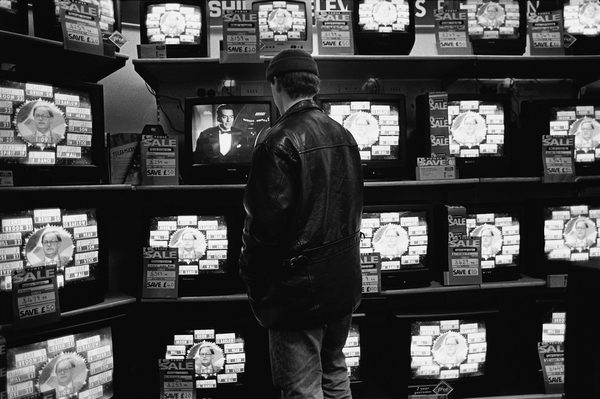
The British 1994-1999 — The renowned photojournalist returned to his birth country on the cusp of the Millennium, capturing its contradictions with humour and wit.
At the age of 13, Nick Danziger arrived in Paris with neither plane ticket nor passport, embarking upon the first of many adventures to come. The London-born, Monaco and Switzerland-raised photographer was by nature and nurture a citizen of the world. His father was a New Yorker, son of a farmer in turn of the century Brooklyn, with Danziger evoking scenes from a bygone world while speaking with a mid-Atlantic accent. “I didn’t feel particularly British. In fact, there were a lot of things I didn’t like about Britain,” Danziger says. “But it’s also like T.S. Eliot once said, ‘And the end of all our exploring will be to arrive where we started.’”
Danziger first returned to London as a young man to study painting and drawing at Chelsea School of Art where he earned an MFA and secured representation at the Robert Fraser Gallery. But wanderlust transformed him into a photographer. In 1982, he began an 18-month trip along ancient trade routes from Turkey to China. Traveling through Iran, Afghanistan, and Pakistan on foot and local transport disguised as an itinerant Muslim, he chronicled his extraordinary quest in the bestselling Danziger’s Travels (1987) and further journeys in Danziger’s Adventures: From Miami to Kabul (1993).
With his vaunted position as a top photojournalist, Danziger returned once again to the land of his birth. “Being successful, people were always asking me about foreign places and I thought, well actually, a similar journey could be done in the UK,” he says. “Initially when my work was in colour, people would say, ‘Oh wow, it’s so exotic!’ And I was like, ‘But you know the people living there don’t have that experience, that’s not what they are living through.’ Then I came to think, in the UK, there are a lot of paradoxes too.”
Danziger touched down in the UK on the 50th anniversary of D-Day, exploring the last remnants of the British Empire’s core. Over the course of a decade, he would travel through England, Scotland, Wales, and Northern Ireland to create The British: A Photographic Journey (2002) and Danziger’s Britain: A Journey to the Edge (2011), complexly layered portraits of a nation that, when left to its own devices, would just as soon consume its own.
Now he looks back at the era in The British 1994–1999 (Café Royal Books). Describing himself as a “local stranger”, Danziger adopts the position of an impassioned observer who knows exactly how the sausage is made, being neither an insider nor an outsider but a curious blend of the two. Throughout the work, a persistent tension between alienation and belonging can be felt lurking beneath a captivating wit, striking a balance of tragicomedy without becoming maudlin for what is and what could never be.
“In the UK, it’s difficult to get away from class, and I think what had probably changed was the old definitions of class,” Danziger says. “I discovered a working class that no longer worked and a ruling class that no longer ruled. I would say the one thing about the British is they will face anything with stoicism, and that comes out of adversity. The irony and paradox is that for a really unequal nation, there’s this incredible notion of equality and justice [that comes] when people think of themselves as good as the next person, but also the next person was not half as good as they were.”
The British 1994-1999 by Nick Danziger is published by Café Royal Books.
Miss Rosen is a freelance arts and photography writer, follow her on X.
Buy your copy of Huck 83 here.
Enjoyed this article? Follow Huck on Instagram and join Club Huck’s mailing list for more from the cutting edge of sport, music and counterculture.