Nigeria imports nearly $5bn in U.S. crude despite exporting billions worth abroad
Nigeria imported an estimated 61.7 million barrels of crude oil from the United States between January 2024 and January 2026, worth roughly $4.9 billion at an average price of $80 per barrel, underscoring a growing reliance on foreign feedstock despite its status as one of Africa’s leading oil exporters.
 Black News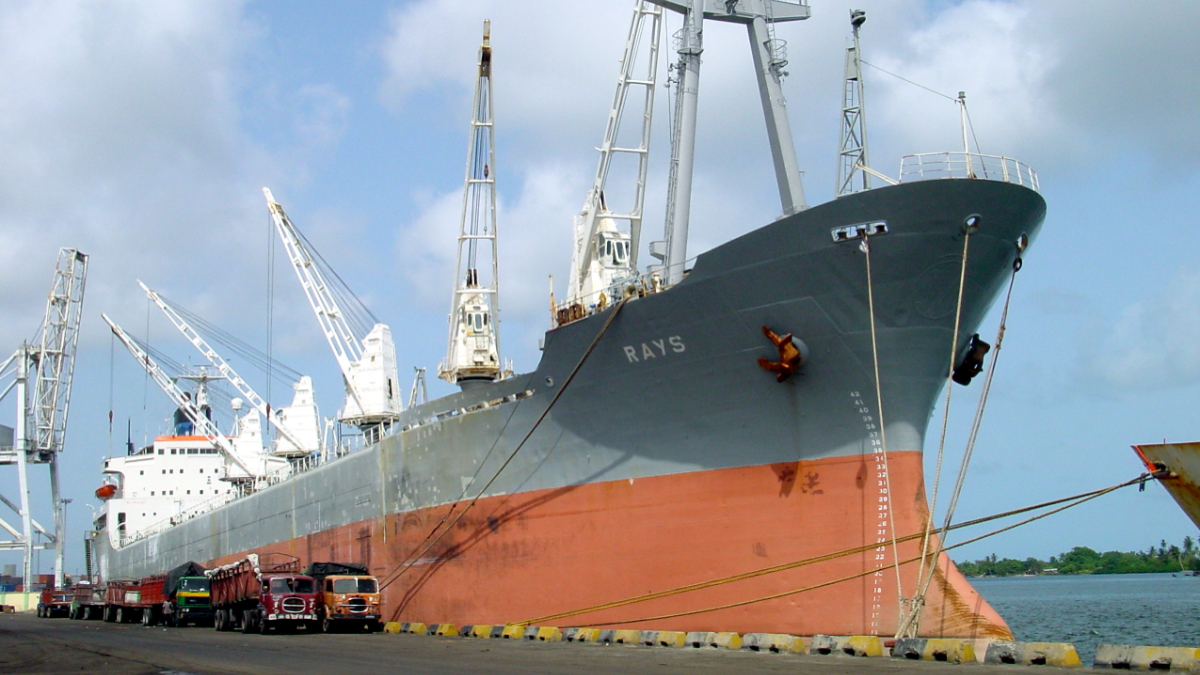


![Freighter, Port, Lagos, Nigeria, Africa. [Photo by: Dukas/Universal Images Group via Getty Images]](https://ocdn.eu/pulscms/MDA_/48f6c7604cf8b4002bbb6443644b623b.jpg)
Nigeria imported an estimated 61.7 million barrels of crude oil from the United States between January 2024 and January 2026, worth roughly $4.9 billion at an average price of $80 per barrel, underscoring a growing reliance on foreign feedstock despite its status as one of Africa’s leading oil exporters.
- Nigeria imported about 61.7 million barrels of U.S. crude oil, valued at roughly $4.9 billion, between January 2024 and January 2026.
- The trend is driven largely by demand from the Dangote Refinery, which began operations in 2024.
- At the same time, Nigeria exported over $24.5 billion worth of crude in 2025 alone, highlighting a structural imbalance.
- Experts warn that limited domestic crude allocation may continue to constrain refining efficiency.
The trend highlights a widening disconnect in the country’s oil sector. While Nigeria continues to export significant volumes of crude, domestic refineries, particularly the Dangote Refinery, are increasingly sourcing supplies from abroad to sustain operations.
Data from the U.S. Energy Information Administration shows that crude flows from the U.S. to Nigeria rose sharply during the two-year period, reversing nearly a decade of negligible trade. Prior to 2024, such imports were rare, with only a brief occurrence recorded in 2016.
The shift coincided with the commencement of operations at the Dangote Refinery, which industry analysts identify as a key driver of demand for imported crude. Between January and June 2024, Nigeria imported about 15.7 million barrels, equivalent to approximately $1.26 billion.
Imports accelerated further in 2025, which accounted for the largest share of inflows. From February to December 2025, Nigeria brought in around 41.06 million barrels, valued at roughly $3.28 billion.
![Lagos Port Complex (port of Lagos) is located at the Apapa area of Lagos, Nigeria, West Africa. [Photo by Frédéric Soltan/Corbis via Getty Images]](https://ocdn.eu/pulscms/MDA_/67b5c4ca1146709c80d9a51f4b1f6411.jpg)
Monthly imports peaked in June 2025 at more than 300,000 barrels per day, exceeding 9 million barrels for the month. Volumes declined towards the end of the year before rising again in January 2026.
Despite this dependence on imported crude, export figures remain substantial. Central Bank of Nigeria data indicate that the country exported about 306.7 million barrels between January and October 2025 alone, worth an estimated $24.5 billion, representing nearly 70 per cent of total production during that period. The trend continued into 2026, with 55.39 million barrels, approximately $4.4 billion, exported in the first two months of the year.
The imbalance reflects longstanding structural challenges in Nigeria’s oil industry. Much of the country’s crude production is tied to international supply contracts, limiting availability for domestic refining.
Industry sources say the Dangote Refinery requires more than 19 million barrels of crude oil per month to operate at optimal capacity. This has forced it to supplement domestic supply with imports from the United States, Ghana, and other producers.
Business leader Aliko Dangote has previously stated that such imports are necessary to “bridge the gap” between local crude availability and refinery demand.
The development signals a shift in Nigeria’s energy model, from reliance on imported refined petroleum products to reliance on imported crude for local processing. However, analysts caution that without reforms to prioritise domestic supply, inefficiencies in the oil value chain are likely to persist.